
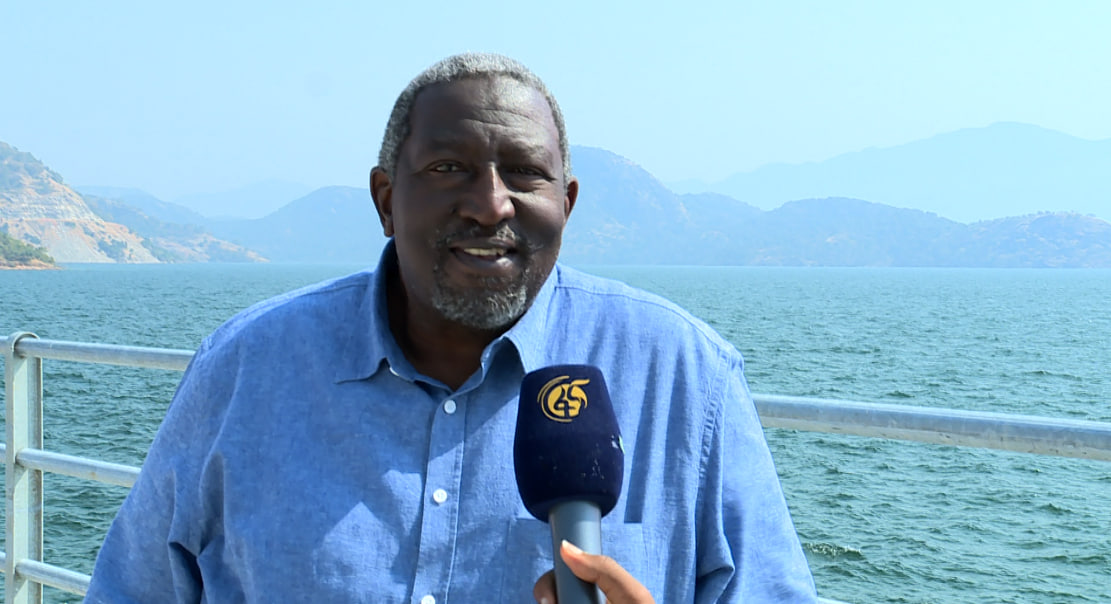
Kenneth Kaunda’s son urges Africa to follow Ethiopia’s lead, harness local talent, and build its own future
Addis Ababa, December 12, 2025 (FMC) — Kaweche Kaunda, son of Zambia’s first President Kenneth Kaunda, has called on African nations to rely on local expertise, foster continental cooperation, and follow Ethiopia’s example in achieving large-scale development projects independently.
Joined by descendants of 20th-Century Pan-African leaders and freedom fighters, Kaweche Kaunda toured Africa’s biggest hydropower dam the Grand Ethiopian Renaissance Dam (GERD) recently,
On the occasion, Kaweche exclusively spoke to Fana Media Corporation, highlighting that Africa possesses the knowledge and capacity to design, construct, and operate major projects without relying on foreign engineers or investors.
“This is a great example of African self-reliance. Designed by Ethiopians, built by Ethiopians, run by Ethiopians — it shows the rest of us that we can do this ourselves,” he said.
“Instead of going to China or America next time, African countries should look within, learn from Ethiopia, or bring Ethiopian experts here to guide our projects. Where we fail, we can then seek assistance, but first we must trust our own people.”
Kaunda underscored the broader continental significance of Ethiopia’s initiatives, noting that infrastructure projects, including the recent $30 billion development agenda spanning energy, gas, and fertilizer sectors, are not only valuable for Ethiopia but hold potential benefits for neighboring nations.
“Projects like this are a model for Africa. The Nile passes through ten countries — the way this resource is managed here should inspire collaboration and shared benefits across the continent,” he said.
He also reflected on Africa’s historical challenges, pointing out that colonial borders imposed at the Berlin Conference in 1884 were drawn without African input, yet the continent still has the capacity to innovate and achieve transformative outcomes.
“We did not create these borders, but our ability to act, innovate, and develop remains intact. Ethiopia’s example proves that African countries can overcome historical limitations and take charge of their own destiny,” Kaunda noted.
Highlighting the leadership dimension, Kaunda said African governments must cultivate local talent, engage communities, and prioritize knowledge transfer to strengthen the continent’s developmental capacity.
“Africa can build its own future. Leaders must recognize the potential of our engineers, scientists, and citizens. Ethiopia has shown what can be done when talent is harnessed, resources are mobilized, and determination guides every step,” he added.
Kaunda also stressed the importance of Pan-African unity, arguing that shared expertise and cooperation between countries can accelerate development and reduce dependency on external powers.
“We must look at each other and learn. Collaboration across nations will increase African prosperity and security. Africa has the talent, resources, and vision — it just needs coordination and courage,” he said.
During his visit, Kaunda toured key infrastructure and met project engineers, observing how Ethiopian initiatives combine local knowledge, innovation, and community involvement. He concluded by urging African nations to adopt homegrown solutions, emphasizing that Ethiopia’s example can inspire the continent to achieve self-reliance, economic growth, and regional integration.
“Africa must first believe in itself, trust its people, and work together. Ethiopia has shown the way — the rest of the continent can follow,” he said.