
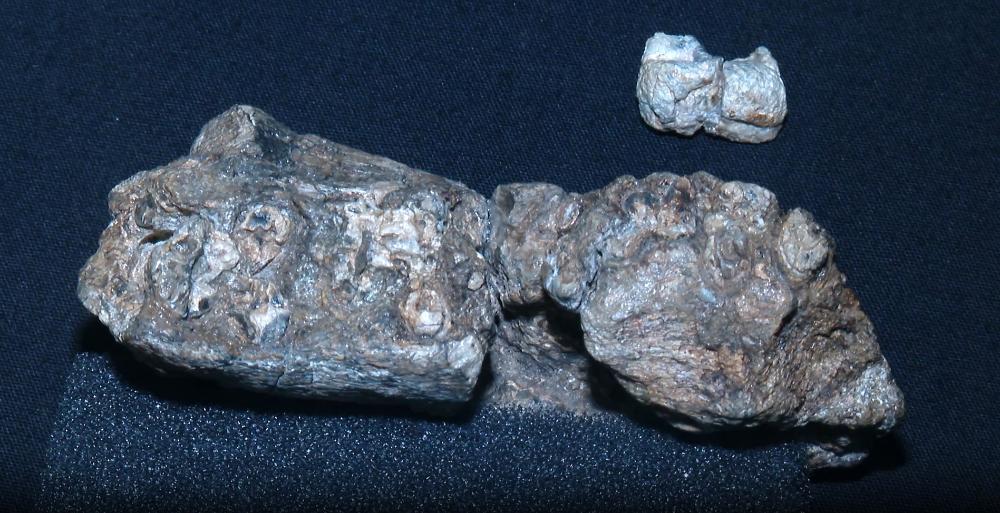
2.6-Million-Year-Old Hominin Fossil Discovered in Ethiopia’s Afar Region
Addis Ababa, January 21, 2026 (FMC) — A research team led by Zeresenay Alemseged, a paleoanthropologist at the University of Chicago, has discovered 2.6-million-year-old hominin fossil remains in Ethiopia’s Afar region, marking the first confirmed evidence of the genus Paranthropus in the area.
Briefing journalists on Tuesday, Zeresenay said the fossil was unearthed at the Mille–Logya paleoanthropological site in the Afar region. The discovery fills a long-standing gap in the region’s fossil record and provides new insights into early human evolution.
Referring to Ethiopia as “the Land of Origins,” the researcher noted that the country has made exceptional contributions to the global study of human ancestry. Numerous paleontological and archaeological sites across Ethiopia have yielded hominin fossils and stone tool assemblages spanning nearly the entire history of the human lineage, dating back around six million years.
Among these sites, the Afar Depression holds particular scientific significance. Discoveries from Dikika, Ledi-Geraru, Gona, Hadar, and the Middle Awash — all located in Afar — have documented successive stages in the evolution of hominin behavior from approximately 3.5 million years ago to recent periods.
Zeresenay noted that dozens of hominin species belonging to the genera Ardipithecus, Australopithecus, and Homo have been identified in the region. However, despite extensive research, Paranthropus fossils had remained conspicuously absent from Afar, even though the genus has been documented in South Africa, Malawi, Tanzania, Kenya, and southern Ethiopia.
“The absence of Paranthropus in Afar has long puzzled researchers, leading many to conclude that the species never reached the region,” he said, adding that the new discovery challenges that assumption.
Commenting on the findings, Ethiopian Heritage Authority Deputy Director-General Elias Shikur said the discovery further reinforces Ethiopia’s status as the “Cradle of Humankind.” He stressed that collaborative efforts between Ethiopian and international researchers have elevated the country’s global profile in the study of human origins.
Elias added that recent hominin fossil discoveries are expected to draw increased international attention, strengthening Ethiopia’s position in scientific research, cultural tourism, and diplomatic engagement.
He described the identification of Paranthropus in Afar as a pivotal moment in paleoanthropology, noting that growing evidence suggests the region was once home to a wide range of early human species.
“Ethiopia’s Afar region is emerging as a leading center for paleoanthropological research, with clear indications that numerous early human species once thrived there,” he said.
The deputy director-general also reaffirmed the Ethiopian Heritage Authority’s commitment to sustaining progress in the field by supporting young researchers, strengthening partnerships with international scientific institutions, and providing institutional backing for individual research initiatives.