
UN Secretary-General: Mattei Plan Shows Italy’s Commitment, But Africa Needs Fair Financing and Technology
Addis Ababa, February 13, 2026 (FMC) – UN Secretary-General António Guterres said Italy’s Mattei Plan demonstrates a clear commitment to Africa, but stressed that the continent’s full potential can only be realized through fair financing, climate action, and equitable access to technology.
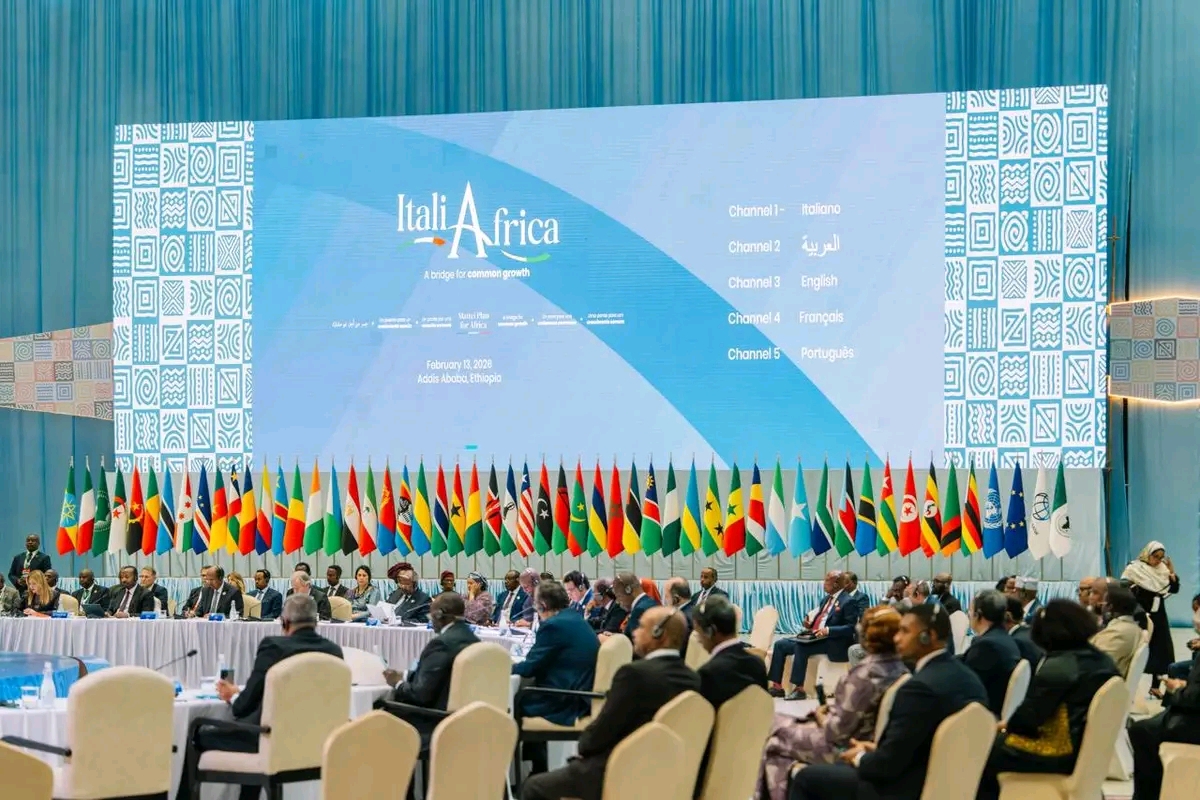
The 2nd Italy-Africa Summit was held today in Addis Ababa, co-hosted and presided over by Prime Minister Abiy Ahmed of Ethiopia and Prime Minister Giorgia Meloni of Italy.
The one-day meeting brought together African heads of state and government, United Nations Secretary-General António Guterres, African Union Commission Chairperson Mahmoud Ali Youssouf, and high-level delegates from Italy, African countries, and international and multilateral institutions.
Addressing the summit, Guterres said the gathering sends a clear message that cooperation between Africa and its partners must be built on trust and mutual respect, and must deliver on both the United Nations’ Agenda 2030 and the African Union’s Agenda 2063. He described the Mattei Plan as an example of a structured partnership other nations can follow.
The Secretary-General outlined three global priorities that he said are critical to maximizing the impact of the Mattei Plan and unlocking Africa’s development potential.
The first, he said, is financial justice. Developing countries face an annual financing gap of $4 trillion to achieve the Sustainable Development Goals (SDGs), and African nations pay up to eight times more to borrow than developed countries, which he said “strangles investment and opportunity.”
He called for stronger multilateral development banks, affordable long-term financing, and debt solutions to reduce risk and cost. Guterres also highlighted that such measures are key to addressing the root causes of irregular migration by creating jobs, strengthening public services, and restoring hope to communities across Africa.
The second priority is climate action. Guterres warned that the world is on track to overshoot the 1.5°C temperature limit and urged global partners to ensure that any overshoot is “as small, as short, and as safe as possible.”
He stressed that Africa’s renewable energy potential, combined with a young workforce and international capital and technology, could make the clean energy transition a shared engine of growth. He noted, however, that Africa currently receives just 2 percent of global clean energy investment.
Guterres called for scaled-up investment in renewables, energy grids, storage, adaptation finance, and early-warning systems. He also emphasized the need for fair value chains for critical minerals, ensuring benefits flow to African people.
The third priority is digital transformation. Guterres highlighted the importance of ensuring artificial intelligence is safe, transparent, and fair, with benefits accessible to all, he asserted.
The UN chief announced a proposal for a Global Fund on AI to build capacity in developing countries, including skills, data, and affordable computing infrastructure.
He said the initiative is part of a broader effort to ensure that technological advances support sustainable and inclusive development.
Guterres concluded by stressing that Africa’s success is essential for a safer, more equal, and sustainable world, and he urged leaders at the summit to turn shared principles into measurable progress and prosperity.