
PM Abiy Ahmed Highlights Economic Growth and Human Capital as Foundations of Africa’s Future
Addis Ababa, February 14, 2026 (FMC) – Prime Minister Abiy Ahmed has underscored economic transformation and investment in human capital as central pillars for Africa’s long-term prosperity, calling on the continent to turn growth momentum into inclusive and sustainable development.
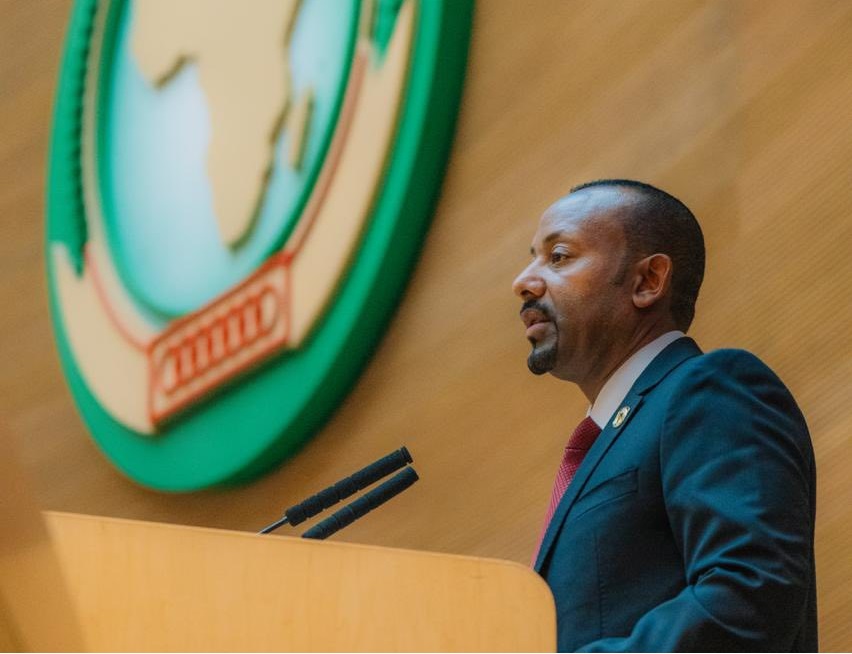
Speaking at the opening of the 39th Ordinary Session of the Assembly of Heads of State and Government of the African Union in Addis Ababa, the Prime Minister said Africa’s future competitiveness will depend on productivity, industrialization, and the effective harnessing of its growing population.
Abiy noted that several African economies are currently among the fastest growing in the world, with projections indicating that the continent’s growth could match or surpass that of Asia. He highlighted Ethiopia’s own economic outlook, citing a projected growth rate of 10.2 percent by the end of the year, and outlined a long-term vision to transition from a low-income economy to a globally competitive one over the next 25 years.
The Prime Minister emphasized that growth must be anchored in industrial development, innovation, and quality job creation, stressing that Africa’s development trajectory should move from dependency toward production and value creation. He also pointed to food self-sufficiency as a critical component of economic resilience.
Human capital development featured prominently in the address. Abiy said Africa’s greatest asset lies in its people, noting that by 2035 the continent is expected to add more young people to the global workforce than the rest of the world combined. He stressed that this demographic reality must be matched with deliberate investments in maternal and child health, early childhood education, and school feeding programs to ensure future productivity.
Urban and rural transformation were also highlighted as integral to economic progress. Abiy referred to ongoing efforts in Ethiopia to modernize rural livelihoods and connect communities to markets, while reshaping urban areas to be greener, more resilient, and human-centered. He said such integrated approaches help align economic growth with social inclusion and environmental sustainability.
The Prime Minister further underlined the role of connectivity and infrastructure in supporting Africa’s economic ambitions, pointing to transport and logistics networks that link markets, facilitate trade, and strengthen regional integration.
Abiy concluded that Africa’s economic rise will not be defined by growth figures alone, but by how effectively the continent invests in its people and builds systems capable of sustaining long-term development.
The AU Summit continues through February 15, with leaders deliberating on economic priorities, peace and security, and the implementation of Agenda 2063.