
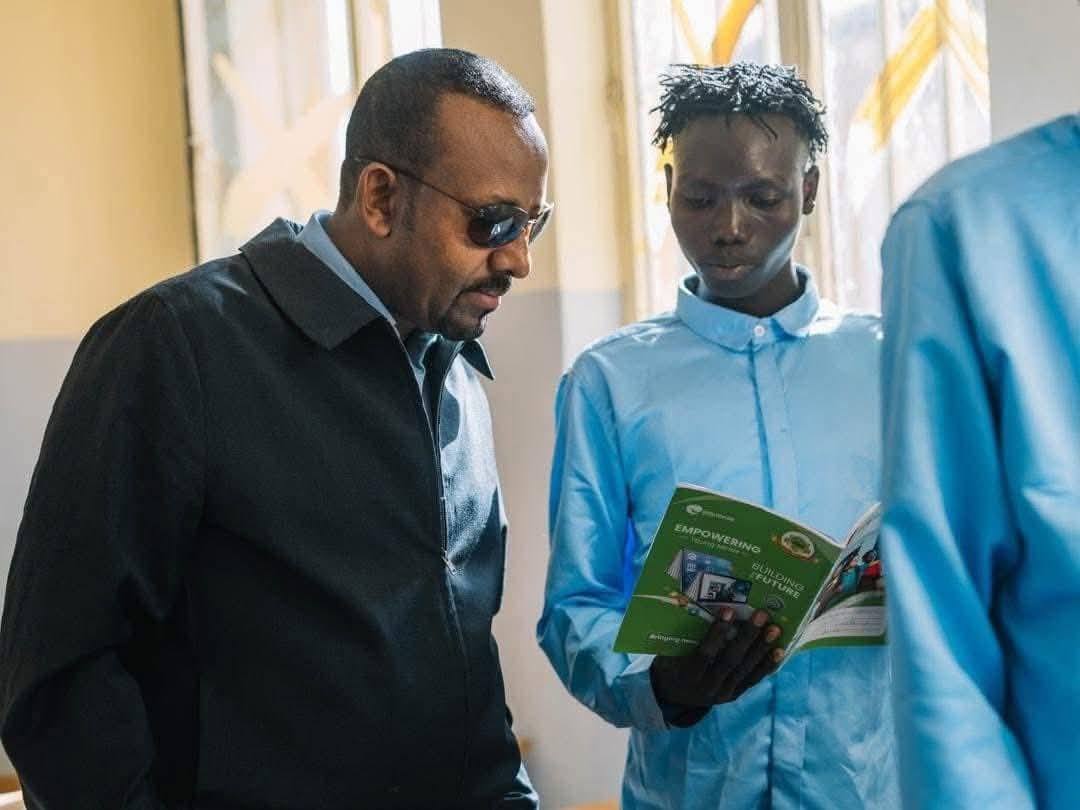
Comprehensive education reforms target to strengthen human capital through access, quality, and infrastructure expansion – GCS
Addis Ababa, April 30, 2026 (FMC) – The Government of Ethiopia is implementing broad, generation-focused reforms in the education sector aimed at addressing deep-rooted structural challenges and strengthening the country’s human capital base, the Government Communication Service (GCS) said.
In a statement, the GCS said the reform-oriented government, since 2018 under the leadership of Prime Minister Abiy Ahmed, identified foundational imbalances in the education system as a critical challenge requiring sustained and structural intervention.
It noted that a key gap in the sector was the practice of enrolling millions of children directly into primary school without pre-primary preparation, a situation that affected students’ readiness, school retention, and overall learning outcomes.
To address this, the government has undertaken a large-scale expansion of pre-primary education infrastructure, constructing more than 34,000 O-Class schools over the past five years. According to the GCS, this expansion has significantly improved children’s cognitive and psychological readiness for formal education, while also widening equitable access, particularly in rural areas.
The statement further emphasized that the initiative serves as a foundational pillar in strengthening Ethiopia’s long-term human resource development.
In parallel, the government has introduced a revised curriculum designed to shift the education system toward practical and research-oriented learning, complementing theoretical instruction.
To improve learning quality, the government has also undertaken measures to address chronic shortages and uneven distribution of textbooks. Nearly 279 million textbooks have been distributed across different education levels, the statement said.
The GCS added that the national “One Book for One Student” initiative is being advanced to ensure each student has access to learning materials. The program is expected to enhance reading culture, strengthen research capacity, improve academic performance, and contribute to better national examination outcomes.
In addition, the government has introduced a nationwide school feeding program as part of efforts to improve student well-being and retention. The program, backed by more than 1.7 billion birr in funding, is being implemented in public schools across the country.
According to the statement, the initiative has helped reduce dropout rates by improving school attendance and supporting students from low-income households to continue their education.
Looking ahead, the government plans to further expand access to pre-primary education through the construction of 1,452 new schools in 727 woredas during the 2019 E.C. (2026/27) academic year. The expansion is expected to bring more than 87,000 additional children into the education system.
The GCS also noted ongoing efforts to strengthen the higher education environment through the construction of laboratories and libraries, as well as the establishment of childcare and innovation centers in universities to improve conditions for students, researchers, and staff.
Overall, the statement said the government’s education reforms are focused on a coordinated expansion of access, quality improvement, and infrastructure development, forming a long-term foundation for human capital formation and national development.