
China, Russia Elevate Strategic Partnership as Xi, Putin Chart Expanded Cooperation Across Key Sectors
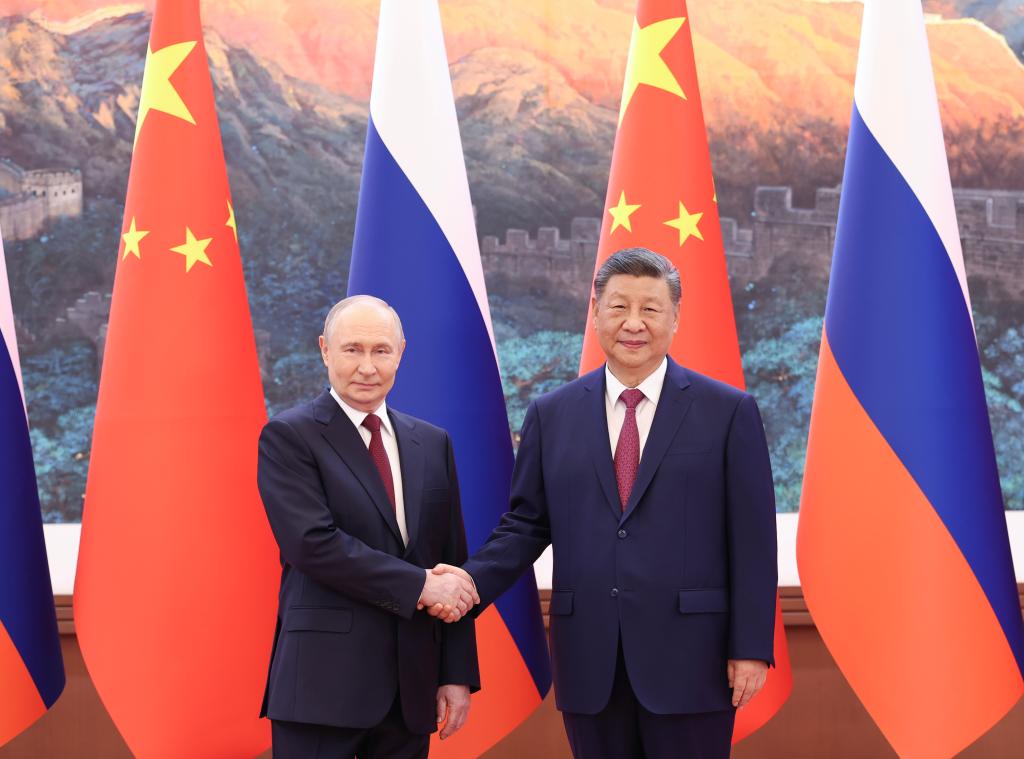
Addis Ababa, May 20, 2026 (FMC) — China and Russia have strengthened their comprehensive strategic partnership following extensive high-level engagements in Beijing, with both sides agreeing to deepen coordination across political, economic, security, and global governance areas.
The developments came during talks between Chinese President Xi Jinping and Russian President Vladimir Putin at the Great Hall of the People, alongside expanded-format discussions, a joint press briefing, and the signing of multiple cooperation agreements, as well as ceremonial exchanges including a banquet and tea conversation.
Both leaders reaffirmed that China-Russia relations have entered a new stage of greater achievements and faster development, grounded in deepening political trust and expanding practical cooperation. Xi Jinping stressed that bilateral ties are built on equality, mutual respect, and mutual benefit, and called for closer alignment of development strategies and full implementation of existing agreements.
Putin described the partnership as having reached an unprecedented level, underscoring it as a model of comprehensive strategic coordination based on long-term cooperation. Both sides highlighted the significance of the 30th anniversary of their strategic partnership and the 25th anniversary of the Treaty of Good-Neighborliness and Friendly Cooperation.
Economic ties continued to expand, with bilateral trade consistently exceeding 200 billion U.S. dollars in recent years, while energy cooperation remains central. Cooperation is also growing in transport, agriculture, science and technology, and industrial development.
Xi called for deeper alignment between China’s 15th Five-Year Plan (2026–2030) and Russia’s development strategy through 2030, with both sides agreeing to expand cooperation in emerging technologies and innovation-driven sectors.
A key outcome of the talks was agreement to advance major cross-border infrastructure projects, including a second railway track on the Zabaikalsk–Manzhouli corridor, expected to significantly boost cargo capacity by 2030. Both sides also noted progress in aviation and road connectivity, as well as expanded use of GLONASS and BeiDou systems in digital logistics.
The two countries issued a joint statement outlining a shared vision for a multipolar world and a new type of international relations based on equality, sovereignty, and non-interference, rejecting unilateralism and bloc confrontation while calling for reform of global governance to reflect emerging economies.
They reaffirmed support for diplomatic solutions to international crises, including Ukraine and Middle East tensions, and reiterated commitment to the United Nations Charter. Both sides also emphasized civilizational diversity and strengthened coordination within the UN, BRICS, G20, SCO, and APEC frameworks.
Xi and Putin also jointly attended the opening of the China-Russia Years of Education, highlighting expanded cooperation in education, youth exchange, and academic collaboration.
The engagements concluded with the signing of multiple agreements and reaffirmation of sustained high-level coordination, reflecting what both sides described as a resilient and steadily advancing strategic partnership.