
BUILDING DESTINATIONS, REVEALING ETHIOPIA: THE DINE FOR NATION TRANSFORMATION
Addis Ababa, June 30, 2026 (FMC) — Across Ethiopia’s diverse regional landscapes, a new tourism geography is taking shape—one defined not only by natural beauty and historical depth, but by structured destination development that reimagines how places are accessed, experienced, and connected.
At the center of this transformation is the Dine for Nation initiative, a flagship national program that introduced a coordinated model of destination development anchored in three major sites: Gorgora, Wenchi, and Koysha. Together, these projects reflect a strategic shift from fragmented tourism attractions to integrated, experience-based destinations designed to unlock underutilized natural and cultural assets.
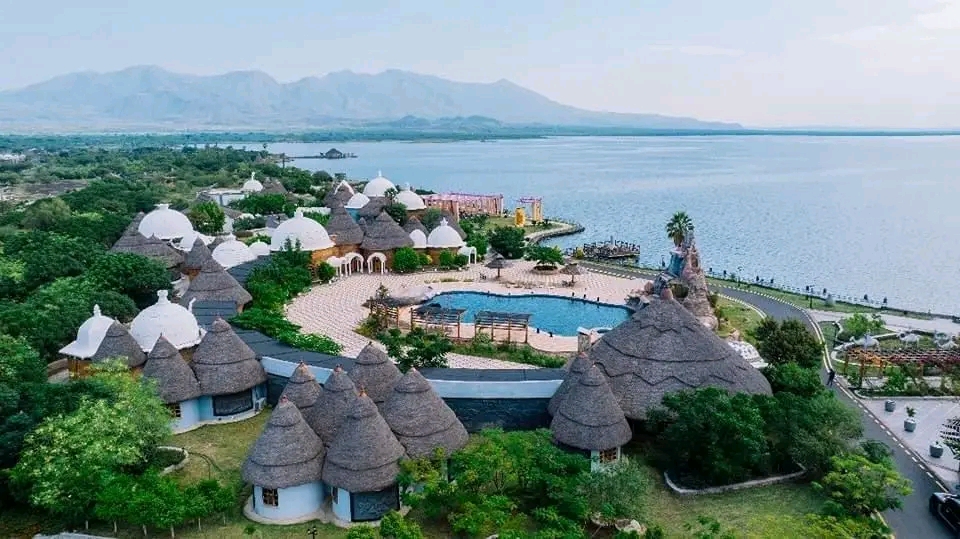
In the northern lakeside landscapes of Amhara, the Gorgora Project has reconfigured the Lake Tana shoreline into an organized tourism environment. The centerpiece, the Gorgora Eco Resort, introduces structured hospitality within a region already distinguished by one of the continent’s richest historical ecosystems. Lake Tana is home to ancient monastic islands and centuries-old church traditions, while nearby Gondar preserves the architectural legacy of royal castles and imperial heritage. In this context, Gorgora functions as a modern access point to a wider historical corridor, linking lake ecology, religious heritage, and cultural tourism into a single navigable destination system.
In Oromia, the Wenchi Project reshapes the volcanic landscape of Wenchi Crater Lake into a structured eco-tourism destination centered on the Wenchi Eco Lodge. The crater’s dramatic geography—its deep lake, surrounding cliffs, island monastery, and natural hot springs—has long existed as an underdeveloped attraction with limited accessibility. Through improved infrastructure, visitor pathways, and hospitality services, the site has been repositioned as a managed experience environment. Wenchi also connects conceptually to Ethiopia’s broader Rift Valley system, aligning it with a chain of volcanic lakes and ecological sites that strengthen the country’s eco-tourism circuit and expand visitor movement beyond traditional heritage routes.
In the southwest, the Koysha Project represents the most expansive landscape-driven development under the initiative. Anchored by the Halala Kella Resort, the project integrates river valley systems, highland scenery, and ecological corridors within the Omo basin region. This area, long recognized for its cultural diversity and ecological richness, has historically remained less accessible due to limited infrastructure. Koysha addresses this gap by introducing structured hospitality and access routes that connect remote landscapes to the national tourism network, gradually linking ecological preservation with tourism-led economic activity.
Together, these three destinations form a new tourism architecture that complements Ethiopia’s established heritage core. While sites such as Lalibela, Axum, Gondar, Harar, and the Simien Mountains represent the country’s historical and cultural foundation, the Dine for Nation projects extend the tourism map into previously underdeveloped natural landscapes. Rather than replacing heritage tourism, they broaden its spatial and economic reach—creating a dual system where history and landscape reinforce each other.
This transformation reflects a broader shift in how Ethiopia leverages its hidden tourism potential. Previously isolated or difficult-to-access natural sites are being reimagined as structured destinations supported by infrastructure that enables tourism flow, visitor experience, and service delivery. The emphasis is increasingly on activation—turning landscapes into economically productive spaces while maintaining ecological and cultural integrity.
Economically, the sector is becoming more central to local development dynamics. Tourism-linked infrastructure, hospitality services, and community participation around these destinations are generating new employment opportunities and expanding regional value chains. Local economies are increasingly integrated into the tourism system through services, guiding, cultural presentation, and small enterprise participation.
In this evolving framework, Ethiopia’s tourism identity is transitioning toward a more interconnected model—where heritage, nature, and infrastructure operate as parts of a single national system. Through Gorgora, Wenchi, and Koysha, the country is not only presenting destinations, but actively constructing a structured tourism economy that links geography, culture, and development into one coordinated national vision.