
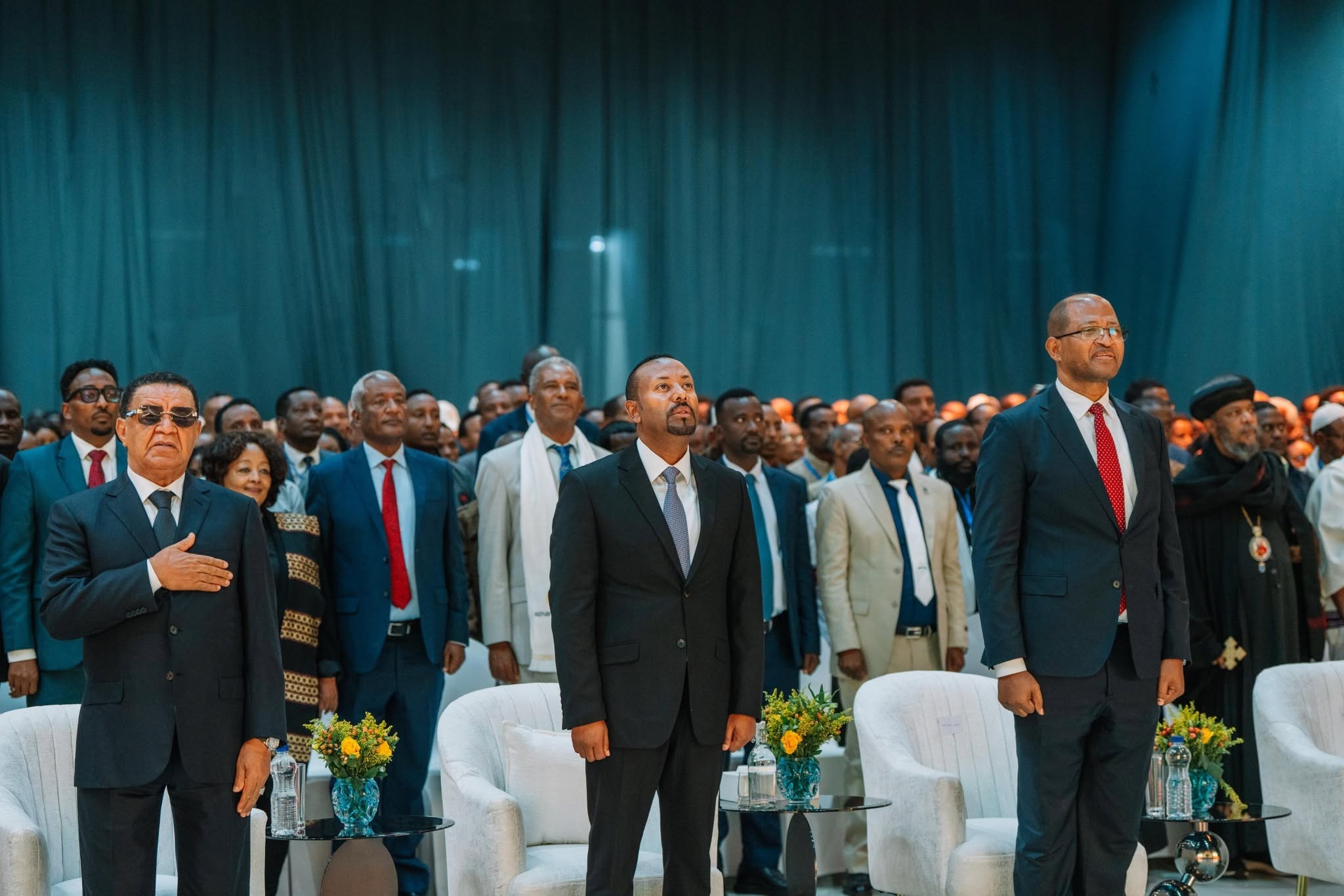
Can Dialogue Rewrite History?
Ethiopia Embarks on Its Most Ambitious Search for National Consensus
Addis Ababa, July 16, 2026 (FMC) — History is not only shaped by battles and confrontations; sometimes, it is rewritten through dialogue, understanding and the courage to seek common ground.
For generations, Ethiopia’s story has been told through triumphs and trials, extraordinary resilience and profound challenges. It is the story of an ancient civilization that has endured the rise and fall of kingdoms, resisted foreign aggression, inspired a continent’s quest for freedom, and remained one of Africa’s oldest sovereign states.
Yet it is also a story marked by recurring political divisions, competing historical narratives, and conflicts whose consequences have echoed across generations.
Today, Ethiopia is attempting something remarkably different.
Instead of allowing disagreement to be settled through confrontation, it is placing dialogue at the center of one of the most ambitious political undertakings in its modern history.
The Ethiopian National Dialogue is not merely another conference on the national calendar. It is an unprecedented effort to create a common platform where thousands of Ethiopians, representing diverse communities, backgrounds, institutions and perspectives, can deliberate on questions that have shaped the country’s political life for decades.
The process carries an ambition that reaches beyond the walls of the conference hall. It seeks to cultivate a political culture in which listening becomes as important as speaking, consensus is valued over confrontation, and national interests rise above competing differences.
Whether it ultimately succeeds remains a question only time can answer.
But the dialogue itself has already begun to redefine how many Ethiopians—and many across Africa—think about addressing complex national challenges.
More Than a Conference
Throughout the opening of the National Dialogue, one message echoed consistently from Ethiopian leaders and continental and regional figures: this is not simply the launch of another political event.
It is a national undertaking that many described as a defining moment in Ethiopia’s contemporary history.
Prime Minister Abiy Ahmed characterized the process as a rare opportunity for Ethiopians to “write a new chapter” in their nation’s history through their own collective deliberation.
Rather than repeating political traditions that often began with heated rhetoric and descended into confrontation, he called for a new political culture rooted in dialogue, mutual respect and reasoned discussion.
For the Prime Minister, Ethiopia’s greatest challenge has never been the existence of differences themselves.
It has been the country’s repeated tendency to allow those differences to evolve into cycles of political conflict.
Breaking that cycle, he argued, begins not with victory over one another, but with the willingness to sit together and seek common ground.
The National Dialogue, he said, offers exactly that opportunity—a chance to replace a politics of confrontation with one of consultation, ensuring that future generations inherit stronger institutions rather than unresolved divisions.
The Pen That Writes Tomorrow
One image returned repeatedly throughout the opening session.
The Prime Minister described the dialogue as placing before Ethiopians a “pen and parchment” with which they could write the next chapter of their country’s history.
It was a metaphor that captured the essence of the moment.
History, he suggested, is not only inherited.
It is also written.
Sometimes by soldiers.
Sometimes by politicians.
And sometimes by ordinary citizens willing to listen to one another.
That responsibility, he said, rests today with nearly 4,000 representatives gathered from across Ethiopia following years of nationwide grassroots consultations that produced eight major agenda pillars for deliberation.
Their task is not simply to debate today’s disagreements.
It is to shape tomorrow’s possibilities.
The Architecture of a National Conversation
Behind the historic gathering in Addis Ababa lies a process built over years of preparation, consultation and public engagement.
The National Dialogue Commission has emphasized that the conference did not emerge from a single decision or a closed political process. Rather, it was shaped through extensive consultations that sought to capture the concerns, aspirations and priorities of citizens from different parts of Ethiopia.
Those consultations helped identify eight major agenda pillars that now guide the national deliberations. They reflect some of the most fundamental questions facing the country, including issues related to state-building, identity, history, governance and social cohesion.
The scale of participation is one of the defining features of the process.
Around 4,000 representatives have gathered to deliberate over three weeks, bringing together voices from diverse communities, social groups and institutions with the shared responsibility of seeking areas of consensus.
For the National Dialogue Commission, the objective is not to eliminate differences. In a country as diverse and historically complex as Ethiopia, differences are inevitable.
The ambition is to create a framework where those differences can be discussed peacefully, understood through dialogue and transformed into foundations for a stronger national future.
Africa Is Watching
The significance of Ethiopia’s National Dialogue has also drawn attention beyond its borders.
Continental and regional figures have highlighted the broader implications of Ethiopia’s effort, describing it as an opportunity not only for national reconciliation but also as a reflection of Africa’s growing emphasis on peaceful, homegrown approaches to resolving complex challenges.
African Union Commissioner for Political Affairs, Peace and Security Bankole Adeoye described the dialogue as a testimony and landmark in Ethiopia’s pursuit of sustainable peace and development.
He praised the depth of participation and reaffirmed the African Union’s support for the process, emphasizing that Ethiopia’s peace, stability and unity carry importance for the wider region and the continent.
As the diplomatic capital of Africa and the seat of the African Union Commission, Ethiopia’s stability, he noted, has significance far beyond its own borders.
The AU Commissioner’s message reflected a broader continental expectation: that successful dialogue processes can demonstrate the power of inclusive engagement and African-led solutions.
The Strength of Homegrown Solutions
That message was echoed by IGAD Executive Secretary Workneh Gebeyehu, who emphasized the importance of Ethiopia looking inward to its own traditions of reconciliation and consensus-building.
He noted that no country has built lasting prosperity through conflict, arguing that nations that have achieved progress are those that prioritize dialogue, listening and peaceful resolution of differences.
Ethiopia, he said, is not a nation searching for identity. It is a country with an ancient civilization and longstanding traditions of mediation and reconciliation.
For Workneh, these indigenous mechanisms represent valuable resources that can help address present challenges.
Rather than seeking external answers to internal questions, he encouraged Ethiopians to draw upon their own historical experiences and cultural assets to find solutions.
He described the National Dialogue as an opportunity for Ethiopia to demonstrate that disagreements can be resolved through dialogue and mutual respect, offering lessons for the wider Horn of Africa and beyond.
Lessons From Nigeria’s Experience
Former Nigerian President and African Union Special Envoy for the Horn of Africa Olusegun Obasanjo brought another important perspective to the discussion—the lessons of history.
Drawing from Nigeria’s own experience navigating complex national challenges, Obasanjo emphasized the dangers of internal division and the devastating consequences of conflicts within societies.
He stressed that internal struggles do not benefit nations and can inflict deeper damage than confrontations with external adversaries.
For this reason, he urged Ethiopians to protect their unity and recognize the importance of resolving differences through peaceful engagement.
Obasanjo praised Ethiopia’s National Dialogue Commission for its preparations and described the process as an important opportunity to build a stronger and more unified society.
He also highlighted Ethiopia’s potential to remain a leading force in Africa and a center of opportunity globally, expressing confidence that these aspirations can be achieved through collective commitment and a shared national vision.
Beyond the Conference Hall
The true measure of the National Dialogue will not be determined only by the discussions taking place over the coming weeks.
Its lasting significance will depend on whether the process contributes to a deeper culture of consultation, strengthens trust among citizens and creates mechanisms capable of carrying national consensus into the future.
The challenges before the dialogue are substantial. Ethiopia’s political history is complex, and the issues being discussed touch on deeply held experiences, identities and perspectives.
Yet those who have spoken at the opening of the process have emphasized a common belief: that difficult questions cannot be avoided forever, and that sustainable solutions require the courage to confront them through conversation.
The dialogue is therefore not simply about reaching agreement on individual issues.
It is about establishing a new way of engaging with disagreement itself.
A Question for History
Ethiopia’s National Dialogue has placed a historic question before the nation:
Can a country with such a rich history and profound diversity transform its challenges into a foundation for unity?
The answer will not be found in a single speech, a single meeting or a single moment.
It will emerge through the willingness of participants to listen, understand and search for common ground.
As Prime Minister Abiy Ahmed noted, the opportunity before Ethiopians is like a pen and parchment placed in their hands.
What they write with it will become part of the country’s history.
And history, ultimately, will decide whether this was the moment when Ethiopia chose not only to remember its past—but to reshape its future.