
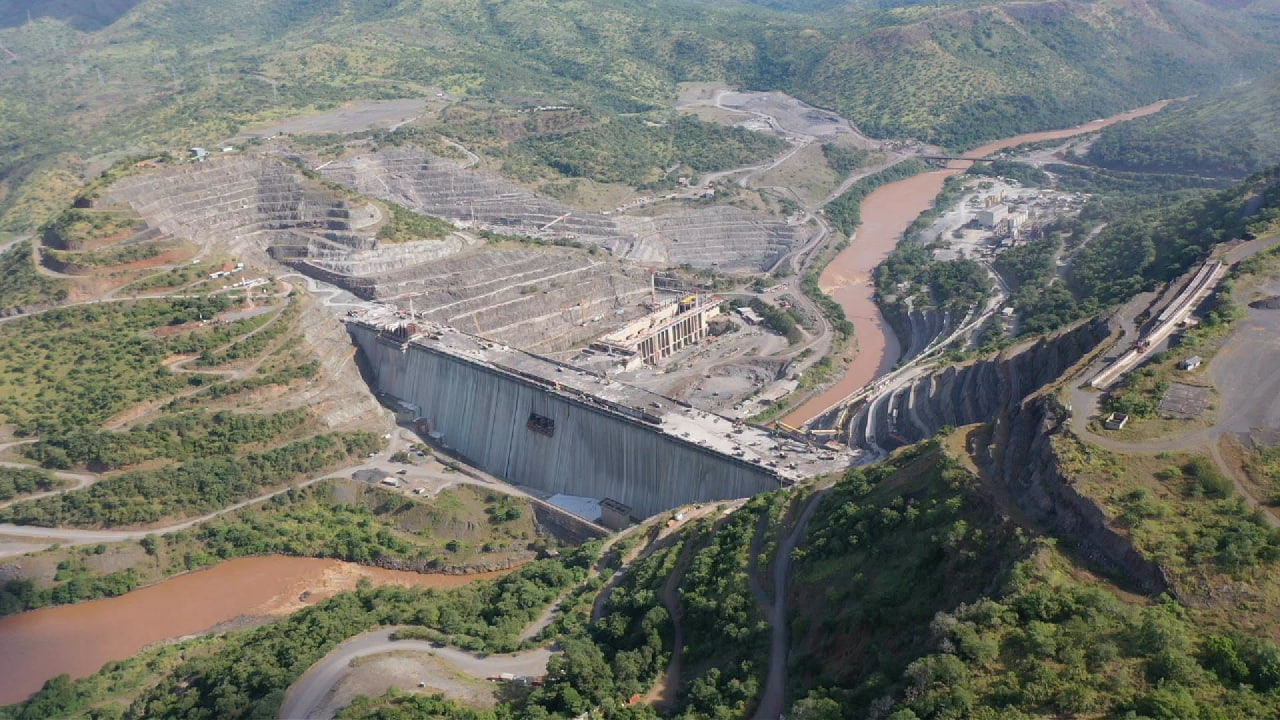
Koisha Hydropower Project Reaches New Construction Milestone with Completion of First Powerhouse Concrete Phase
Addis Ababa, July 21, 2026 (FMC) — Construction of the Koisha Hydropower Project has reached another major milestone with the successful completion of the first phase of structural concrete works for the project’s powerhouse, marking further progress on one of Ethiopia’s largest renewable energy developments.
Project Civil Engineer Yitagesu Ayalew said the Koisha Hydropower Project ranks as Ethiopia’s third-largest power generation scheme after the Grand Ethiopian Renaissance Dam (GERD) and the Gibe III Hydropower Project.

He noted that more than seven million cubic meters of overburden were excavated before roller-compacted concrete (RCC) placement for the dam began.
According to the engineer, more than 6.2 million cubic meters of RCC have so far been placed out of the project’s planned 7.725 million cubic meters, with construction progressing around the clock through a two-shift, 24-hour work schedule. On average, over 100,000 cubic meters of RCC are being placed each month to accelerate implementation.
Yitagesu said the dam has now reached an elevation of 623 meters above sea level, bringing its current structural height to 136 meters.
With the first phase of structural concrete works for the powerhouse now completed, preparatory activities are underway to begin the second phase of concrete construction, he added.
The project is designed to house six turbines, each with an installed generation capacity of 300 megawatts, giving the hydropower plant a total installed capacity of 1,800 megawatts. He said electromechanical installation works are advancing alongside the manufacturing of components for all six turbines.
The engineer further stated that excavation of 7.7 million cubic meters of soil and hard rock has been completed to facilitate construction of the dam’s spillway gates, while structural concrete works for the spillway have reached 45 percent completion.
He added that advanced engineering technologies are being deployed to stabilize varying geological formations encountered during excavation, ensuring the dam’s long-term structural integrity.
Yitagesu also noted that Ethiopian engineers participating in the project are benefiting from significant technology and knowledge transfer, strengthening the country’s capacity to undertake similar large-scale infrastructure projects in the future.
Once completed, the reservoir created by the dam is also expected to enhance the area’s tourism potential, according to information from Ethiopian Electric Power.