
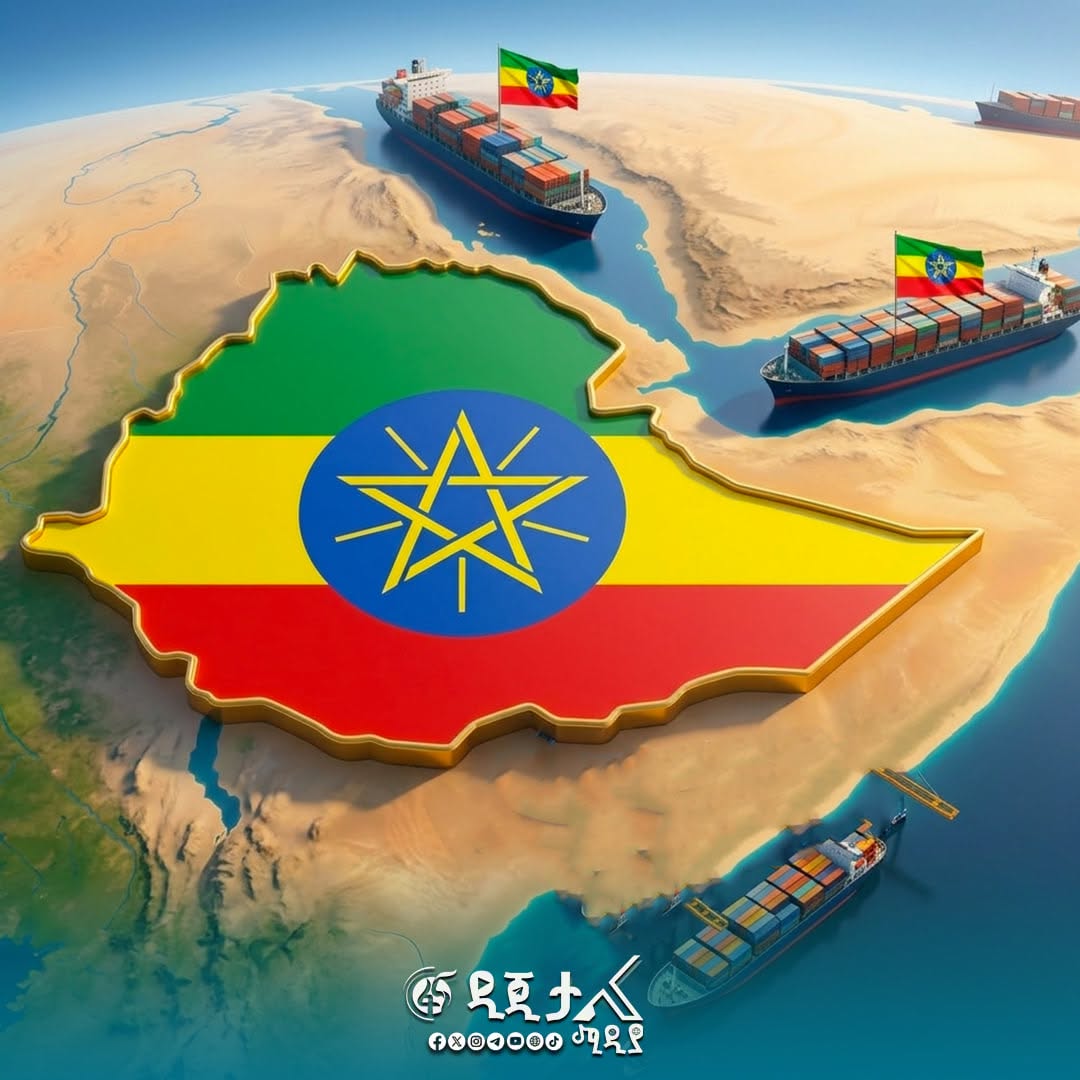
𝐓𝐇𝐄 𝟏𝟑𝟎-𝐌𝐈𝐋𝐋𝐈𝐎𝐍-𝐒𝐓𝐑𝐎𝐍𝐆 𝐏𝐀𝐑𝐀𝐃𝐎𝐗: 𝐑𝐄𝐂𝐋𝐀𝐈𝐌𝐈𝐍𝐆 𝐄𝐓𝐇𝐈𝐎𝐏𝐈𝐀’𝐒 𝐁𝐋𝐔𝐄 𝐇𝐎𝐑𝐈𝐙𝐎𝐍
Addis Ababa, July 23, 2026 (FMC) — Ethiopia stands proudly among the world’s most populous nations, yet it remains confined by the paradox of landlocked status. However, when global observers label it the largest landlocked country, historical records reveal a vastly different reality.
It is impossible to envision Ethiopia without the Red Sea, just as the Red Sea cannot be divorced from Ethiopian history.
For millennia, Ethiopia maintained a direct, sovereign stake in the Red Sea, exercising authority over territories far beyond its current borders. Its rich heritage is inextricably bound to the maritime trade of the Red Sea, the glorious Aksumite civilization, flourishing commercial fleets, and extensive overseas influence.
Consequently, its demand for sea access is neither a luxury nor a passing ambition; it is a legitimate historical claim and an essential imperative for national survival.
A careful examination of historical archives shows that since the golden age of Aksum, Ethiopia minted its own currency and governed the strategic port of Adulis.
Through this vital gateway, the nation commanded the primary maritime trade routes linking the Indian Ocean to the Mediterranean Sea, cementing its status as a formidable global maritime power.
Historical documents further confirm that visionary monarchs—such as Emperor Amde-Tsion and Emperor Zer’a-Yaqob—established robust institutional frameworks to safeguard the Red Sea coastline and the vital Zeila trade corridor.
Unfortunately, this sovereign maritime presence was repeatedly undermined by external conspiracies and imperial interference.
During the late nineteenth century, European imperial powers carved up the African continent during the scramble for colonies. Italy, arriving late to this colonial enterprise, cast its covetous eyes on Ethiopia, the sole uncolonized bastion in #africa.
Great Britain, the dominant colonial power of the era, acted as a willing accomplice to Italian ambitions.
Most notoriously, through the fraudulent manipulation of the 1884 Hewett Treaty, Britain handed the historic port of Massawa over to foreign control.
Decades later, aided by external adversaries hostile to Ethiopia’s sovereignty, domestic militant factions plunged the country into more than thirty years of destructive civil conflict.
Generations of patriotic Ethiopians willingly sacrificed their lives to defend their nation’s maritime heritage. In a fierce engagement fought in Massawa in February 1990 (February 1982 E.C.), over 9,000 Ethiopian soldiers made the ultimate sacrifice.
The unwavering courage of General Tadesse Tesema and Colonel Belay Aschenaki—who wrapped themselves in the Ethiopian flag and chose death over surrender—remains an eternal monument to this truth.
Today’s generation draws inspiration from this profound legacy and demands justice as it reclaims its rightful path to the sea.
Today, a dynamic nation of over 130 million citizens and an influential BRICS member is forced to endure the economic handicap of being landlocked, bearing exorbitant annual logistics costs that needlessly stifle its national development.
Therefore, Ethiopia’s call for a sea outlet transcends history; it is a matter of tangible economic reality, legal ownership, and existential survival fully supported by international maritime law.
The circumstance whereby Ethiopia—a legitimate maritime power for thousands of years—was stripped of its coastline through the arbitrary decisions of unchosen and legally unrepresented militant factions represents a monumental historical injustice.
The rise of a visionary political system in Ethiopia committed to dismantling this illegality has transformed the seaport question into an indispensable national priority.
Steering this transformative agenda, Prime Minister Abiy Ahmed (PhD) has brought the maritime strategy to the forefront.
Highlighting the urgency of the matter, Prime Minister Abiy Ahmed eloquently emphasized the gravity of the issue, stating, “For a growing population, gaining access to the sea is not a luxury, but a matter of survival.”
Beyond serving as a cost-effective commercial outlet, a sovereign seaport is a vital anchor for national security and geopolitical equilibrium.
Securing maritime access drastically reduces trade transaction expenses, enhances the global market competitiveness of domestic products, bolsters the naval capabilities required to protect territorial integrity, and generates crucial diplomatic leverage, positioning Ethiopia as an influential stakeholder in Red Sea security dynamics.
Ultimately, Ethiopia’s peaceful, diplomatic, and legal efforts to secure sea access represent a principled pursuit of natural and historical justice.
By anchoring its strategy in international legal frameworks, mutually beneficial economic development, and robust regional integration, Ethiopia is poised to reclaim its maritime destiny and safeguard the shared prosperity of millions.