
The Fault Line Ethiopia Can No Longer Afford to Leave Exposed
Addis Ababa, August 14, 2026 (FMC) — There are moments in a nation’s history when the line between an internal political crisis and a wider national-security threat becomes dangerously thin.
Ethiopia is confronting such a moment. What may appear, on the surface, to be another chapter in the long and troubled story of the banned, illegal and defunct TPLF group is, in reality, part of a much larger strategic landscape in which old political wounds, renewed militarization and external calculations are beginning to intersect.
That is precisely what makes the current situation so troubling. The danger does not depend on every actor sharing the same blueprint. Different powers can pursue different ambitions and still arrive at the same pressure point.
One may be driven by rivalry over the Nile, another by calculations around the Red Sea, another by hostility toward Ethiopia’s growing economic and diplomatic weight. Yet when those pressures converge on an already-fractured political space, their combined effect can be far greater than any one of them acting alone.
And the TPLF’s legacy of political fragmentation has left exactly such a space.
For years, the group cultivated a political order in which identity was elevated above common citizenship and difference was transformed from a source of diversity into an instrument of power. The scars of that era are not confined to old political arguments.
They remain visible in broken trust, hardened narratives and the persistent attempt to turn Ethiopia’s pluralism against itself.
The most disturbing part is that this machinery of division has not entirely disappeared. It has simply changed its vocabulary.
Today, the same political culture is being accompanied by renewed militarization in Tigray region. Young people are once again being pulled toward the machinery of war, while families are left to contemplate a future in which their children may become casualties of political ambitions that have nothing to do with their dreams.
Recruitment, intimidation and reported killings of those resisting mobilization reveal the terrible logic of a politics that cannot imagine its future without a gun in its hand.
A generation that should be inheriting a future is instead being asked to inherit a battlefield.
That is not political leadership. It is the recycling of human suffering for political survival.
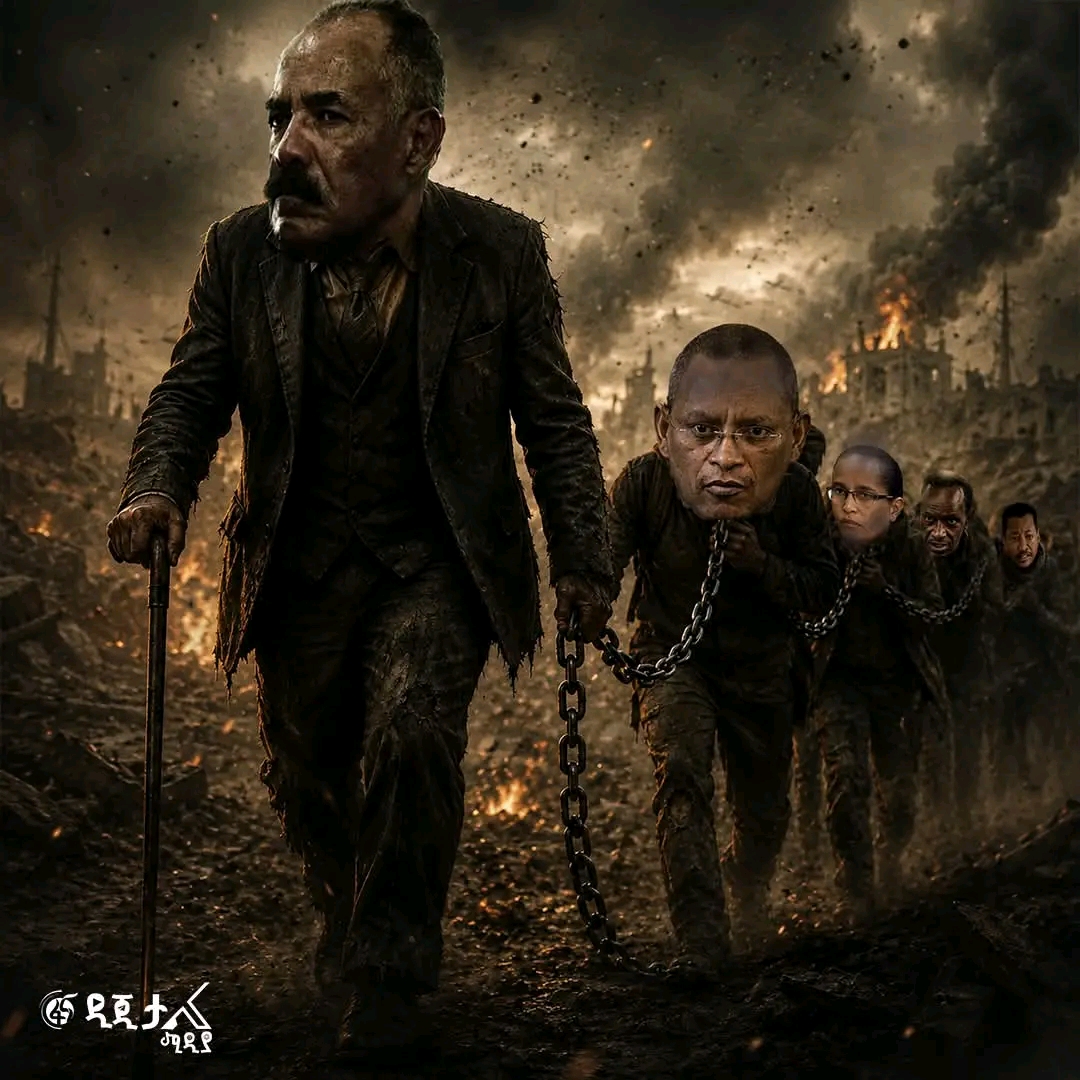
The so-called “Tsimdo” alignment adds another disturbing dimension. The reported convergence between hardline TPLF elements and the Eritrean regime demonstrates how quickly an internal fault line can acquire a regional strategic dimension.
Yesterday’s enemies can become today’s tactical partners when the objective is reduced to weakening Ethiopia. The contradiction is glaring, but the underlying calculation is not difficult to understand: keep Ethiopia distracted, keep its internal fractures open and make every step toward national consolidation more costly.
This is where Ethiopia must look beyond the immediate headlines.
The country is navigating a regional environment in which several strategic questions are unfolding simultaneously.
The Nile remains a matter of sovereign national development and regional diplomacy. The Red Sea carries profound economic and strategic significance. Ethiopia’s expanding economy and growing regional role inevitably alter established calculations.
None of these developments needs to be directed from one center for their pressures to accumulate. Separate currents can flow from different directions and still produce one turbulent sea.
The answer is therefore not to imagine an enemy behind every event. The answer is to deny every adversary the vulnerabilities through which pressure can be amplified.
That requires confronting the political inheritance of the outlawed TPLF group with unusual clarity. Its record of division, repression, economic exploitation and conflict cannot be romanticized simply because the political vocabulary surrounding it has changed.
Nor should its claims of representing Tigray region be confused with the aspirations of the millions of people who have repeatedly paid the price of its political choices.
The people of Tigray region are not synonymous with the TPLF. Their suffering is not the TPLF’s mandate. Their children are not its military reserve. Their future cannot remain collateral damage in an endless struggle for political relevance.
For Ethiopia, this is ultimately about something larger than one organization.
It is about whether the country will continue allowing old political fractures to serve as gateways for new strategic pressures—or whether it will finally turn those fractures into foundations for resilience.
The choice is stark. One path leads back to the familiar landscape of recruitment, confrontation, displacement and political manipulation. The other leads toward reconstruction, economic opportunity, institutional strength and a political culture in which differences are negotiated rather than weaponized.
Ethiopia has already paid an extraordinary price for politics that made division a method of governance. It should not be asked to pay the same bill twice.
The banned, illegal, outlawed and defunct TPLF group may attempt to preserve a political past built around confrontation, but Ethiopia’s future is moving in another direction. Its economy is expanding, its strategic horizons are widening, and its national interests are becoming increasingly inseparable from the wider economic and geopolitical transformation of the Horn of Africa.
That transformation demands something the politics of fragmentation cannot provide: a country sufficiently confident in its unity that external pressure finds no internal fracture wide enough to enter.
The task, then, is not merely to defeat another round of destructive politics. It is to close the fault line itself.
And once that fault line is closed, those waiting to exploit it will discover something Ethiopia has always possessed in abundance: a people whose strength becomes formidable when their differences are no longer turned against one another.