

Ethiopia Challenges Double Standards in Abay Water Rights and Red Sea Access
Addis Ababa, August 19, 2026 (FMC) — Ethiopia is advancing diplomatic, legal and economic approaches to challenge what it views as double standards in regional positions on Abay water rights and Red Sea access, while promoting reciprocity and shared benefits in the Horn of Africa.
The approach questions calls by some parties to restrict Red Sea affairs exclusively to littoral states while marginalizing Ethiopia despite its population of more than 130 million and significant geopolitical and economic weight, while those same parties seek extensive rights over Abay waters.
The Ethiopian position maintains that if strategic partnership and shared benefits are accepted as fundamental principles for managing Abay waters, the same reciprocal logic should apply to maritime access and economic interests in the Red Sea.
Ethiopia is also exploring legal and economic mechanisms available under international frameworks governing transboundary waters, including the principle of payment for ecosystem services.
The argument points to Ethiopia’s contribution of about 86 percent of the Abay’s total water flow and its efforts in recent years to expand vegetation cover through the planting of more than 48 billion trees across watershed areas.
According to the Ethiopian perspective, these efforts have contributed to improving water quality, increasing water availability and reducing sediment accumulation in reservoirs downstream.
The approach draws on international experiences involving financial compensation for environmental protection and the sustainability of river systems, including arrangements between the United States and Canada, the United States and Mexico, and China.
Ethiopia maintains that it has provided environmental and water-related services to downstream countries for decades without compensation, while international practice allows countries providing ecosystem services to seek financial compensation for benefits generated for downstream users.
The Ethiopian approach also distinguishes between its relations with Sudan and Egypt.
Relations with Sudan are characterized as those of immediate neighbors with intertwined social destinies, with the two peoples sharing borders, language and culture. The Grand Ethiopian Renaissance Dam (GERD) is viewed in this context as providing direct benefits to Sudan, particularly by regulating water levels, protecting Sudanese dams from sediment accumulation and providing electricity.
By contrast, the Ethiopian perspective attributes persistent tensions with Egypt to continued reliance on colonial-era legacies and historical attempts at exclusive control over Abay waters. It calls for a more pragmatic approach that recognizes the emerging reality based on greater equality among basin countries.
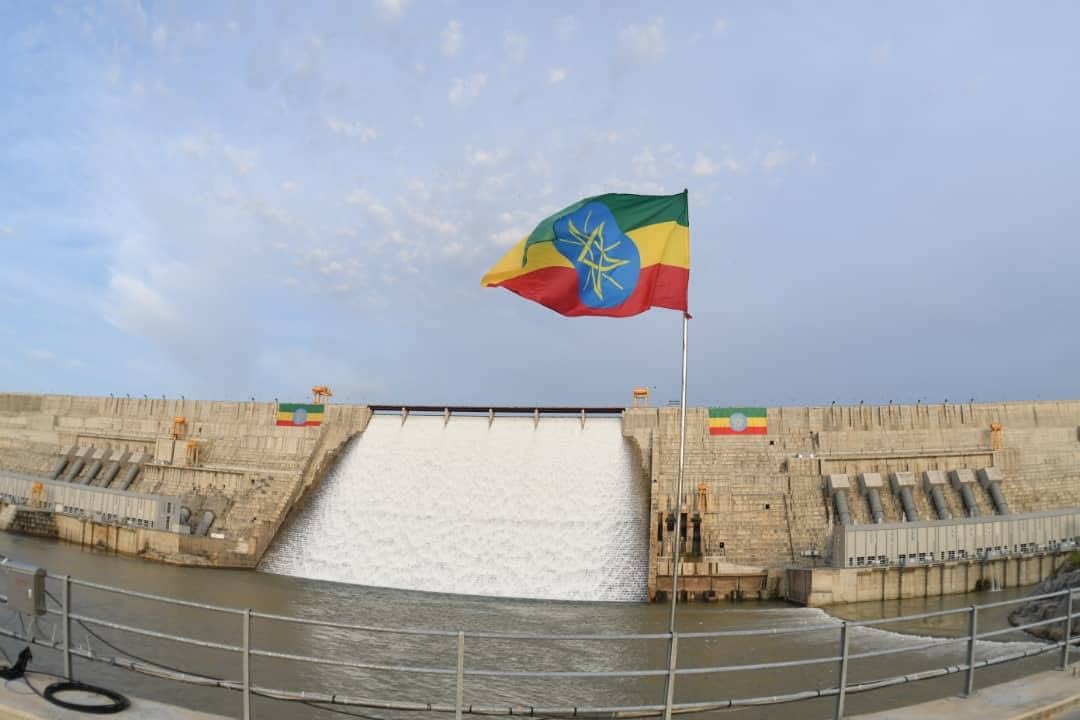
The Ethiopian position has also raised concerns over research and studies published by research centers and universities questioning the safety of Ethiopia’s water infrastructure, including recent claims concerning the safety of GERD’s embankment dam.
Ethiopia maintains that its engineering and technical teams have examined and challenged those studies, identifying what they describe as manipulation of data and mathematical models used in the research. Relevant publishers and universities have also been contacted to clarify what Ethiopia considers scientific fabrication.
The Ethiopian perspective concludes by emphasizing that water resources and GERD constitute an existential national issue, while calling on Ethiopian researchers and academics inside and outside the country to engage actively in producing objective research that advances Ethiopia’s rights and counters misleading narratives in international forums.