
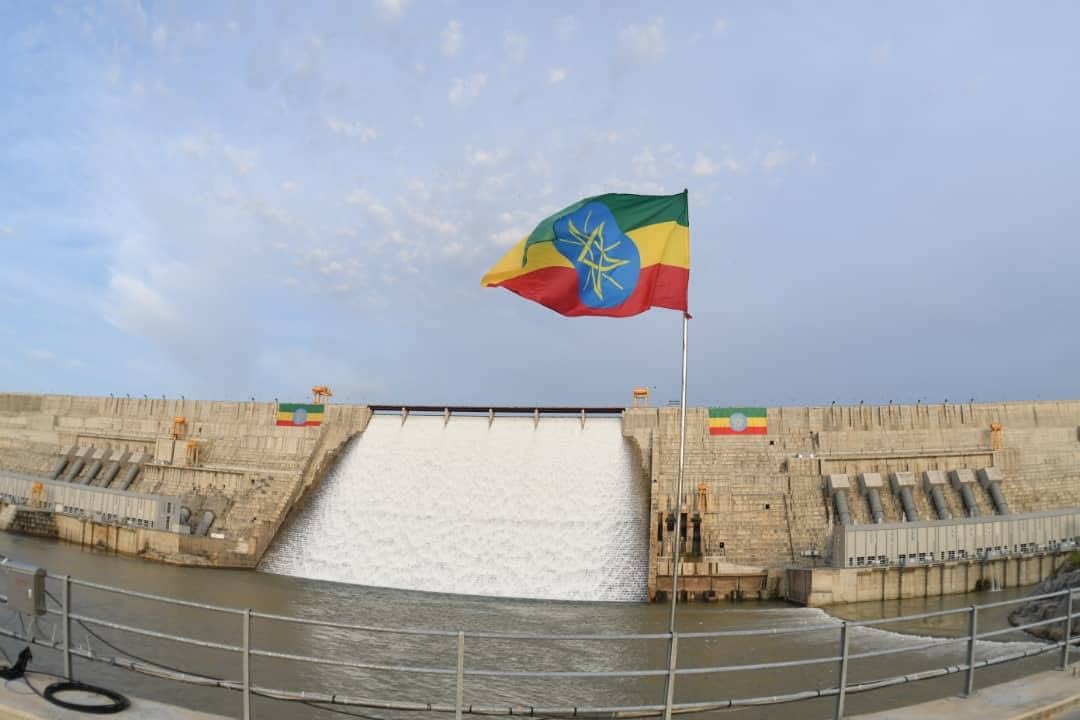
African Analyst Condemns Cairo’s Confrontational Posturing and Bellicose Threats Targeting Ethiopian Dams
Addis Ababa, August 21, 2026 (FMC) — In a sharp rebuke of downstream posturing, prominent African political analyst Dr. David Matsanga has strongly condemned Cairo’s aggressive rhetoric and confrontational approach toward Ethiopia’s transboundary water developments, exposing what he termed a manufactured strategy of regional political pressure.
Speaking to Indian news website Firstpost in a Zoom call from Helsinki, Finland, Matsanga delivered a forceful critique of Egypt’s escalating campaign over Ethiopia’s water-resource development, questioning why Cairo was “panicking” over Ethiopia’s plans for additional dams and challenging what he described as Egypt’s increasingly confrontational approach to the Nile Basin question.
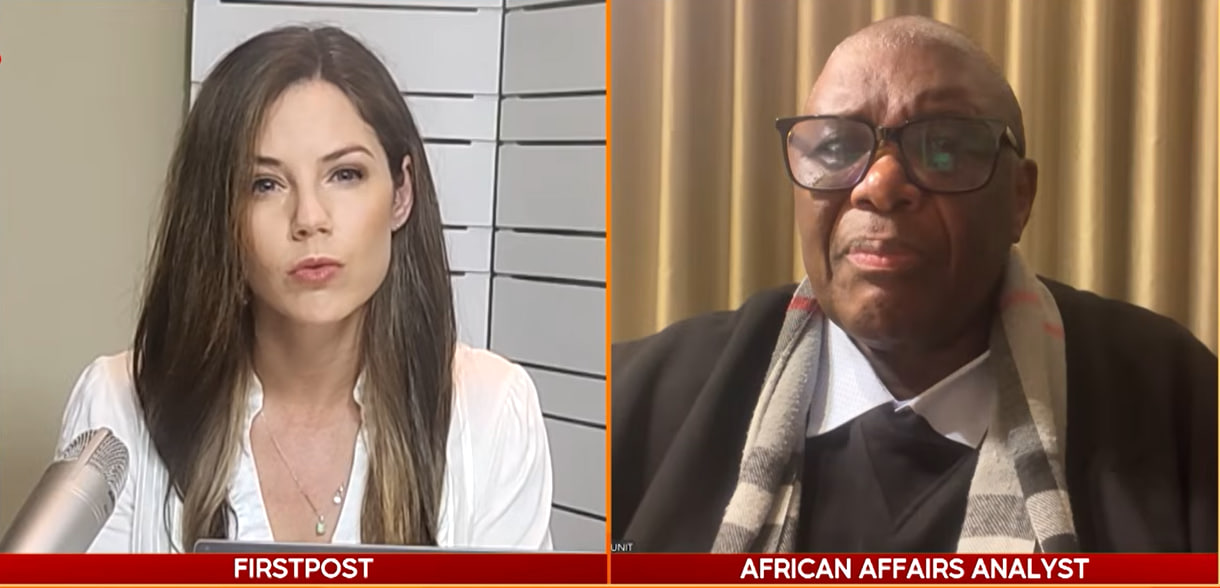
Matsanga argued that the Nile Basin already has an established framework covering the river from its upstream reaches in Uganda to the Mediterranean Sea. Rather than turning Ethiopia’s development plans into another source of confrontation, he said Egypt should bring its concerns to the negotiating table and engage the basin countries over how the shared resource should be used.
He put a direct question to Cairo: how much water does Egypt actually want, and how much should be used where? Drawing on his experience as a peace mediator, Matsanga said this is where any serious effort to resolve the issue should begin. Egypt, he argued, should clearly state its requirements and negotiate them with the countries sharing the basin instead of relying on threats and escalating political pressure.
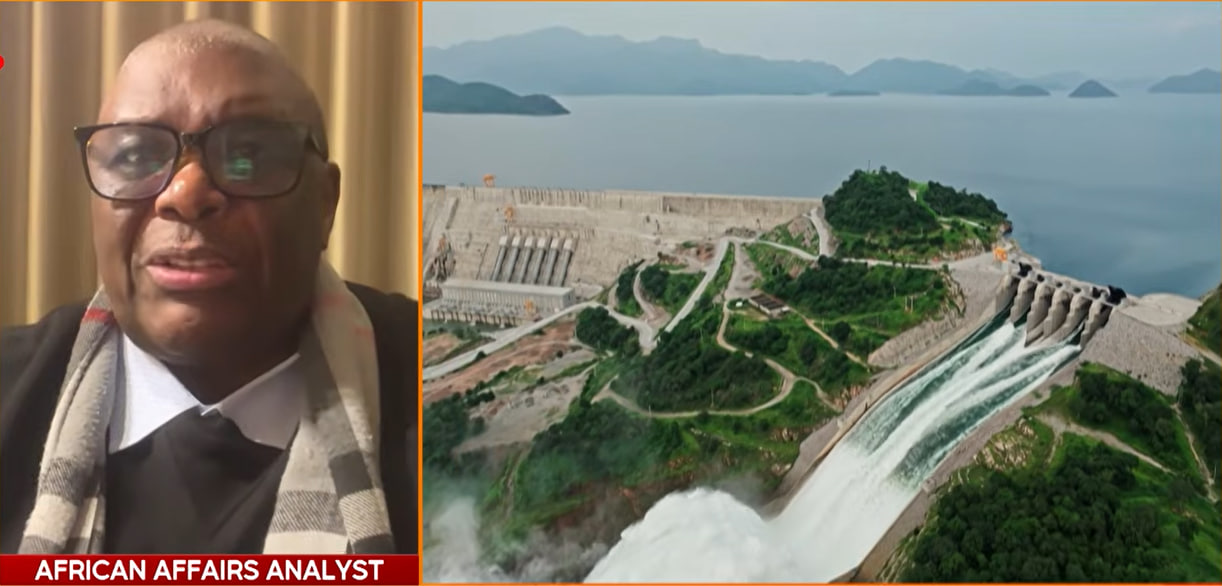
Matsanga also challenged the premise that Ethiopia should halt its development simply because its rivers flow downstream. Ethiopia needs electricity to power factories, sustain production and drive economic growth, he said, arguing that a country facing growing energy and production needs cannot simply stop developing its resources because another country objects.
He rejected the notion that Ethiopia’s development amounts to an attempt to exercise arbitrary control over the Nile. Ethiopia, he maintained, is seeking equitable use of its water resources and is not pursuing development with the intention of harming Egypt or any other downstream country.
His criticism of Egypt became particularly pointed when he accused Cairo of turning the GERD and the broader Nile question into a political weapon. Egypt, he said, had transformed the issue into “political weaponized issues”, turning what could be addressed through negotiation into a much broader political confrontation.
Matsanga was equally direct in condemning the military rhetoric surrounding the GERD. He criticized the threats of war and specifically referred to “threatening to bomb the dam and going into proxy wars in Somalia.” He questioned why Egypt would pursue such a dangerous course when the Horn of Africa is already facing multiple serious challenges, arguing that there is nothing wrong with sitting down and resolving the outstanding issues through dialogue.
His warning extended directly to the wider conflicts in the Horn of Africa. Referring to “all the conflicts that we see now escalating into Sudan, coming into Somalia,” Matsanga urged Egyptian President Abdel Fattah El-Sisi to “turn down” his approach, arguing that Egypt’s military power should not be used to threaten other countries.
He stressed that Ethiopia and Egypt are both powerful military states in the region and warned against allowing their confrontation to develop into another armed conflict. “So we don’t want any other conflict to erupt between Egypt and Ethiopia,” he said, immediately calling for the two sides to “come back to African Union and sit it down.”
Matsanga’s argument thus went beyond warning of an abstract regional risk. He explicitly linked the escalation around the GERD to what he described as proxy warfare in Somalia and pointed to conflicts escalating in Sudan and Somalia. In his view, Egypt’s confrontational posture toward Ethiopia risks adding another dangerous fault line to an already fragile Horn of Africa.
He also challenged Egypt’s push to involve the United Nations Security Council in the GERD issue. Matsanga argued that international law already provides principles governing the equitable sharing of transboundary resources and questioned what Cairo expects to achieve by taking an African water question to a divided international body.
Drawing comparisons with major international waterways and maritime passages, including the Straits of Hormuz, the Indian Ocean, the Red Sea and the Suez Canal, he argued that resources crossing national boundaries can be managed through arrangements that recognize the interests and rights of all countries concerned.
Matsanga was particularly dismissive of the Security Council as a solution to the GERD issue. He pointed to the Council’s inability to resolve major international crises, including the Russia-Ukraine war and tensions involving the United States and Iran, arguing that it is unlikely to settle an African water issue that can be addressed within Africa.
For Matsanga, taking the matter to the Security Council risks escalating rather than resolving the confrontation. He urged Egypt to return the issue to the African Union and bring its proposals to an African-led mediation process.
His call was unequivocal: “Let’s come back to African Union and sit it down.” He invoked the principle of “African solutions to African problems,” insisting that an African water question should be resolved through African institutions and negotiations rather than turned into another arena for international pressure and geopolitical confrontation.
Matsanga also rejected any attempt to characterize Ethiopia’s position as a bid for unchecked control of the Nile. Ethiopia, he said, is simply seeking equitable use of its water resources and has no intention of harming its neighbors. He maintained that Ethiopia has used its share without seeking to harm anyone and remains willing to negotiate.
He further challenged the assumption that water availability can be dictated politically. “We are not God to regulate how much rain will come,” Matsanga said, emphasizing that rainfall is naturally variable and cannot be controlled by governments. Any sustainable arrangement, he argued, must therefore take account of natural variations in water availability while allowing countries to pursue legitimate development.
This, he said, makes it unreasonable to expect Ethiopia to freeze the development of its rivers indefinitely. Ethiopia needs electricity to power factories, expand production and sustain economic growth, while its energy development can also generate benefits for neighboring countries.
Matsanga pointed to Ethiopia’s electricity exports to Djibouti, Kenya and Sudan as evidence of this broader regional benefit, noting that Somalia and South Sudan are also seeking access to Ethiopian power. In his assessment, Ethiopia’s development is therefore capable of supporting regional economic growth rather than posing an inherent threat to its neighbors.
The analyst consequently urged Egypt to replace threats with a concrete negotiating position. Cairo, he said, should specify how much water it needs and how it intends to use it, then bring its proposals to the African Union so that the parties can negotiate a practical arrangement.
Matsanga’s strongest appeal was directed at Egyptian President El-Sisi. He urged him to “cool down” and “calm down,” abandon threats and return to an African-led negotiating process. Rather than allowing military pressure, international escalation or proxy confrontation to shape the Nile question, he argued, Egypt should sit down directly with Ethiopia and negotiate.
He also described Ethiopian Prime Minister Abiy Ahmed as a “man of peace” who understands and works for peace, while reiterating that Ethiopia does not seek to harm Egypt or Sudan.
Matsanga’s closing message was therefore direct: Egypt should step back from confrontation, stop turning the GERD into a political and military flashpoint, return to the African Union and negotiate with Ethiopia. As he put it, the parties should “talk about the talks to talk about the dam.”
For Matsanga, the way forward lies not in threats against Ethiopia, military posturing or the expansion of the confrontation into Somalia and Sudan, but in an African-led process that addresses Egypt’s water requirements, Ethiopia’s development needs and the equitable use of the Nile Basin’s resources through negotiation.