
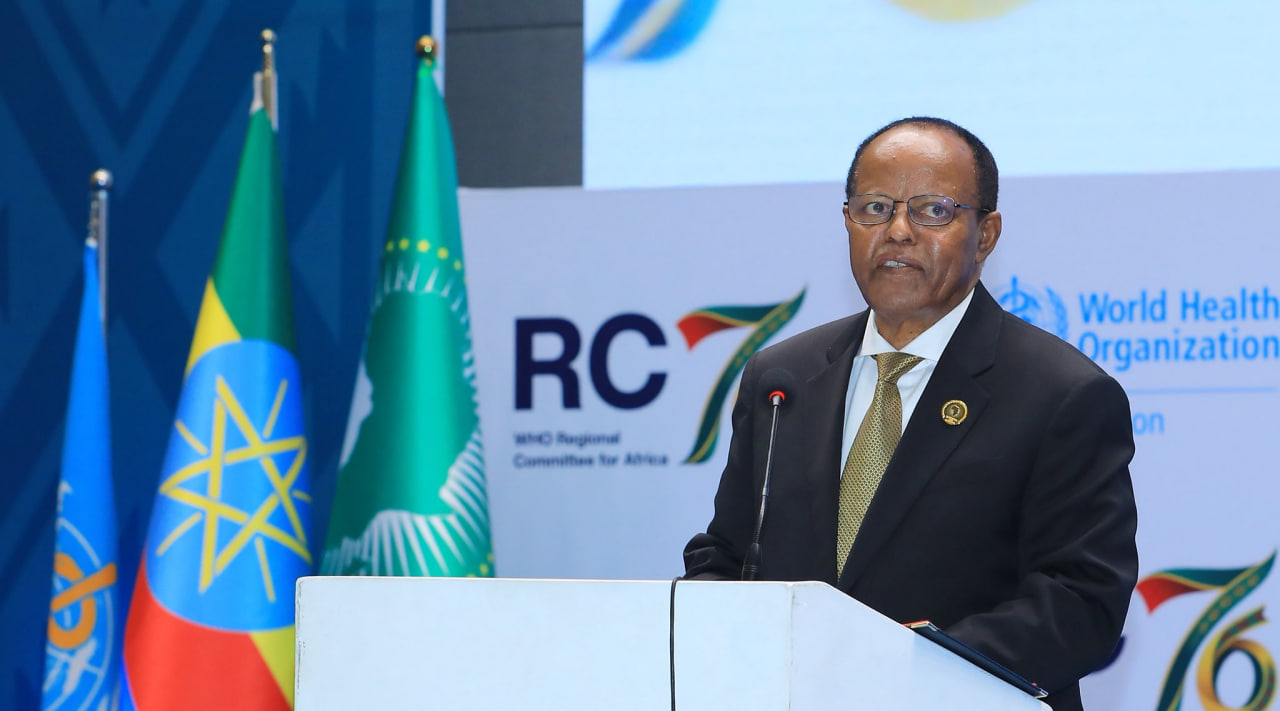
Ethiopia’s Green Transformation, Health Investment and Peace Form Pillars of Resilience: President Taye
Addis Ababa, August 25, 2026 (FMC) — Ethiopia’s progress in health, environmental sustainability and peacebuilding are interconnected elements of building national resilience, President Taye Atske-Selassie said, highlighting sustained health investment, the Green Legacy Initiative and the country’s National Dialogue as key components of Ethiopia’s broader development approach.
Addressing the 76th Session of the World Health Organization (WHO) Regional Committee for Africa in Addis Ababa, President Taye said Ethiopia regards health as a strategic national investment and has steadily increased budget allocations to the sector despite competing economic demands.
He said decades of investment in primary healthcare have brought essential services closer to communities and expanded access for millions of people, while the expansion of the health workforce has contributed to progress in maternal, newborn and child survival.
President Taye linked Ethiopia’s environmental efforts to its response to climate-driven health risks, citing the Green Legacy Initiative as an important part of the country’s broader resilience efforts.
He noted that Ethiopia planted more than 800 million seedlings on August 3 as part of its target to plant 8 billion seedlings this year. Since the initiative began in 2019, he said, the country has planted about 56 billion seedlings.
He also pointed to the transformation of Addis Ababa, saying the cleaner and healthier urban environment being created in the capital is intended to improve the health and living standards of its residents.
President Taye stressed that sustainable health systems cannot exist without peace, linking health resilience with Ethiopia’s efforts to strengthen dialogue and reconciliation.
He cited the recently concluded National Dialogue, which brought together more than 4,000 delegates representing a broad range of political views, describing it as a major stride in Ethiopia’s political landscape.
He said dialogue and reconciliation are important to securing stability in Ethiopia and the wider region.
Placing Ethiopia’s experience within the broader African context, President Taye said the continent is facing mounting pressures from unpredictable health financing, geopolitical instability, disease outbreaks, climate change and conflicts that disrupt vital health services and displace vulnerable populations.
He called for stronger regional cooperation and greater African ownership of health priorities, arguing that international partnerships should reinforce national leadership, strengthen domestic institutions and enable countries to sustain their own health priorities.
President Taye also called for increased domestic public investment in health, accelerated local manufacturing of medicines, vaccines and diagnostics, stronger coordination between the World Health Organization and the Africa Centres for Disease Control and Prevention, and practical mechanisms for sharing expertise, laboratory capacity and emergency supplies during health crises.
He further urged Africa to take a leading role in the climate-health agenda, highlighting Ethiopia’s preparations to host COP32 in Addis Ababa in 2027 as an opportunity for the continent to advance a unified position on climate resilience, health systems and adaptation financing.
President Taye said Africa’s health priorities should ultimately be driven by African leadership, with national governments leading, regional institutions supporting and global organizations providing coordinated technical and institutional assistance.
He called for Africa’s health agenda to move beyond declarations toward firm commitments and measurable actions capable of producing tangible improvements in the lives and well-being of African people.