
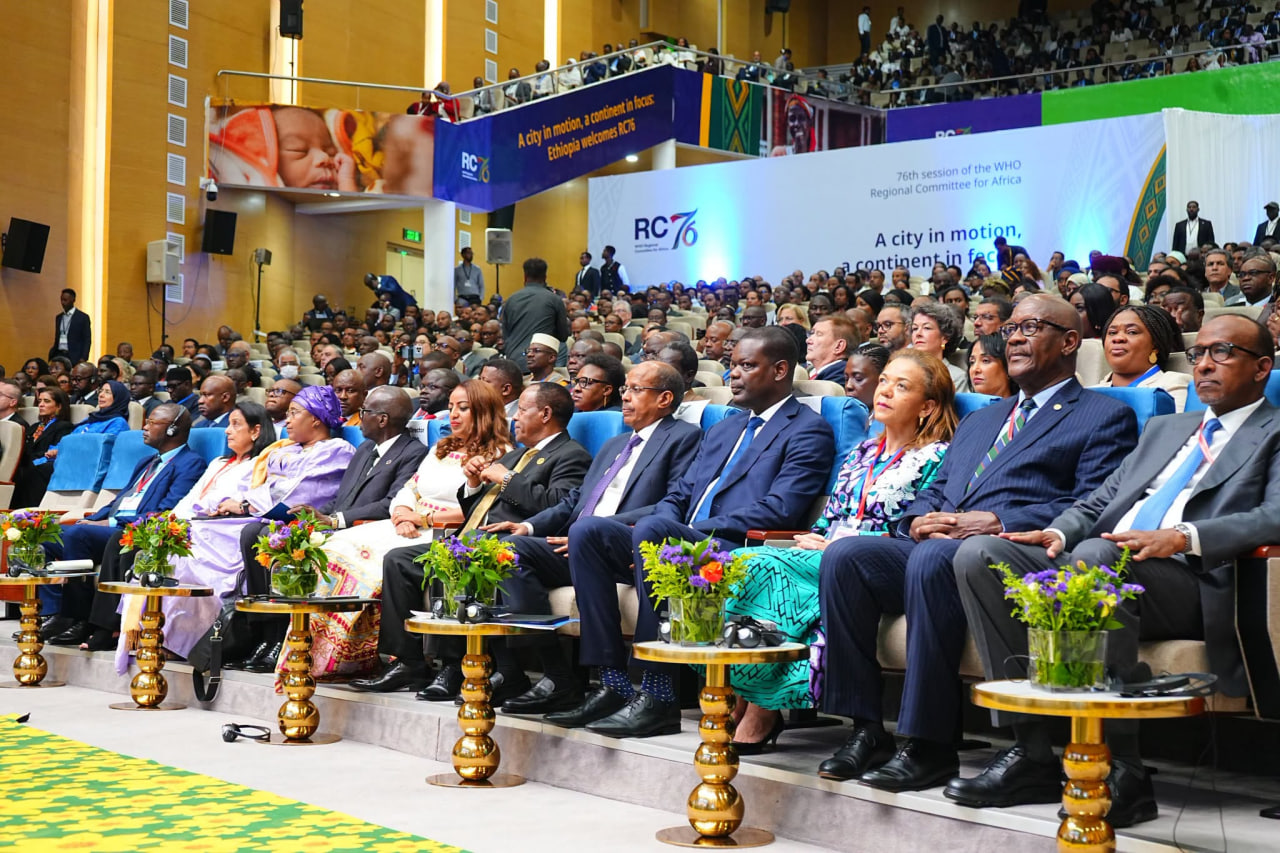
Ethiopia Expands Digital Health to More Than 33 Million People Across 7 Million Households: Health Minister
She said community health records through the Ethiopian Community Health Information System have grown from about 112,000 seven years ago to around 7 million households.
The expansion has put data on more than 33 million people in the hands of the health system, she said, enabling the use of real-time information for decision-making.
Dr. Mekdes stressed that technological advancement must ultimately serve people rather than become an objective in itself.
She said a woman living in a remote community should benefit from digital transformation just as much as someone living in the capital, making equity a central consideration in Ethiopia’s digital-health transition.
“Equity means digital age,” she said, emphasizing that people in both urban and rural areas should have the same opportunity to benefit from technological advances.
The minister placed Ethiopia’s digital-health experience within the wider transformation required across Africa, saying technology can help countries extend healthcare further while keeping communities and households at the center of health-system development.
She said technology, alongside sustainable financing, a stronger health workforce and local production, should ultimately serve one purpose: enabling people to access the healthcare they need as close to their homes as possible.
Dr. Mekdes called on African countries to embrace digital transformation while ensuring that equity remains central to implementation.
She urged the 47 WHO African Region member states to use the Regional Committee not simply to adopt strategies, but to renew their determination to implement them, including by strengthening primary healthcare, sustainable health financing, local production and digital transformation.
She said Africa has the knowledge, talent and determination to build stronger health systems, but the central question is whether the continent has the collective resolve to turn that potential into lasting change.
Dr. Mekdes stressed that the ultimate measure of health-system success should not be the number of strategies adopted or technologies introduced, but the difference they make in people’s lives.
She said this means ensuring that mothers receive care when they need it, children are protected from preventable diseases and health workers have the tools required to perform their jobs.
“Africa’s health future will not be built by one country or one institution or one technology,” she said, calling for collective African action based on solidarity, purposeful investment and innovation with equity at the center.