
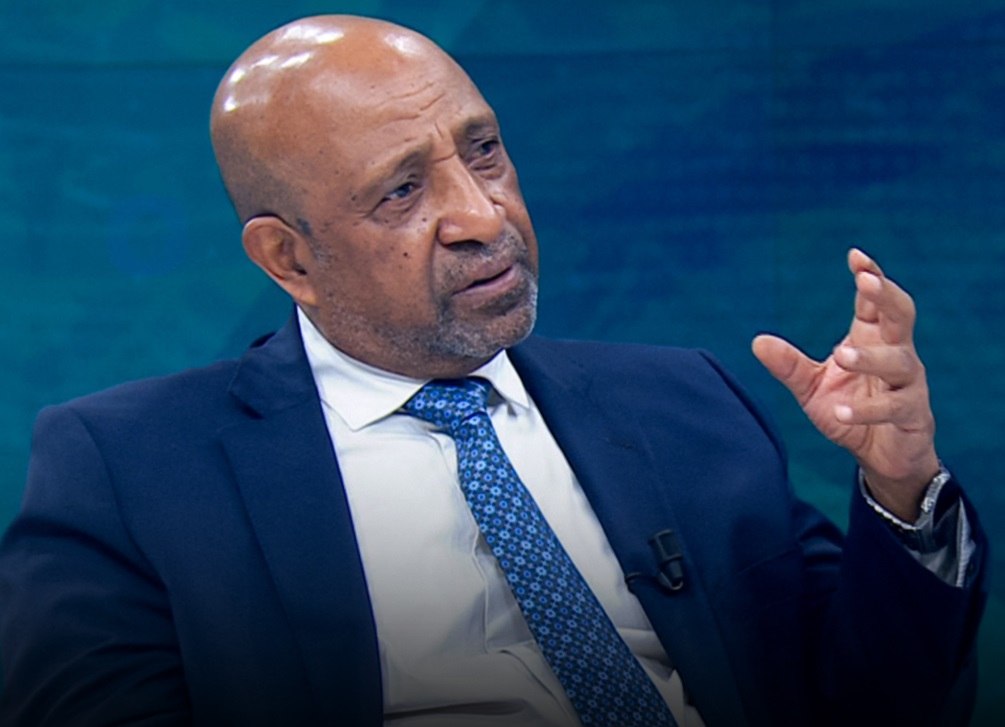
Egypt’s Attempts to Weaken Ethiopia Will Ultimately Harm Egypt Itself, Says Prof. Berhanu Nega
Addis Ababa, September 4, 2026 (FMC) — Egypt’s continued attempts to weaken Ethiopia will ultimately harm Egypt itself, Education Minister Berhanu Nega said, warning Cairo that efforts to obstruct Ethiopia’s development cannot stop the country’s advance and will only deepen the costs for those pursuing such a course.
Prof. Berhanu said Egypt’s efforts to block Ethiopia’s development projects were not new, but stressed that the international environment is changing fundamentally and requires countries in the region to abandon confrontational politics and work together.
He said developing countries such as Egypt are failing to recognize the broader changes taking place in the international system, warning that Africa’s continued fragmentation could leave the continent vulnerable to external pressures.
“The changing international environment can completely swallow us unless otherwise we somehow unify and collaborate as Africans,” Berhanu underlined.
He cited Africa’s experience under colonialism as a clear lesson in the consequences of political fragmentation, saying the continent suffered for centuries partly because it was unable to unite in the face of external pressures.
Berhanu warned that the continued use of divisions within societies and among neighboring countries to weaken one another would produce no winners, as reported by local news agency ENA.
“If we allow these divisions within our societies and use it to weaken each other, this is not an environment where there will be winners. We will all lose,” he cautioned.
Addressing Egypt’s policy toward Ethiopia directly, Berhanu said attempts to undermine Ethiopia through proxies or other means might create temporary difficulties but would not fundamentally alter the balance of power in the region.
He said Egypt’s belief that it could rely on what he described as “old politics” and emerge victorious was a misguided undertaking, arguing that such an approach fails to reflect the changing realities of the region and Ethiopia’s growing capabilities.
Berhanu urged Egypt to abandon efforts to weaken Ethiopia and instead engage in dialogue, stressing that Ethiopia and Egypt are not mortal enemies and should cooperate in confronting the wider challenges facing the region.
“The smartest thing to do, I think, is to sit down and discuss. We are not each other’s mortal enemies,” he said.
He warned that Egypt’s continued efforts to weaken Ethiopia could ultimately turn against Egypt’s own interests, particularly as geopolitical and economic pressures intensify globally.
Berhanu pointed to Egypt’s longstanding opposition to Ethiopia’s construction of the Grand Ethiopian Renaissance Dam (GERD) as a clear example of the futility of attempting to halt Ethiopia’s development.
He noted that Egypt had sought for a long time to stop Ethiopia from building the dam, yet Ethiopia proceeded with the project and has become stronger and more capable of undertaking additional major development projects, including the construction of other dams if necessary.
“If you were an Egyptian leader, just think what has happened. You’ve been trying to stop Ethiopians from building the dam for a long, long time. But did they stop it? No!” he said.
Berhanu stressed that Ethiopia’s determination to pursue development should not be mistaken for an intention to deprive Egypt of water.
“Ethiopia has no—or should not have—any particular interest to starve or stop Egypt from surviving because of lack of water,” he said, emphasizing that Egypt is Ethiopia’s downstream neighbor.
He called on Egypt and other countries in the region to abandon attempts to weaken one another and instead pool their strength and resources to advance the prosperity of their peoples.
“If we sit down, rather than trying to weaken each other, and gather our forces, gather our energy, and work together for the prosperity of all the peoples of this region; I think that’s a much better and wiser strategy than this continuous, silly attempt to weaken Ethiopia,” Berhanu underscored.