
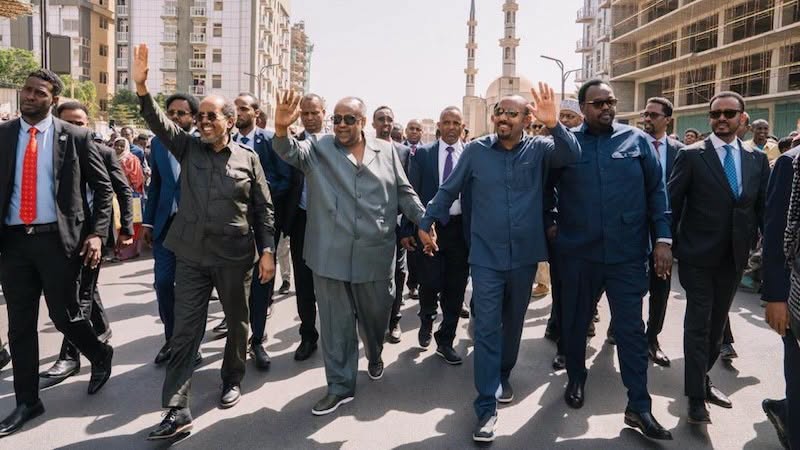
From Global Reach to Regional Weight: Ethiopia’s Diplomatic Momentum
Addis Ababa, September 27, 2026 (FMC) — Over the past eight years, Ethiopia’s diplomatic map has grown wider—and so has the range of national interests it carries into the world.
From its enduring position at the heart of African diplomacy, Ethiopia has opened new channels across the Global South, strengthened regional dialogue, expanded economic diplomacy and secured a broader place in multilateral institutions.
The country’s accession to BRICS in January 2024 marked one of the clearest expressions of that widening horizon, placing Ethiopia within a major platform for political, economic and people-to-people cooperation among the Global South.
Diplomacy has increasingly acquired an economic dimension. Trade, investment, technology, tourism, infrastructure and market access now sit more visibly alongside traditional political and security concerns. Ethiopia’s long-running WTO accession process has likewise entered a decisive phase, with negotiations advancing alongside domestic economic reforms.
Closer to home, dialogue has remained central to Ethiopia’s regional engagement. The December 2024 Ankara Declaration between Ethiopia and Somalia reaffirmed respect for sovereignty and territorial integrity and established a framework for pursuing cooperation and shared prosperity.
Ethiopia’s diplomatic reach has also been reinforced through multilateral institutions. Its election to the UN Human Rights Council for the 2025–2027 term added another platform for its participation in global policy discussions. Addis Ababa, meanwhile, continues to serve as a vital diplomatic crossroads, anchored by the headquarters of the African Union and a dense community of international institutions.
The Red Sea has added another strategic dimension. For a landlocked economy deeply connected to maritime trade, questions of connectivity, logistics, regional security and access to global markets increasingly converge in Ethiopia’s diplomacy.
Yet the larger story is not simply the accumulation of memberships, seats, declarations or summits. It is the widening of Ethiopia’s diplomatic vocabulary.
Peace and security remain fundamental. But alongside them now stand trade and investment, connectivity and technology, continental integration and global economic participation. Relations with African neighbours, emerging powers, Western partners, Asian economies and Gulf states form part of an increasingly diversified network of engagement.
The result is a diplomacy seeking more than representation abroad. It is increasingly being used to create space for national development, regional cooperation and a stronger Ethiopian voice in shaping the international conversation.
From Addis Ababa to BRICS, from regional dialogue to Geneva, from the Red Sea to the global trading system, Ethiopia’s diplomatic horizon has expanded considerably.
The measure of that expansion, ultimately, will be what those wider horizons bring home: greater opportunity for Ethiopia, stronger partnerships for Africa and a more consequential voice in the world.