
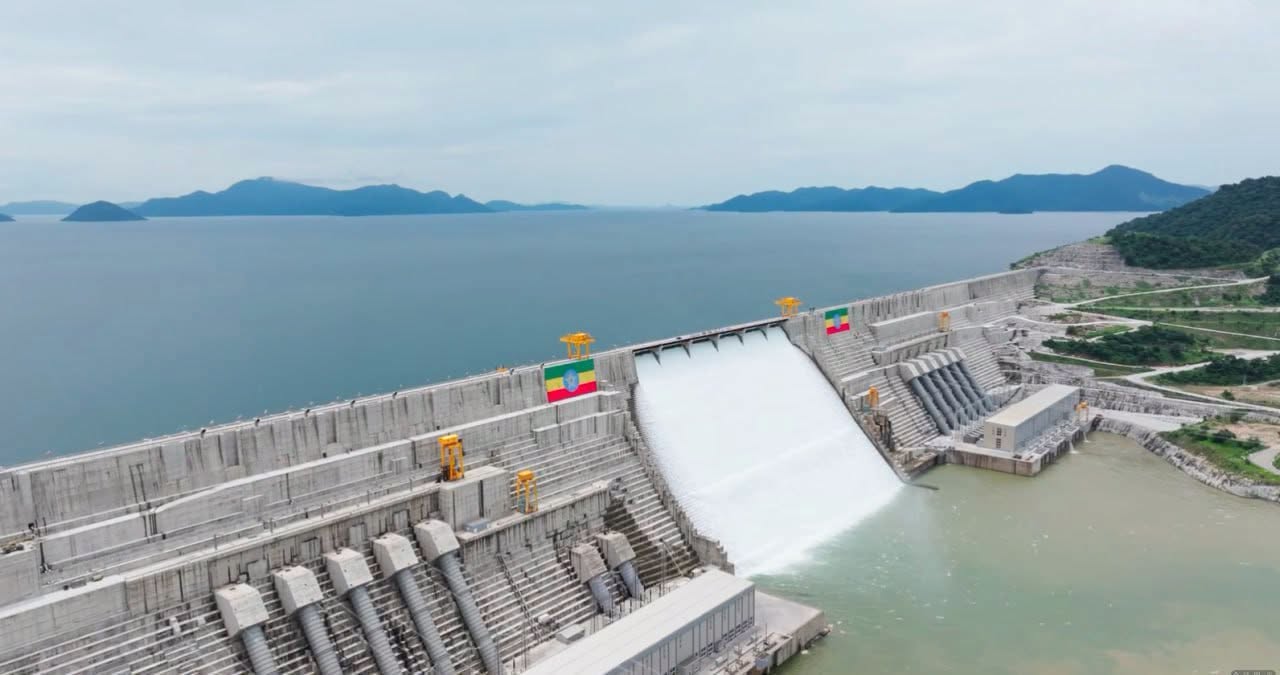
Diplomacy Does Not Mean Ethiopia Must Ask Cairo for Permission
Addis Ababa, October 1, 2026 (FMC) — There comes a point when diplomatic language becomes so heavily loaded with conditions that the word “diplomacy” itself demands scrutiny. This is precisely where Egypt’s latest rhetoric on the Grand Ethiopian Renaissance Dam leaves us.
We are told that Cairo prefers diplomacy and peaceful solutions. Fine. But diplomacy is not a ceremonial word to be displayed whenever pressure is needed and discarded whenever sovereignty becomes inconvenient. Diplomacy has a boundary.
Negotiation has a boundary. International obligations have a boundary. And that boundary is respect for the rights of all parties—not the conversion of one country’s concerns into another country’s instructions.
That distinction cannot be blurred.
When President Abdel Fattah El-Sisi says that diplomacy over the Ethiopian dam will not come at the expense of Egypt’s existence and people, the question from Ethiopia is straightforward: who has placed Ethiopia’s development on the scale of Egypt’s national definition of existence?
Egypt has its interests. Ethiopia has its interests. Egypt has its water concerns. Ethiopia has its development needs. Egypt has obligations toward its neighbours. Ethiopia has obligations toward downstream states. That is precisely why negotiation exists.
But negotiation is not a system in which one party arrives carrying its rights while the other is expected to arrive carrying only concessions.
That is not diplomacy. That is prescription dressed in diplomatic language.
And Ethiopia should not be expected to accept it.
The latest attempt to explain GERD through Egypt’s political upheaval between 2011 and 2013 is equally revealing.
Yes, Egypt experienced profound instability during those years. But Ethiopia’s development needs did not originate in Cairo’s political crisis. Ethiopia did not wake up in 2011 and discover that it needed electricity because Egypt had temporarily become unstable.
Ethiopia’s development deficit, energy needs and ambition to harness its own resources are much older than that episode. Even the tripartite Declaration of Principles describes GERD in terms of power generation, economic development, regional integration and sustainable energy.
This matters because historical circumstance cannot be turned into a permanent claim over another country’s future.
Egypt cannot make its own periods of instability the explanation for Ethiopia’s sovereign development choices. Ethiopia’s development cannot be retroactively placed inside Egypt’s domestic political chronology as though Addis Ababa’s national decisions were merely consequences of Cairo’s moments of weakness.
That is where the argument must be firmly corrected.
The Nile is shared. Ethiopia is not.
The river crosses borders. Ethiopia’s sovereignty does not.
The water creates interdependence. Interdependence does not create hierarchy.
These are not rhetorical flourishes. They are the essential boundaries without which the language of cooperation becomes dangerously one-sided.
The 2015 Declaration of Principles is clear enough on this point. It places cooperation, equitable and reasonable utilization, avoidance of significant harm, development, regional integration, peaceful settlement, sovereign equality and information exchange within the same framework.
Notice what that framework does not establish: it does not turn Egypt into Ethiopia’s development authority.
There is no principle of sovereign equality that says one state’s national interest automatically outranks another’s. There is no principle of negotiation that transforms a legitimate concern into a unilateral veto.
There is no principle of peaceful settlement that requires Ethiopia to surrender its development rights before discussions can even begin.
Rights and obligations must travel together.
That is the boundary.
And this is precisely why Ethiopia should not be lectured into treating its own sovereign development as something that requires external approval.
Ethiopia has repeatedly stated that it recognizes the principles of equitable and reasonable utilization and avoiding significant harm. Its own submissions to the United Nations have framed GERD within those principles while calling for negotiations conducted in good faith.
So let us not manufacture a false choice between Ethiopia’s sovereignty and responsible use of a transboundary river.
Ethiopia can defend its development rights and recognize downstream interests.
Ethiopia can build infrastructure and engage in technical dialogue.
Ethiopia can insist on equitable utilization and accept international responsibilities.
What Ethiopia cannot reasonably be asked to accept is the transformation of those responsibilities into an obligation to seek permission from Cairo.
That is the line.
And it is precisely here that some of the rhetoric coming from Egypt sounds less like a new diplomatic language and more like an attempt to preserve an old political grammar around the Nile. The language may have changed.
The institutions may have changed. Africa itself has changed. But whenever Ethiopia’s development is discussed as though it requires prior Egyptian approval, the old assumption reappears.
It should be rejected on its merits.
Not because Egypt has no legitimate interests. It does.
Not because Ethiopia has no obligations. It does.
But because legitimate interests do not become unlimited privileges, and obligations do not become instruments of subordination.
That is the difference between diplomacy and domination.
And there is another point that deserves to be made without euphemism: Egypt’s water-security challenge cannot be solved by permanently placing a ceiling over Ethiopia’s development.
Egypt is already pursuing desalination, wastewater treatment and water reuse, measures Sisi himself highlighted.
Those efforts demonstrate a broader reality of the twenty-first-century water crisis: countries must diversify, conserve, modernize and cooperate. A changing climate, growing populations and expanding economies make resilience increasingly dependent on innovation rather than on the assumption that historical patterns of water use can remain frozen forever.
Ethiopia has its own transformation to pursue.
Its people need electricity. Its industries need reliable power. Its economy needs infrastructure. Its development cannot be suspended indefinitely because another state has decided that any upstream transformation must first be reconciled with an inherited conception of downstream entitlement.
And this is where diplomacy must return to its proper meaning.
The negotiating table should be a place where countries bring their rights, obligations, evidence, technical concerns and national interests—and then work toward arrangements that accommodate legitimate interests on all sides.
It should not become a courtroom where Ethiopia arrives as the defendant and Egypt arrives with the authority to determine what constitutes an acceptable Ethiopian future.
Ethiopia will negotiate. Ethiopia will cooperate. Ethiopia will meet its responsibilities. But Ethiopia’s sovereignty is not an item on the negotiating table.
That distinction should be understood clearly.
The Abbay can generate electricity without becoming an instrument of confrontation. It can contribute to Ethiopia’s transformation while remaining part of a wider system of regional interdependence. The challenge is not to decide which country owns the river. The challenge is to establish a modern framework in which countries sharing the basin recognize one another’s legitimate rights.
That requires something more demanding than diplomatic vocabulary.
It requires mutual respect.
And mutual respect has a boundary: Egypt cannot define the limits of Ethiopia’s legitimate development any more than Ethiopia can define the limits of Egypt’s legitimate water security.
That is not hostility.
That is the minimum condition for meaningful diplomacy.
And if diplomacy is genuinely the chosen path, then let it begin there.