
The Pharaoh’s Shadow Cannot Reach Ethiopia’s Future
Addis Ababa, October 1, 2026 (FMC) — There is something profoundly anachronistic in the idea that Egypt can speak of diplomacy while simultaneously defining the boundaries within which Ethiopia is expected to exercise its own sovereignty.
Diplomacy is not the art of dressing old hierarchies in new vocabulary. It is the discipline of dealing with sovereign states as equals, each possessing rights, responsibilities and legitimate national interests.
President Abdel Fattah El-Sisi’s latest remarks on Ethiopia’s dams once again expose this tension. While presenting diplomacy and peaceful solutions as Egypt’s chosen course, he also linked the emergence of the Grand Ethiopian Renaissance Dam to Egypt’s internal upheavals between 2011 and 2013 and framed the issue in terms of protecting Egypt’s existence and the well-being of its people.
The Egyptian concern over water security is real and can be addressed through negotiation. But the historical narrative surrounding that concern cannot be allowed to become a political map showing Ethiopia where it may build, what it may develop or how it must use the resources within its own sovereign territory.
That is where the language of diplomacy begins to collide with the habits of another age.
For too long, the Nile has been discussed through a political vocabulary in which downstream entitlement could overshadow upstream sovereignty, and in which Ethiopia’s development aspirations were too often treated as variables to be adjusted according to Egyptian calculations.
That vocabulary belongs to a different historical order. It carries echoes of the old Nile hierarchy—of an era when power attempted to speak louder than equality and historical privilege was presented as though it were permanent law.
Modern Africa cannot be governed by that grammar.
Ethiopia is not a political toy to be moved across a regional chessboard whenever another capital feels threatened by its development. It is not a subordinate state awaiting instructions on what infrastructure it may construct, what natural resources it may harness or what development path it may pursue.
Its rivers, mountains, land and natural endowments are part of a sovereign national inheritance, and the Ethiopian state has the responsibility to use them for the advancement of its people while observing its international obligations.
The distinction is fundamental: cooperation does not mean permission; responsibility does not mean obedience; interdependence does not create hierarchy.
The 2015 Declaration of Principles signed by Egypt, Ethiopia and Sudan itself speaks in the language of cooperation, equitable and reasonable utilization, sustainable development, avoidance of significant harm, peaceful settlement of disputes and sovereign equality.
Those principles do not establish a relationship in which one country becomes the custodian of another country’s development decisions. They point toward a shared basin governed by reciprocal obligations rather than inherited privilege.
That is why the argument must be taken beyond the latest speech. The real question is not whether Egypt has the right to care about the Nile. It plainly does. The question is whether that legitimate concern can be transformed into an unlimited political claim over Ethiopia’s sovereign choices. It cannot.
Egypt cannot write Ethiopia’s development agenda. Cairo cannot decide which Ethiopian projects are acceptable, which must be abandoned, or which require Egyptian approval. No diplomatic formula can turn another sovereign state’s natural resources into an extension of Cairo’s domestic policy calculations.
And Ethiopia should not be expected to apologize for developing.
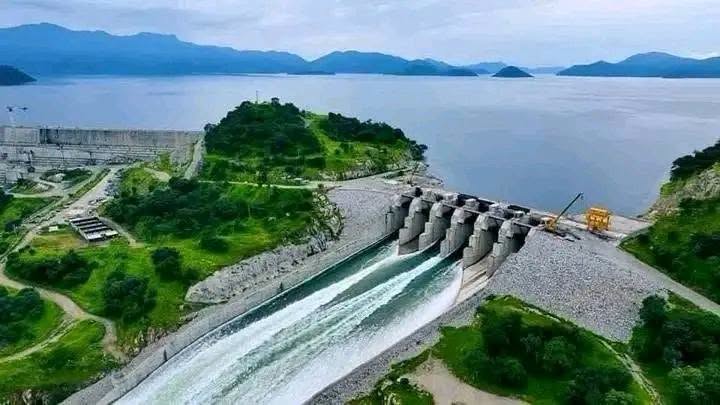
The GERD is part of a much larger Ethiopian pursuit of energy, infrastructure, economic transformation and opportunity. Its significance cannot be reduced to the chronology of Egypt’s political crises.
Ethiopia’s development imperatives did not suddenly appear in 2011, nor can they disappear because Egypt invokes a particular chapter of its own history.
The deeper problem with an old imperial vocabulary is that it assumes yesterday’s hierarchy can survive simply by changing its clothes.
But Africa has changed. Ethiopia has changed. The international order has changed. Sovereignty is no longer something to be measured by proximity to power, and the Nile is not a political throne from which one state can command the destiny of another.
The river is shared. The responsibility is shared. The future can be shared.
But sovereignty is not divisible according to another country’s preferences.
If Egypt genuinely seeks diplomacy, then diplomacy must be allowed to mean what the word requires: negotiation among equals, recognition of reciprocal rights, respect for sovereign decision-making and a willingness to accommodate legitimate interests without attempting to subordinate one nation’s development to another’s preferences.
The Nile can connect Ethiopia and Egypt without placing Ethiopia beneath Egypt. The Abbay can flow toward the north without carrying with it an ancient political hierarchy.
The Pharaohs belong to history. Ethiopia belongs to its future.
And no diplomacy worthy of the modern African order should confuse the two.