
The Medemer Trajectory: Rebuilding Ethiopia’s State Around Modern Public Service
Addis Ababa, October 5, 2026 (FMC) — A country’s progress is measured not only by its roads, buildings and economic output, but also by the quality of the state citizens encounter every day.
When public institutions become faster, more accessible, transparent and responsive, the transformation reaches beyond government offices—it reshapes the relationship between citizens and the state and strengthens the country’s development trajectory.
This is one of the visible dimensions of Ethiopia’s Medemer journey.
Over recent years, the Medemer philosophy has informed efforts to build a modern, efficient and citizen-centred public administration. The objective has gone beyond digitizing old procedures. It has increasingly involved rethinking how the state connects institutions, delivers services and responds to citizens.
The transformation is particularly visible through the Digital Ethiopia strategy. Fayda, the national digital identification system, is creating a modern biometric foundation for interaction with banks, insurance providers and government institutions. By enabling more reliable identification and verification, it can reduce duplication, simplify procedures and make services faster and more secure.
Digital payments are reinforcing the same shift. Taxes, water and electricity bills, traffic penalties and other public-service charges can increasingly be settled through platforms such as Telebirr, CBE Birr and online banking. This reduces time and transaction costs while improving traceability, transparency and accountability.
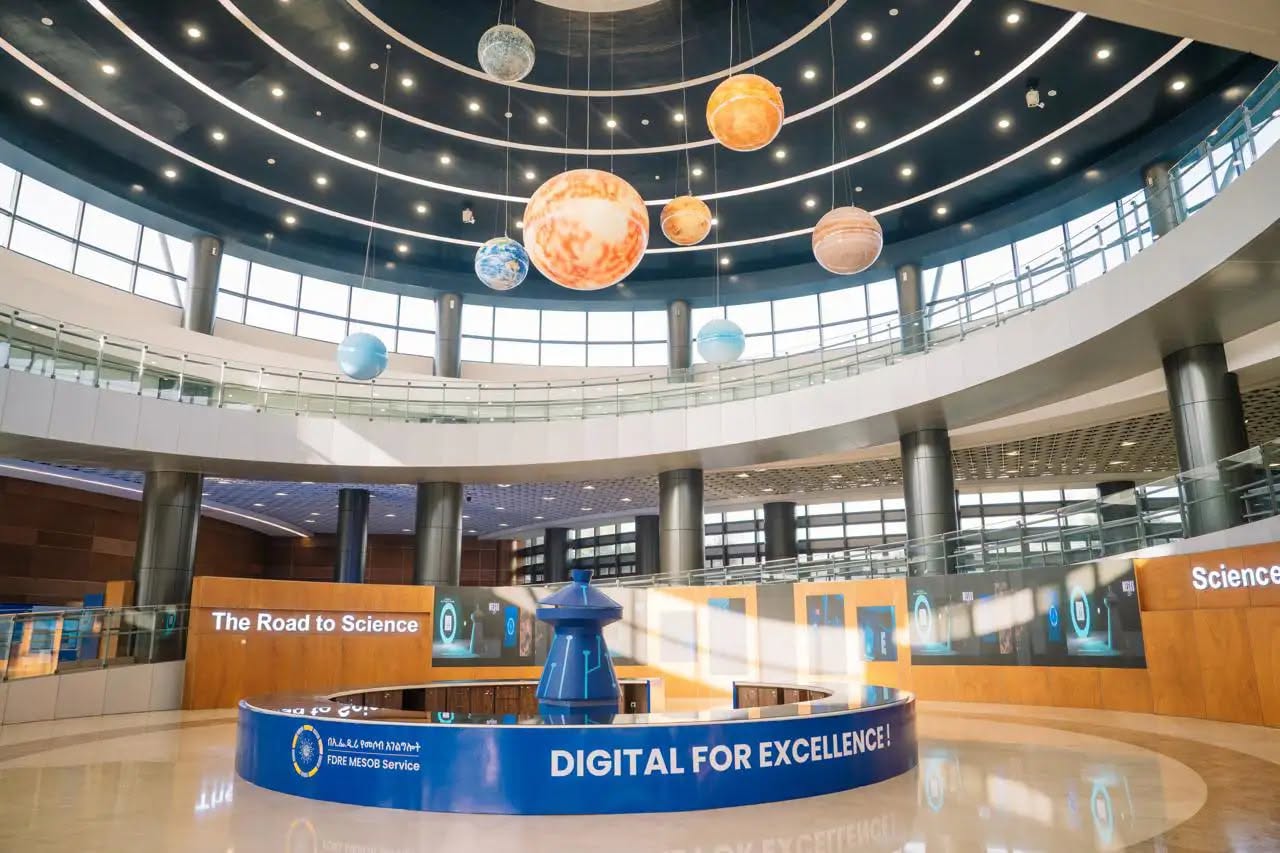
The transformation is also taking physical form through MESOB, the multi-service platform designed to bring government services together and simplify citizens’ interaction with the state. Since its introduction in Ethiopian Fiscal Year 2017 (2024/25), MESOB has expanded through service centres in different parts of the country. Its underlying principle is powerful: government services should increasingly be organized around citizens rather than the internal boundaries of institutions.
Business and investment services are undergoing a similar shift. Online systems are enabling commercial and investment licensing procedures to be completed remotely, reducing bureaucratic friction for investors and businesses. Justice-related and civil-registration services are also becoming more interconnected through digital networks and service centres.
Together, these reforms are gradually moving Ethiopia away from fragmented administration, paper-heavy procedures and repeated physical journeys toward a more integrated public-service system.
The transformation is not confined to digital platforms. Corridor development has also contributed to modernizing transport, urban infrastructure and the physical environments in which citizens access public services. Structural reforms and human-capital development are further supporting a service culture in which citizens are increasingly expected to be treated with professionalism, dignity and efficiency.
Tax administration offers another important example. Technology-supported e-tax systems and electronic invoicing are modernizing domestic revenue collection, reducing burdens on taxpayers and strengthening transparency. More traceable transactions can also reduce opportunities for leakage, manipulation and corruption.
These initiatives are not isolated projects. They are pieces of a broader architecture of state modernization.
The significance of this transformation extends into Ethiopia’s economic ambitions. Investment requires predictable institutions. Businesses need efficient licensing and registration. Citizens need reliable identity and civil services. Digital economies require interoperable public infrastructure. A modernizing economy therefore requires a state capable of moving at the same pace.
This is where the deeper meaning of Medemer becomes visible.
Its promise lies in bringing together institutions, technology, infrastructure, human capacity and national purpose so that their combined effect is greater than their individual parts. Public service becomes one of the clearest places where state capacity is experienced by ordinary citizens.
The journey remains unfinished. Digital expansion must continue to be matched by cybersecurity, data protection, interoperability, digital literacy and wider access. Modern systems must remain inclusive, while institutional reform must continue to strengthen professional and accountable public administration.
But the direction is increasingly clear.
Ethiopia is seeking to move from a state that citizens must navigate toward a state that increasingly works around them—from fragmented services toward integration, from cumbersome procedures toward accessibility, and from paper-based administration toward digital connectivity.
The ultimate measure will not be the number of platforms or service centres established. It will be the experience of the citizen: a service accessed without an unnecessary journey, a payment completed from a phone, an identity used across institutions, a business licence secured without bureaucratic friction, and a public office where service is delivered with dignity.
That is where the Medemer trajectory becomes tangible.
A modern state is not built merely by creating new institutions. It is built by making the institutions people encounter every day work better.
And that is the direction of Ethiopia’s public-service transformation: toward a state that is more connected, capable, accessible and increasingly aligned with the country’s upward trajectory.