
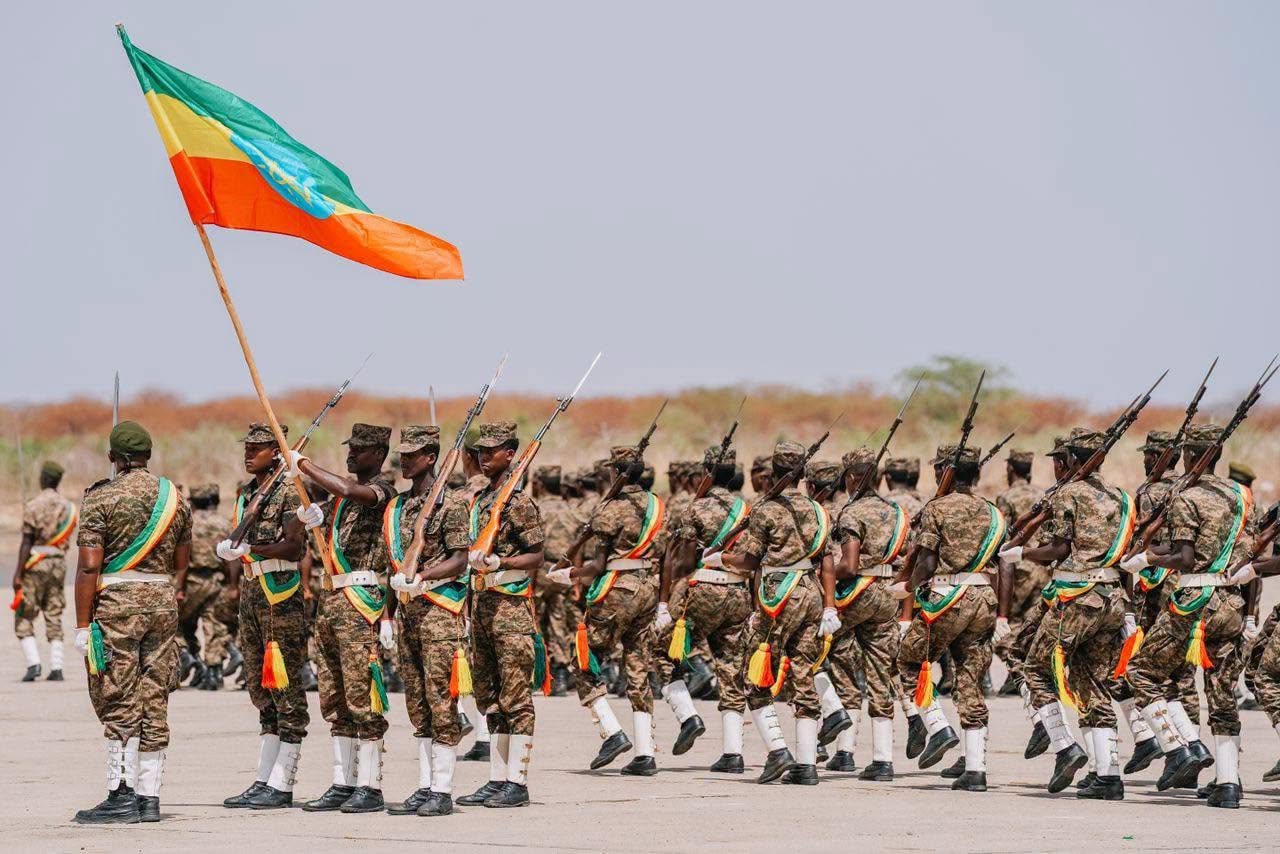
Ethiopia’s Defense Force: 119 Years of Indomitable Spirit, Sovereignty and Transformation Across Generations
Addis Ababa, October 23, 2026 (FMC) — Across generations, Ethiopia’s defense legacy has been forged in courage, sacrifice and an unwavering commitment to national sovereignty.
As the Ethiopian National Defense Force marks 119 years since its establishment, its history stands as a testament to a nation’s enduring determination to defend its independence, safeguard its territorial integrity and preserve the freedom inherited by each new generation.
For Ethiopia, defense is more than a military institution or a matter of weapons and formations. It is a national responsibility carried across generations: to protect the homeland, uphold the constitutional order, ensure the security of the people and defend the country’s national interests.
Through successive eras of challenge and transformation, the defense establishment has remained central to that historic responsibility, with the sacrifices of its members helping preserve an independent Ethiopia for the generations that followed.
That legacy now meets the demands of a changing security environment.
The Ethiopian National Defense Force is pursuing a new phase of institutional modernization and professional capability, seeking to equip itself to address contemporary threats while sustaining the resolve and sense of duty that have defined its historical mission.
The force’s responsibilities extend beyond defending the country’s borders. Safeguarding sovereignty and national interests, protecting the public and upholding the Constitution remain central to its mandate.
At a time when security challenges increasingly cross national boundaries and extend into new domains, Ethiopia’s defense preparedness is being shaped by the need to respond across land, air, maritime and cyber environments.
Ethiopia’s military history has also carried its name beyond its own borders.
Through United Nations and African Union peacekeeping missions in Korea, the Democratic Republic of the Congo, Rwanda, Sudan, South Sudan and Somalia, Ethiopian personnel have served in international operations, undertaking responsibilities that have contributed to the country’s longstanding role in multilateral peace and security efforts.
These deployments form another strand of the defense legacy: service to national interests alongside participation in collective efforts to address insecurity.
The strategic importance of that role is particularly evident in the Horn of Africa, where instability and security threats can have direct and indirect consequences for Ethiopia.
Countering terrorism and extremism remains a significant part of the defense mission, reflecting the close connection between the country’s security and the wider stability of its neighborhood.
For Ethiopia, preparedness is therefore not only about responding to immediate dangers but also about protecting the conditions necessary for peace, development and national progress.
In recent years, institutional reform under the leadership of Prime Minister Abiy Ahmed has sought to move the defense force into a new phase of modernization and organizational capability.
The reforms have included the acquisition of modern military technologies, unmanned combat aircraft and advanced weaponry, as part of a broader effort to strengthen the force’s capacity to meet its responsibilities.
The contemporary force is organized across ground, mechanized and air capabilities, a restructured navy, special operations forces and cyber security.
Together, these components reflect an expanded understanding of national defense—one in which protecting the country requires readiness across multiple operational domains and the ability to adapt to evolving forms of threat.
The reorganization of the navy carries particular significance within this broader modernization agenda. Alongside land and air defense, maritime capability forms part of the force’s stated structure for protecting national interests.
Cyber security, meanwhile, reflects the growing importance of safeguarding the digital domain as a component of national resilience.
Yet modernization alone does not define the Ethiopian defense story.
Technology, equipment and organizational reform can strengthen military capability, but the institution’s enduring significance also rests on the people who serve: their discipline, professionalism, courage and commitment to the country.
The legacy of earlier generations gives meaning to the responsibilities of those serving today, while the demands of the present require each generation to prepare the institution for the challenges ahead.
That connection between heritage and transformation is central to the force’s 119-year journey.
The defense establishment’s historic duty to protect Ethiopia’s sovereignty and independence now encompasses readiness against threats from the air, on land, at sea and in cyberspace. Its mission also includes contributing to public security, supporting regional stability and defending the constitutional order.
Ethiopia’s development ambitions and its national security are closely linked. Sustained peace, the protection of national interests and the ability to withstand security challenges provide essential conditions for the country to advance its development priorities.
A capable, multinational defense force is presented as a pillar of that effort—an institution expected to protect the nation while adapting to the strategic realities of a new era.
As the Ethiopian National Defense Force marks 119 years, its legacy is therefore both a record of sacrifice and a continuing obligation.
The generations that defended Ethiopia’s independence left behind a responsibility that cannot be confined to history: to preserve sovereignty, protect the people and ensure that the country retains the capacity to determine its own future.
From the sacrifices that safeguarded the homeland in earlier eras to the institutional reforms and modern capabilities shaping the force today, Ethiopia’s defense journey reflects an enduring national principle: the duty to defend the country must be renewed by every generation.
Its history provides the foundation; its modernization prepares it for the future; and its central mission remains the protection of Ethiopia’s sovereignty, territorial integrity and national interests.