
Addis Ababa Is Advancing an Integrated Model of Urban Development, Reimagining What a Modern African City Can Be: Mayor
Addis Ababa, November 19, 2026 (FMC) – Addis Ababa is advancing an integrated approach to urban development that brings together economic opportunity, social interventions, public services, recreational facilities and essential infrastructure, reflecting a vision of city transformation that extends beyond the construction of roads and buildings to the quality of urban life.
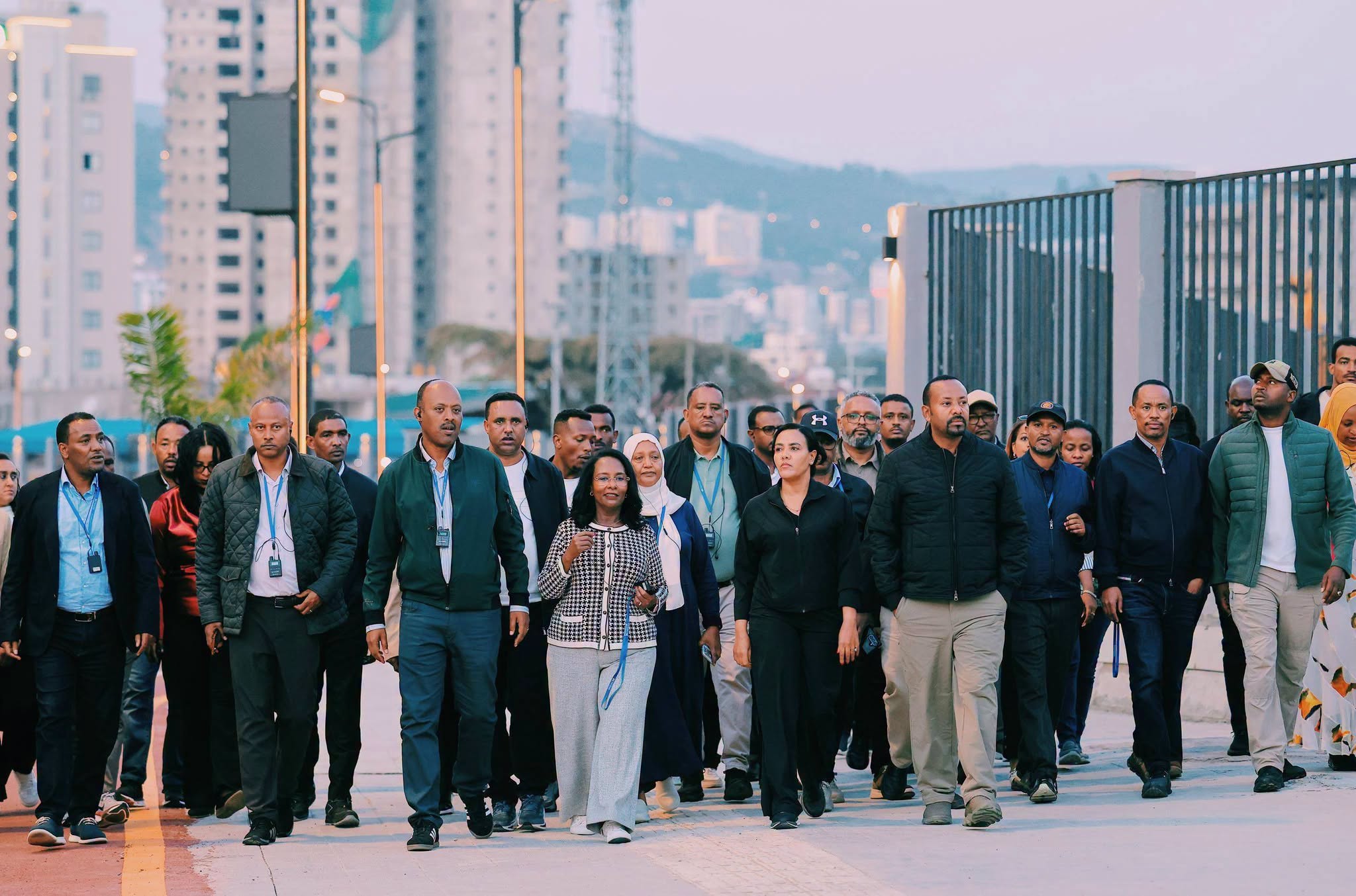
Addis Ababa City Mayor Adanech Abiebie outlined this broader vision during the inauguration and public opening of the completed Bole Corridor Development Project on November 18, in the presence of Prime Minister Abiy Ahmed.
Her account of the development presented urban renewal as an undertaking that must address the different needs of people who live, work and move through the city, while creating an environment that can support its future growth.
A central feature of this approach is the integration of public amenities and community facilities into the renewed urban environment.
The project includes two libraries, seven children’s playgrounds, seven sports fields and gyms, seven fountains and five public recreation spaces and plazas, alongside green areas and public toilets.
These facilities give the development a social dimension, creating places where residents can read, exercise, play, relax and interact.
Their inclusion reflects the importance of planning urban spaces not only around movement and construction, but also around the everyday activities that make neighbourhoods liveable and bring communities together.
The Mayor’s account also highlighted the incorporation of essential public institutions into the development. Two school buildings and two police-station buildings have been constructed or expanded, while a tourist information centre has been established as part of the project.
These facilities bring educational, public-safety and visitor services into the wider urban development framework.
The tourist information centre is intended to help visitors navigate and experience the capital through digital, written and printed information, as well as souvenirs.
The Mayor indicated that the city wants to expand such services as Addis Ababa becomes increasingly attractive to tourists. This places visitor services within the broader effort to make the capital more accessible and welcoming.
The development’s social ambitions are also reflected in interventions addressing vulnerability within the surrounding community.
The Mayor described the establishment of the Dignity Building, a facility intended to provide skills training and pathways towards productive livelihoods for women who had faced exploitative circumstances.
Her remarks underscored the need to complement social interventions with practical opportunities, enabling women to build their capabilities and pursue dignified lives.
The project also illustrates how urban transformation can bring together different economic and social functions within established neighbourhoods. Property owners have been renovating buildings and adapting some residential properties for commercial use, including arrangements that retain homes on upper floors while accommodating businesses at street level.
The Model Village, where 152 existing homes have been renovated and modernized, provides another example of efforts to improve residential environments while allowing commercial activities to coexist with housing.
The Mayor’s account further drew attention to the importance of infrastructure that remains largely out of sight but is fundamental to the functioning of a modern city.
Underground systems for sewerage, stormwater drainage, water, electricity, telecommunications and intelligent transport are incorporated into the development.
Their integration is intended to support the reliable provision of services and reduce the need for repeated disruption of improved public spaces.
Mobility has likewise been approached through the different ways people use urban streets. Alongside roads for vehicles, the project provides pedestrian walkways, cycling lanes, crossing bridges, designated public-transport boarding and drop-off points, parking facilities and electric-vehicle charging stations.
The combination reflects an effort to accommodate different forms of movement rather than treating the street solely as space for motor vehicles.
For the Mayor, however, the transformation does not end when construction is completed. She called on residents to protect and maintain the public facilities and infrastructure, emphasizing that the improvements should be preserved for future generations.
Her appeal places community responsibility and public ownership among the considerations that determine whether urban investments deliver lasting value.
The breadth of the project points to a wider understanding of what urban development can achieve.
Schools, libraries, recreational spaces, business premises, social interventions, visitor services and integrated infrastructure are being brought together within one development undertaking. Each serves a different purpose, but their combination is what gives the renewed area its wider urban function.
For African cities facing rapid urbanization and growing demands for infrastructure and public services, this integrated approach speaks to a significant development challenge: building urban environments that are not only modern in appearance, but also functional, inclusive and responsive to the needs of their communities.
Mayor Adanech’s account of the Bole Corridor Development Project places these interconnected priorities at the centre of Addis Ababa’s urban transformation.
It presents a vision in which the measure of development is not confined to what a city builds, but also encompasses the opportunities it creates, the services it brings closer to residents and the quality of life its urban spaces make possible.