
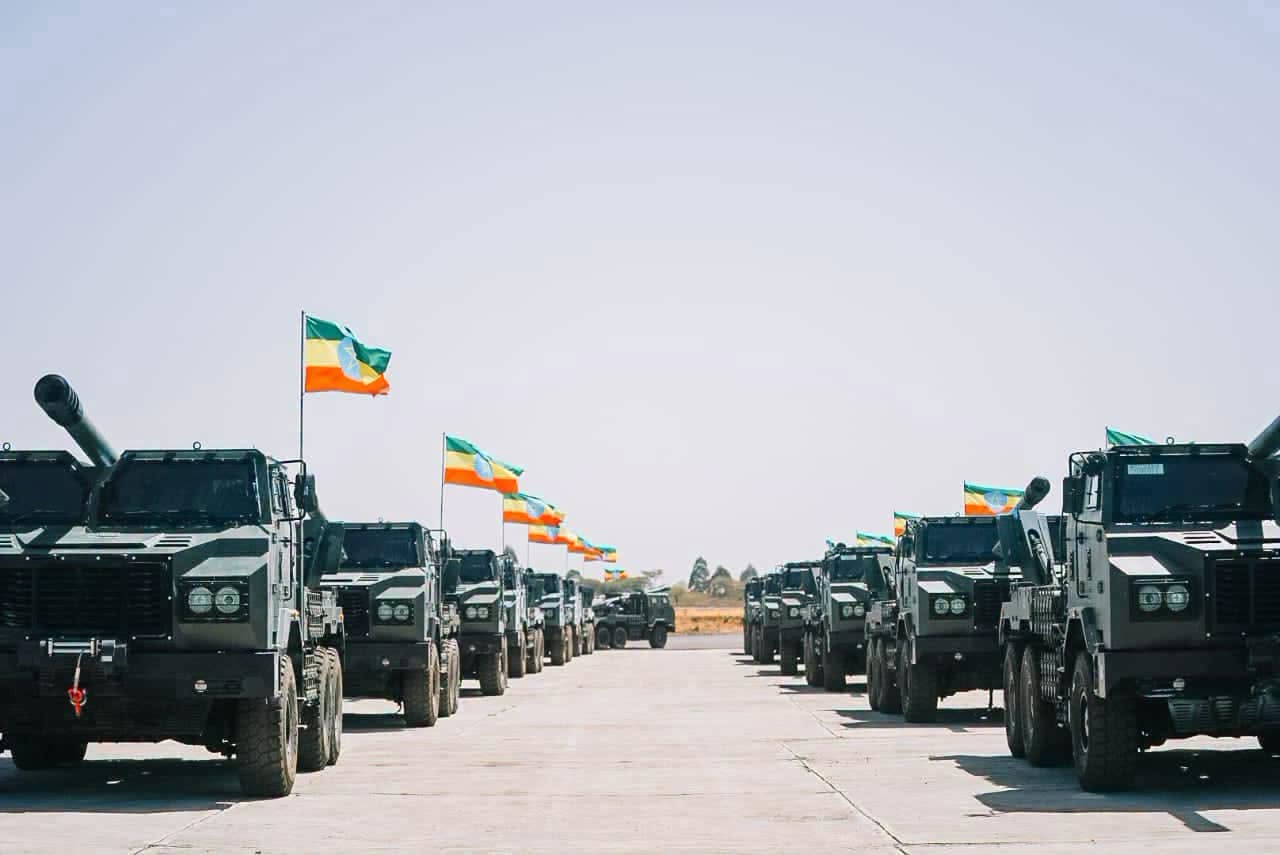
PM Abiy Outlines Four-Pillar Strategy to Strengthen Ethiopia’s Defence Capabilities
Addis Ababa, November 26, 2026 (FMC) — Ethiopia is pursuing a comprehensive military capability-building strategy centred on self-reliance, technological advancement, personnel training and domestic manufacturing, Prime Minister Abiy Ahmed told the House of Peoples’ Representatives, outlining the government’s approach to strengthening national defence amid changing regional and global security conditions.
The strategy is intended to equip the Ethiopian National Defence Force (ENDF) to respond to contemporary threats while reducing dependence on external sources for essential military supplies and capabilities.
PM Abiy explained that the military has developed its own long-term strategic framework, aligned with the country’s broader Medemer Grand Strategy.
Domestic production constitutes one of its central pillars. The Prime Minister identified the capacity to manufacture military uniforms, ammunition and other essential supplies as part of Ethiopia’s drive towards defence self-sufficiency.
He also pointed to the importance of developing the country’s ability to manufacture military equipment, including drones, and maintain aircraft and other defence systems.
Technological advancement is another priority. With warfare increasingly shaped by sophisticated technologies, PM Abiy said the armed forces must acquire contemporary capabilities and remain ahead of emerging threats.
He also underscored the importance of training, noting the progress made by the Ethiopian Air Force, which previously had a limited number of pilots but has since expanded its capabilities.
The strategy encompasses the development of land and air forces, as well as technological and other military capabilities. The Prime Minister stressed that a strong defence institution requires coordinated investment across these areas rather than reliance on a single military component.
He also connected military readiness to the country’s economic strength, arguing that building and sustaining defence capabilities requires a strong economic foundation.
The ability to produce equipment, maintain systems, train personnel and adapt to technological changes depends on the resources and industrial capacity available to the country.
PM Abiy described Ethiopia’s defence posture as protective rather than expansionist, stating that the country has no intention of attacking its neighbours or any other nation.
He said investments in aircraft and air-defence systems are intended to protect Ethiopia against threats from a distance, while also maintaining the capacity to respond to security challenges that could affect neighbouring countries.
The Prime Minister placed this approach within Ethiopia’s wider regional responsibilities, describing the country as an anchor of stability and a major regional actor. He said Ethiopia considers itself a big brother to neighbouring countries and remains committed to supporting regional security when threats arise.
He maintained that Ethiopia would continue strengthening its military readiness, conducting drills and preparing its forces to deter potential aggression, defend the country’s sovereignty and territorial integrity, and preserve gains made in the event of conflict.
The Prime Minister reiterated that Ethiopia has no record or intention of invading another country, while warning that it would firmly defend itself against any attempt to violate its sovereignty.