
Descendants of 20th-Century Pan-Africanist Leaders Visit Development Projects, Celebrate Ethiopia’s Legacy
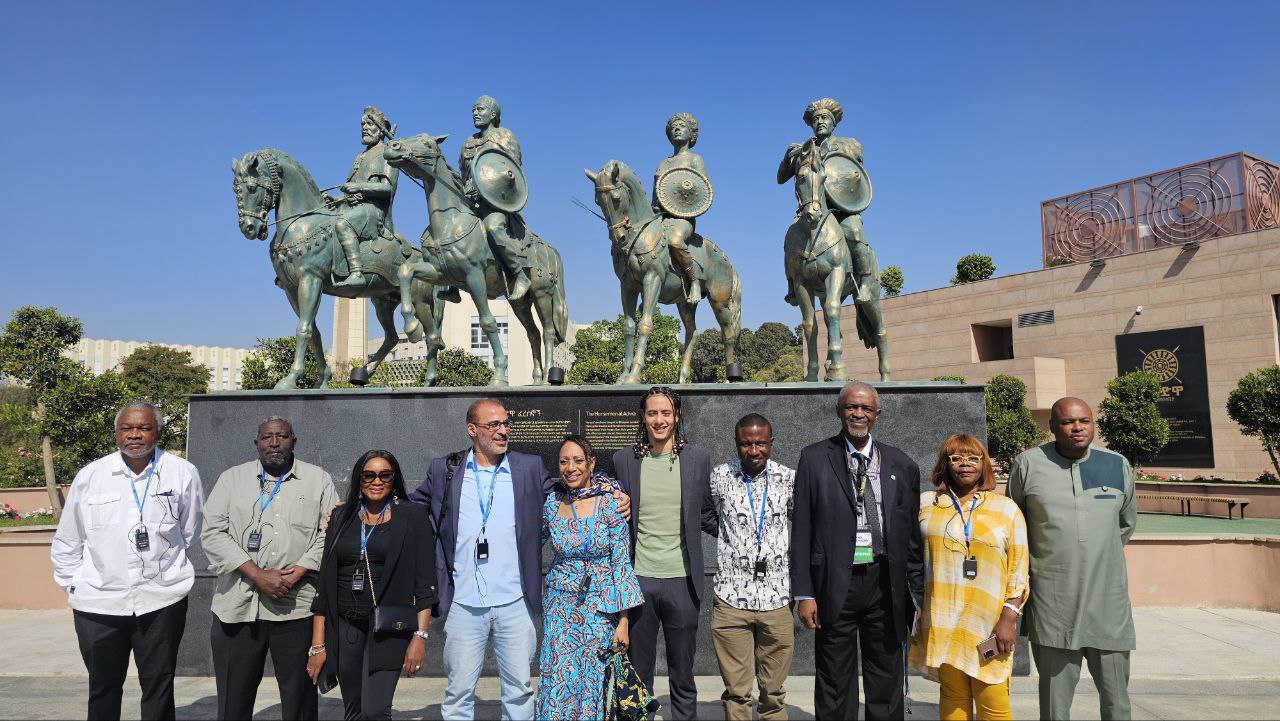
Addis Ababa, December 5, 2025 (FMC) — A delegation of descendants of Africa’s 20th-century liberation and Pan-Africanist leaders toured key development projects and historic sites in Addis Ababa today, reflecting on Ethiopia’s enduring role as a beacon of African unity, independence, and self-reliance.
The delegation includes the offspring and relatives of Patrice Lumumba, Nelson Mandela, Kwame Nkrumah, Kenneth Kaunda, Steve Biko, Oliver Tambo, Julius Nyerere, and other prominent figures of Africa’s liberation and Pan-African movements.
Moussa Ibrahim Gaddafi, nephew of the late Muammar Gaddafi and Executive Secretary of the African Legacy Foundation, also joined the visit.
During their tour, the delegation explored the Adwa Victory Memorial, the National Palace, riverside and corridor development initiatives, and the Science Museum, among other notable sites. At the Adwa Memorial, the visitors observed exhibits highlighting Ethiopia’s pivotal role in resisting colonialism and Italian fascist forces in the late 19th and early 20th centuries, as well as its central contribution to the Pan-Africanist movement.
Following their visit to the historic Adwa Victory Memorial Museum, Julius Nyerere’s son, Madaraka, told the media that the self-financed GERD is a huge and important infrastructure project that other African countries can learn from. “I think it is a really important example of how Africa can finance its own budget without depending on external sources,” he noted.
For Madaraka, Adwa is a huge inspiration for anyone who has Pan-Africanist ideas. “I have been quite impressed (by the museum). I knew a bit about the fact that Ethiopia fought against Italians. But from this visit I have received more details of what happened around that struggle in Adwa.”
According to him, he has also picked inspiration and learned from Ethiopia’s struggle against colonialism that the country managed to become just the only country in Africa which did not come under colonialism. The victory of Adwa is a great inspiration, he said. “It only makes me realize it is part of Ethiopia’s history.”
Therefore, it is really natural, for example, that the Organization of African Unity was established here; and the AU headquarters remains in Ethiopia.
Patrice Lumumba’s son, Roland, also commended Ethiopia for having its own energy, which is “something positive for every country.”
Appreciating the historic Adwa Victory Memorial Museum, he highlighted Ethiopia’s inspirational Pan-African role for other African countries.
The victory of Adwa, which is the beginning of the struggle against colonialism, is also the beginning of Pan-Africanism, Roland stated, encouraging other Africans who pass through Addis Ababa to visit the museum he said he liked very much.
He further noted that Ethiopia got the chance in the beginning of 1960s to have the African Union and the different governments of Ethiopia have been working on it; and it became the capital of Africa.
He also encouraged the Government of Ethiopia to continue working for the unity and peace of Africa as the country has been the center of Pan-Africanism and African unity.
Observers say the GERD is seen by many as a modern-day “Adwa,” inspiring Africans by symbolizing self-reliance, unity, and breaking free from dependency.
The 1896 Battle of Adwa was a pivotal moment that profoundly inspired and energized the global struggle against colonialism, becoming a powerful symbol of Black resistance and pride.
The delegation also attended the African Media Awards in Addis Ababa last night, organized by Art Africa, celebrating contemporary achievements in African media and culture.