
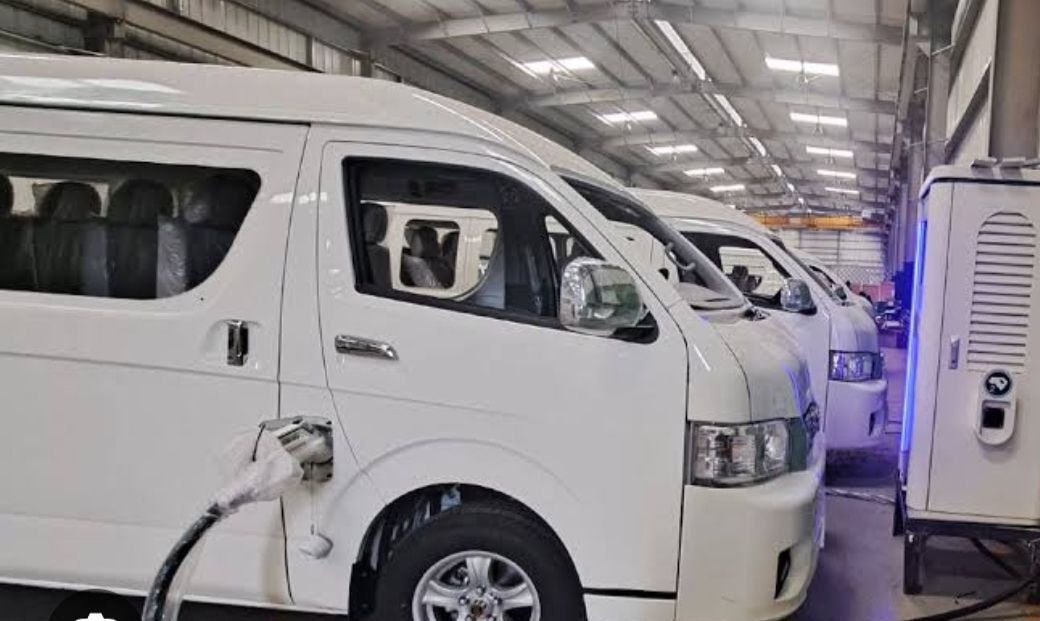
Ethiopia sets ambitious targets for EV assembly and infrastructure development
Addis Ababa, March 30, 2026 (FMC) – Ethiopia is advancing its electric mobility agenda with plans to expand the country’s electric vehicle (EV) assembly centers to 60 in the coming years and strengthen supporting infrastructure nationwide.
The Ministry of Transport and Logistics indicated that the government is actively promoting the use of electricity in the transport sector to reduce reliance on fuel.

In an exclusive interview with Fana Media Corporation, State Minister Ber’o Hassen noted that directives have been issued to convert all vehicle assembly lines to electric vehicle production.
He highlighted that more than 100,000 electric vehicles are already operating in Ethiopia and that the government has set a target to increase this number to 500,000 in the coming years. Since 2016 E.C., domestic production of gasoline-powered vehicles has been banned, and all government vehicle acquisitions have been shifted to electric models.
To support the growing sector, gas stations are being instructed to install EV charging facilities, while financial and non-financial incentives are being offered to businesses engaged in the electric vehicle supply chain, the State Minister indicated.
Policies include tax exemptions for locally assembled EVs, a 15% customs duty on fully imported electric vehicles, a 5% duty on partially assembled imports, and discounted registration fees with distinctive green license plates to encourage wider adoption, Mr. Ber’o recalled.
In the public transport sector, Ethiopia has launched public-private partnerships in Addis Ababa, and discussions are ongoing with foreign investors to expand participation in the sector.
These measures, he noted, reflect Ethiopia’s commitment to scaling up electric vehicle production and infrastructure, building on past achievements to support broader adoption and a greener, more sustainable transport system.