
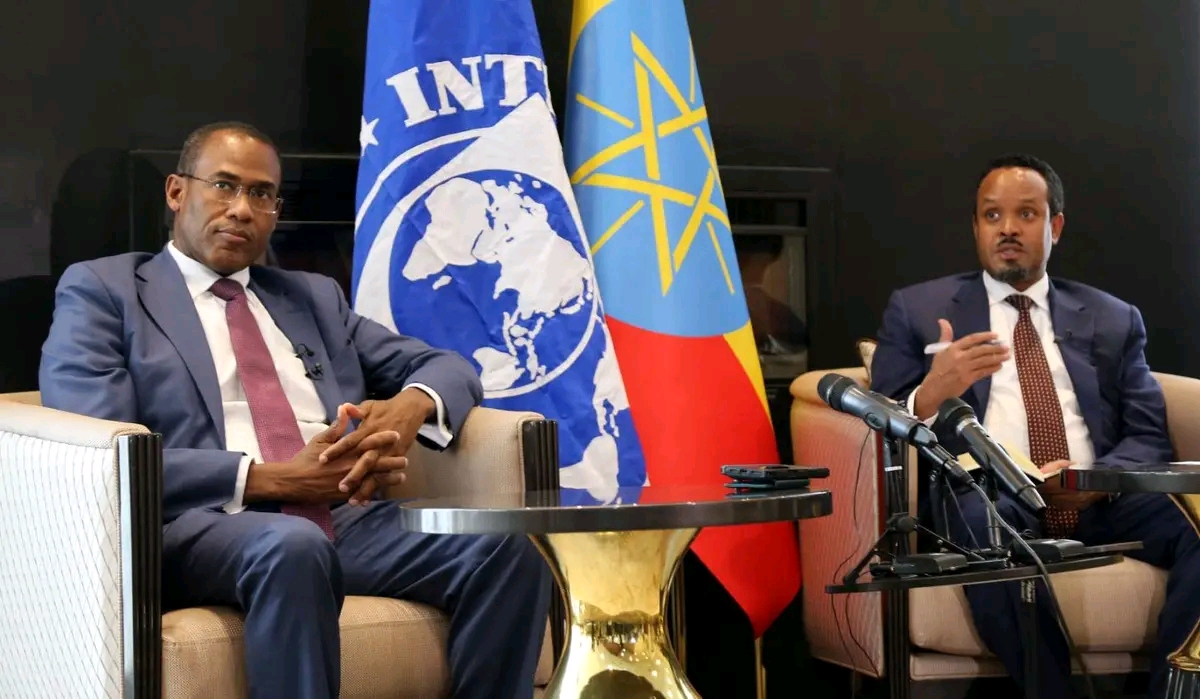
IMF Applauds Ethiopia’s Low-Carbon Development and Renewable Energy Expansion
Addis Ababa, December 5, 2025 (FMC) — During his official visit to Ethiopia this week, IMF Deputy Managing Director Nigel Clarke applauded Ethiopia’s leadership in low-carbon development and renewable energy, highlighting flagship projects such as the Koysha Hydropower Project as central to the country’s strategy for sustainable, low-carbon industrialization.
IMF Deputy Managing Director Clarke lauded Ethiopia’s sweeping economic reforms, describing the Homegrown Economic Reform Agenda as “nothing short of impressive.”
During his visit, Clarke held discussions with Finance Minister Ahmed Shide, National Bank of Ethiopia Governor Eyob Tekalegn, and Planning and Development Minister Fitsum Assefa.
Finance Minister Ahmed Shide and Clarke held a joint press briefing in Addis Ababa, where Clarke said the visit provided an important opportunity to observe firsthand the progress of Ethiopia’s “historic economic reforms,” anchored in a four-year IMF-supported program.
According to Clarke, the reforms aim to transform the Ethiopian economy and build a platform for long-term sustainable growth. He noted that Ethiopia has registered dramatic improvements in key macroeconomic indicators within just 18 months of entering the Extended Credit Facility (ECF) program.
Clarke highlighted that foreign exchange reserves have been significantly strengthened, inflation has declined markedly due to coordinated policy actions, and export earnings have grown strongly, reflecting renewed confidence and improved formal repatriation of proceeds. He also noted a surge in tax revenues, reversing nearly a decade of decline in the tax-to-GDP ratio.
“These are incredibly important achievements of the reform program and achievements on which Ethiopia can continue to build,” Clarke said, emphasizing that the next phase must focus on continuity and sustaining momentum.
Finance Minister Ahmed Shide said Clarke’s visit underscores the depth of the partnership between Ethiopia and the IMF, as well as the seriousness with which both sides are pursuing Ethiopia’s economic reform agenda. He emphasized that Ethiopia is implementing a comprehensive economic reform program aimed at stabilizing the macroeconomy, modernizing institutions, fostering private sector-led growth, and unlocking new sources of productivity.
The Minister noted that the staff mission for the fourth review of the Extended Credit Facility has been completed, with a staff-level agreement expected to be finalized shortly, paving the way for the next phase of cooperation.
Ahmed highlighted key achievements: inflation declined to 10.9 percent last month, down from 16 percent a year earlier, following coordinated fiscal and monetary policy actions. The foreign exchange market has stabilized, operating with greater flexibility, and supply to the private sector has improved, enhancing market efficiency.
On government revenue, domestic revenue collection rose by 61.7 percent to 1.3 trillion birr in 2024/25, and the tax-to-GDP ratio increased to 7.8 percent after nearly a decade of decline. Export earnings surged by 119.2 percent to USD 8.3 billion as exchange-rate reforms reduced illicit trade and encouraged formal repatriation of proceeds.
The Finance Minister also noted that Ethiopia has shifted from broad subsidies to targeted support for low-income households, significantly increasing poverty-targeted spending on health, education, and the Productive Safety Net Program.
Ethiopia is undertaking a four-year IMF-supported program designed to address macroeconomic imbalances and support the shift toward a more resilient, market-oriented economy.