
🇪🇹 Industrial Reform After AGOA Exit Reshaped #Ethiopia’s Energy and Manufacturing Strategy – PM Abiy Ahmed
Addis Ababa, April 26, 2026 (FMC) – Industrial reforms undertaken in the aftermath of Ethiopia’s withdrawal from the African Growth and Opportunity Act (AGOA) have reshaped the country’s energy and manufacturing strategy, Ethiopian Prime Minister Abiy Ahmed said.
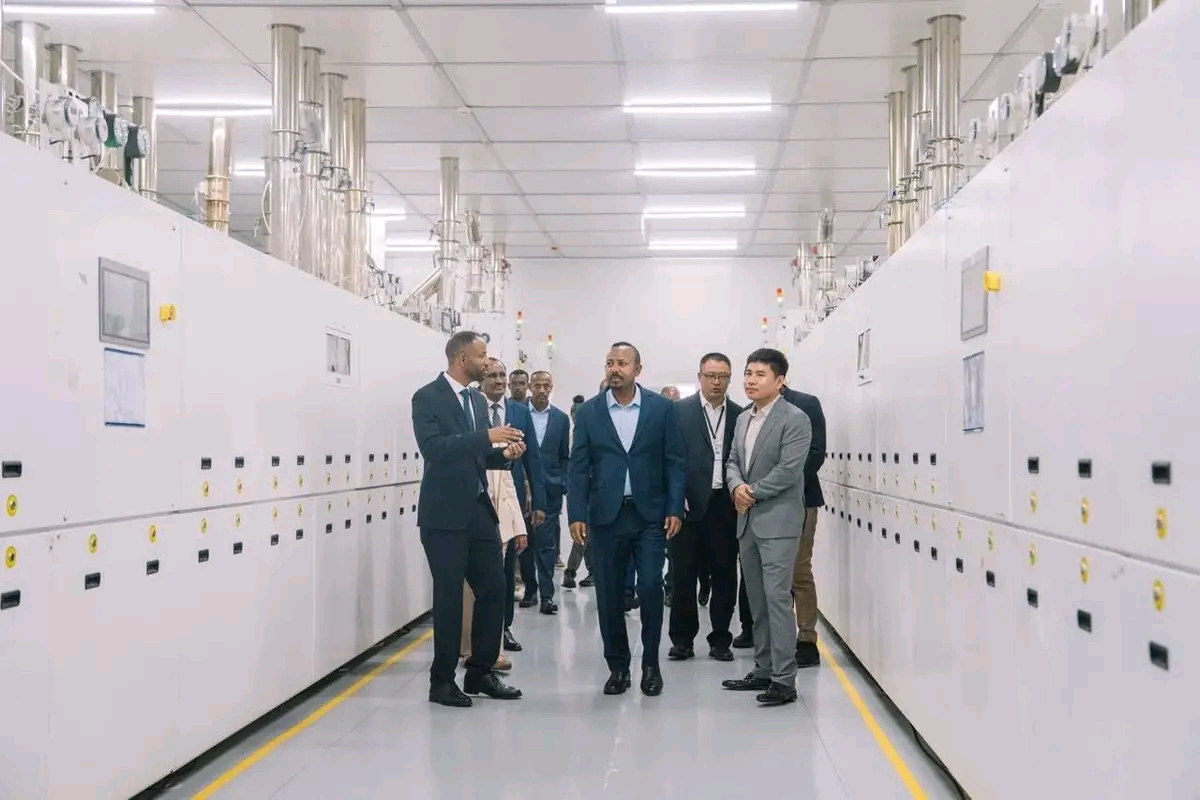
The Prime Minister made the remarks while addressing an inauguration ceremony held at the Hawassa Industrial Park, where the second phase of Toyo Solar Energy, Origin and Lumitech solar factories, and the HZ gas production plant were launched.
He recalled that the industrial park, previously centered on textile production, faced severe operational setbacks following Ethiopia’s withdrawal from AGOA, which reduced access to key export markets and left much of the facility underutilized. This, he said, exposed the risks of relying heavily on a single economic sector.
According to the Prime Minister, this experience became a turning point for national economic planning, leading to broad industrial policy reforms aimed at diversifying production and expanding into high-value sectors such as renewable energy and advanced manufacturing.
He noted that Ethiopia has since drawn lessons from Vietnam’s industrial transformation, adopting a more diversified and technology-driven development model to strengthen both energy security and long-term economic resilience.
The Prime Minister stated that the solar factories inaugurated on the occasion have a combined capacity of 11.3 gigawatts of clean energy annually. He further explained that ongoing solar developments in Hawassa, along with projects in Debre Birhan and Addis Ababa, are expected to raise Ethiopia’s total solar energy output to over 20.3 gigawatts next year.
He added that Hawassa alone is projected to reach 15.3 gigawatts of solar generation capacity as additional facilities become operational.
Alongside the solar projects, the HZ gas plant will produce 900 tons of oxygen, 40,000 tons of nitrogen, and 7 tons of hydrogen annually, contributing to industrial supply chains and energy needs.
Abiy also emphasized that the new facilities are powered by advanced technologies, including artificial intelligence and robotics, which enhance production efficiency and industrial performance. He stressed that scaling up such technologies is essential for strengthening competitiveness in modern industrial sectors.
The Prime Minister further indicated that the projects are expected to generate more than one billion U.S. dollars in annual foreign exchange earnings, significantly boosting Ethiopia’s economic capacity.
He concluded that Ethiopia’s industrial transformation demonstrates how strategic reform, sector diversification, and technological adoption can reposition the country toward a more resilient and competitive economy.