
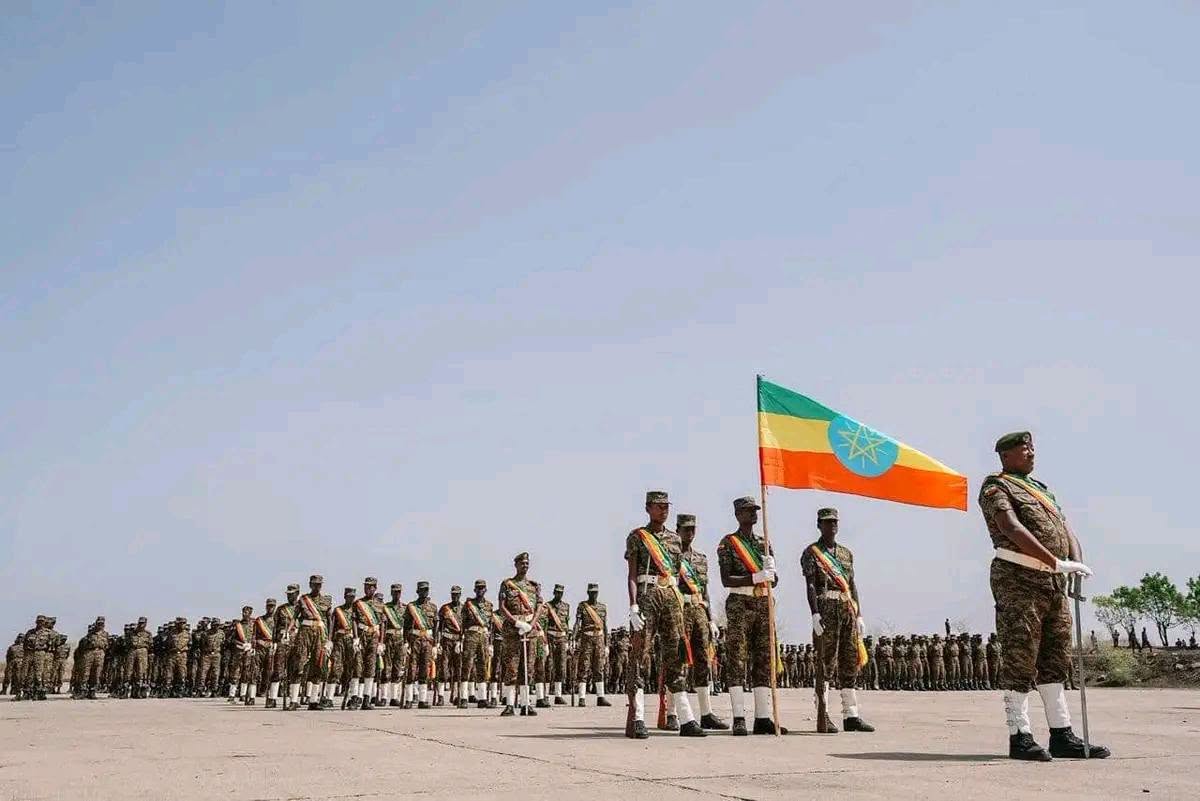
𝗘𝗧𝗛𝗜𝗢𝗣𝗜𝗔’𝗦 𝗗𝗘𝗙𝗘𝗡𝗦𝗘 𝗙𝗢𝗥𝗖𝗘: 𝗔 𝗠𝗢𝗗𝗘𝗥𝗡 𝗔𝗥𝗠𝗬 𝗥𝗢𝗢𝗧𝗘𝗗 𝗜𝗡 𝗛𝗜𝗦𝗧𝗢𝗥𝗬, 𝗗𝗜𝗦𝗖𝗜𝗣𝗟𝗜𝗡𝗘𝗗 𝗕𝗬 𝗘𝗧𝗛𝗜𝗖𝗦, 𝗔𝗡𝗗 𝗘𝗤𝗨𝗜𝗣𝗣𝗘𝗗 𝗙𝗢𝗥 𝗧𝗛𝗘 𝗙𝗨𝗧𝗨𝗥𝗘
Addis Ababa, November 2, 2026 (FMC) — Ethiopia’s defense history is inseparable from its history of independence. Across generations, the country’s sovereignty has been defended through extraordinary sacrifice, determination, and courage.
From repelling foreign invasions to safeguarding national dignity, the military has remained a central institution in the long struggle to preserve Ethiopia’s independence and territorial integrity.
That legacy is not merely a record of past battles; it is a national responsibility that continues to shape the mission of the Ethiopian National Defense Force (ENDF).
A country’s sovereignty cannot rest on historical achievements alone. It must be secured through a capable, disciplined, technologically equipped, and professionally prepared defense force.
Ethiopia’s changing security environment demands an army that combines the determination inherited from its history with the capabilities required by modern warfare.
The ENDF’s ongoing modernization, therefore, is not simply about acquiring sophisticated weapons.
It is about building a comprehensive defense institution whose strength rests on trained personnel, operational competence, technological capacity, institutional discipline, and ethical conduct.
The army’s defining strength also lies in its relationship with the Ethiopian people. It is not an institution detached from society, but a national force drawn from the population, entrusted with protecting its security and safeguarding the country’s sovereignty.
Its bond with the public, grounded in cooperation and shared responsibility, is fundamental to the legitimacy and effectiveness of its national mission. An army’s strength cannot be measured by its weapons alone; the confidence and support of the people it serves are equally consequential.
Modernization is an indispensable part of this responsibility. Warfare has changed profoundly, with technology, intelligence, speed, and precision increasingly shaping military capabilities.
A defense force that fails to adapt to these realities risks falling behind the demands of its time.
Ethiopia’s efforts to combine modern weaponry with human-resource development, professional training, and technological advancement reflect the need to build a military capable of responding to contemporary security challenges.
The Ethiopian Air Force illustrates this modernization drive. Modern fighter jets, advanced drones, and sophisticated air-defense systems constitute important elements of the country’s efforts to strengthen its aerial defense capabilities.
Air superiority and the protection of national airspace are essential dimensions of sovereignty, particularly in a security environment where threats can emerge across multiple domains.
The ability to monitor, protect, and respond to developments in the air domain strengthens the country’s broader defense posture.
Yet military hardware alone does not make an air force formidable. Its effectiveness depends on the knowledge, technical expertise, training, and professional judgment of the personnel operating these systems.
Advanced platforms must be matched by the human capabilities to deploy them effectively and responsibly.
This is why the development of skilled personnel must advance alongside the acquisition of modern equipment and technology.
More fundamentally, the character of a professional defense force is determined by more than its technological sophistication.
Military strength must be matched by an equally firm commitment to ethics, discipline, and the rule of law. Respect for constitutional order, protection of human rights, safeguarding civilians, and compliance with legal obligations are essential responsibilities of a national defense institution.
These principles are not secondary considerations to military capability; they are fundamental to the conduct and credibility of a professional army.
For Ethiopia, this responsibility extends beyond its national borders. Peace and security in the Horn of Africa are closely interconnected, making regional cooperation and collective security essential to lasting stability.
Through peacekeeping engagements, security cooperation, and contributions to regional stability, the ENDF has established a record of involvement in wider African peace and security efforts.
Such engagements underscore the importance of a defense institution capable of serving both national security priorities and broader regional responsibilities.
Ultimately, the ENDF embodies a legacy that extends across generations. For Ethiopians, it represents sacrifice, national service, sovereignty, and the enduring responsibility of defending the country. Preserving that legacy requires more than commemorating past victories.
It demands continuous modernization, professional excellence, institutional discipline, and unwavering commitment to the people and constitutional order the army is entrusted to protect.
History gives the Ethiopian defense force its legacy; modernization equips it for the challenges of the present; and professional ethics must define how it fulfils its duty. These three foundations are inseparable in building a defense force capable of safeguarding Ethiopia’s sovereignty and meeting the demands of the future.