
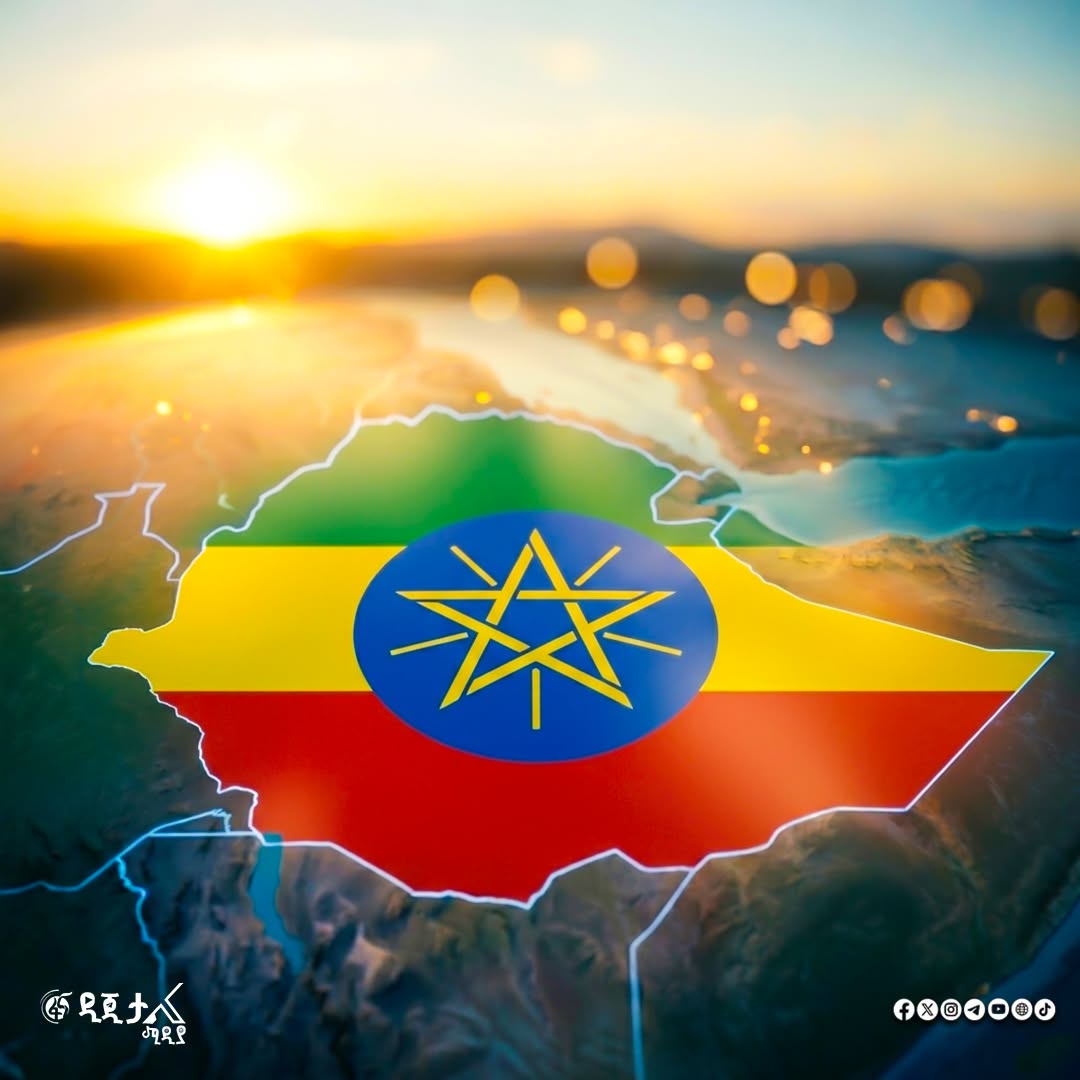
𝗪𝗛𝗘𝗥𝗘 𝗥𝗢𝗔𝗗𝗦 𝗟𝗘𝗔𝗥𝗡 𝗧𝗢 𝗟𝗘𝗔𝗗 𝗧𝗢 𝗕𝗘𝗔𝗨𝗧𝗬 𝗔𝗚𝗔𝗜𝗡
Addis Ababa, June 30, 2026 (FMC) – #Ethiopia’s tourism story is rooted in one of the deepest civilizational timelines in human history. It is a country where the origins of humanity meet enduring kingdoms, living traditions, and landscapes that have remained largely unchanged for millennia.
Today, that same landscape is being gradually extended through new destinations that do not replace history, but continue its spatial and experiential logic in contemporary form.
From the Lower Valley of the Awash, where the discovery of Lucy reshaped global understanding of human evolution, to the rock-hewn churches of Lalibela carved with extraordinary precision into volcanic stone, Ethiopia presents a continuity of history that few nations can match.
These are not isolated heritage points but reference markers of a civilizational geography that still defines how the country is experienced today.
The ancient city of Aksum, once a powerful center of the classical world, still stands through its towering stelae and sacred traditions, while Gondar’s royal castles and Harar’s walled city continue to function as living intersections of memory, faith, and identity.
This historical depth does not exist apart from the present tourism landscape—it actively shapes it. The way Ethiopia is now developing destinations reflects an attempt to extend this same sense of continuity into new spatial forms.
For many years, tourism in Ethiopia remained concentrated within these historic circuits, limiting how fully the country’s broader geography could be experienced.
The current transformation, underway since 2018, has sought to expand this narrative rather than replace it—repositioning tourism as a national system that connects heritage landscapes with emerging ecological and urban destinations.
Nowhere is this continuity more visible than in Addis Ababa.
The capital, long understood as a gateway to Ethiopia’s historic north, is increasingly becoming part of the tourism story itself. Unity Park, located within the National Palace compound, extends the country’s imperial and political history into a publicly accessible cultural environment, where royal heritage, diplomatic history, and landscaped gardens coexist in one space.
In this sense, the park does not stand apart from Ethiopia’s historical identity—it curates and re-presents it in contemporary form.
Entoto Natural Park reflects a similar logic, linking the forested highlands that once held early imperial significance with modern recreational infrastructure.
What was historically a place of settlement and strategic elevation is now also a space for hiking, cycling, and panoramic urban viewing—where history and recreation overlap rather than diverge.
Friendship Park, built on reclaimed urban land, further extends this evolution by turning modern urban space into a large-scale public landscape, reinforcing the idea that contemporary Addis Ababa is built on layers of both memory and renewal.
Beyond the capital, this same relationship between past and present continues across Ethiopia’s regional destinations. The Gorgora Eco-Resort on the shores of Lake Tana is being developed in a landscape already defined by centuries of monastic life and spiritual scholarship.
Lake Tana, source of the Blue Nile and home to ancient island monasteries, has long been a center of Ethiopian religious heritage.
The modern development at Gorgora does not stand in contrast to this history—it builds accessibility and hospitality infrastructure around it, allowing visitors to experience both the ecological beauty and historical depth of the region as a unified space.
In Oromia, the Wenchi crater lake destination reflects another layer of this continuity. The volcanic landscape, long known to local communities, is now being opened to wider tourism through structured access routes and eco-sensitive infrastructure.
What was once a naturally known but limited-access environment is becoming part of Ethiopia’s broader tourism geography, without altering its geological identity.
Further southwest, the Koysha eco-tourism development represents an expansion of this same logic into one of the country’s most complex natural environments.
The region, shaped by the Omo basin system, connects hydrological, ecological, and cultural landscapes into a single tourism framework. Here, tourism development does not erase geography—it organizes it for experience while preserving its structural character.
Wildlife-based tourism adds yet another dimension to this evolving system. The Chebera Churchura Elephant Paw Lodge, located within Chebera Churchura National Park, introduces structured access to one of Ethiopia’s most important elephant habitats.
This is not a departure from Ethiopia’s tourism identity but an expansion of it—from historical and cultural landscapes into biodiversity-rich ecological systems that are equally part of the country’s long-term heritage.
Across these developments, restoration of historic sites continues in parallel. Fasil Ghebbi in Gondar, Harar Jugol, Lalibela’s rock-hewn churches, and other cultural landmarks remain central pillars of Ethiopia’s tourism identity.
Their preservation ensures that modernization does not displace heritage, but instead operates alongside it, reinforcing the continuity between past and present.
Seen together, these developments reveal a single evolving system rather than separate tourism categories. Heritage sites, ecological destinations, urban parks, and wildlife zones are increasingly functioning as interconnected components of one national tourism landscape.
What emerges is not a division between what Ethiopia was and what it is becoming, but a continuous spatial dialogue between both. Roads, in this sense, are not simply infrastructure—they are connectors of time as much as place, linking ancient kingdoms to contemporary landscapes, and inherited memory to newly accessible experience.
Ethiopia’s tourism journey is therefore neither a departure from its past nor a reinvention of it. It is the gradual unfolding of a single story, where the country’s deepest historical layers and its newest destinations finally begin to speak to each other in the same geographic language.