
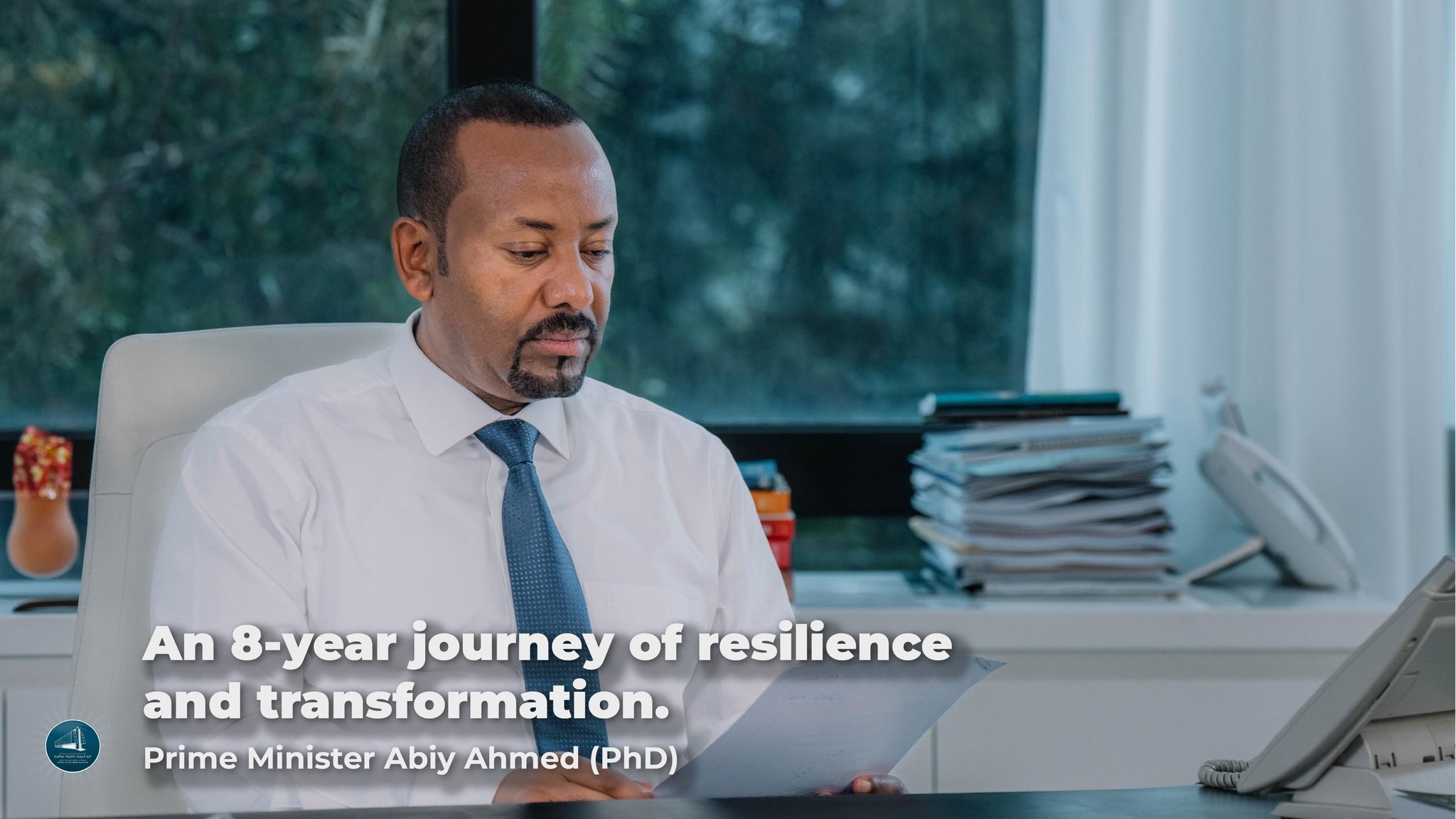
Ethiopia Charts Shift to Market-Oriented, Diversified Economy After Eight Years of Reform
Addis Ababa, April 2, 2026 (FMC) – Ethiopia has undergone a far-reaching economic transformation over the past eight years, transitioning from a state-led model to a more diversified, resilient, and market-oriented economy, according to a statement issued by the Office of the Prime Minister of Ethiopia.
The statement, released to mark the eighth anniversary of the reform era launched on April 2, 2018, outlined sweeping structural changes across key sectors aimed at addressing longstanding economic constraints and unlocking new sources of growth.
Prior to 2018, Ethiopia’s economic performance was constrained by structural challenges, including limited job creation, weak export diversification, and heavy reliance on external borrowing. The Agriculture Development-Led Industrialization (ADLI) framework expanded agricultural output but remained insufficiently action-oriented and did not fully utilize the country’s agricultural potential or generate adequate rural incomes to drive industrialization. Manufacturing exports remained below three billion dollars for years, while industrial parks operated with limited integration into the domestic economy.
The previous model also contributed to macroeconomic vulnerabilities, as large infrastructure investments financed through external borrowing failed to generate sufficient foreign exchange, increasing debt pressures. Key sectors such as telecommunications, finance, and mining remained underdeveloped or closed to private participation.
Since 2018, the government has implemented a comprehensive reform agenda to address these constraints and unlock new sources of growth. Agriculture has been a central pillar of this effort, with Ethiopia achieving wheat self-sufficiency and emerging as Africa’s largest wheat producer by the 2024/25 fiscal year. Crop diversification has expanded significantly, alongside rapid growth in livestock and high-value agriculture.
Annual egg production has reached 9.4 billion, milk production approximately 13 billion litres, and meat production has increased nearly tenfold. Cluster farming, involving 9.5 million farmers across 12.8 million hectares, has contributed to a 29 percent increase in productivity and an 18 percent rise in incomes. Overall agricultural output has grown from 41.7 million tons to around 150 million tons within seven years, while coffee production has doubled to nearly one million tons, generating about 2.65 billion dollars in export earnings in 2024/25.
Environmental sustainability has also been a key focus, with the Green Legacy Initiative leading to the planting of more than 48 billion seedlings and the rehabilitation of 12.5 million hectares of land. Forest coverage increased from 17 percent in 2019 to 23 percent in 2025, contributing to reduced soil erosion and improved agricultural productivity.
In industry, policy has shifted toward integrated Special Economic Zones that strengthen linkages between manufacturing, logistics, and services. The number of investors has increased from 36 in 2018 to over 200, with domestic investors accounting for nearly 65 percent. Export-oriented production from these zones continues to expand, supporting a broader export base.
The mining sector has been repositioned as a major driver of growth, with gold production reaching nearly 39 tons and generating approximately 3.5 billion dollars in export earnings in 2024/25, accounting for more than 45 percent of total exports. Import substitution efforts have also advanced, with coal imports fully replaced by domestic production and cement capacity exceeding 20 million tons annually.
Digital transformation and financial sector reforms have further accelerated economic change. Mobile subscriptions have increased from 37.9 million to 87.9 million, while mobile financial services now serve more than 58 million users, with transactions exceeding 7.5 trillion birr. Credit allocation has shifted toward the private sector, which now accounts for more than 85 percent of total bank lending, supported by reforms in financial governance and restructuring of state-owned banks.
The statement also highlighted strong fiscal discipline as a defining feature of the reform period, citing reduced reliance on external commercial borrowing, improved management of state-owned enterprises, and more efficient project selection.
Urban development has expanded alongside these reforms, with investments in infrastructure, housing, and integrated corridor development enhancing the functionality and competitiveness of cities. These initiatives have extended beyond Addis Ababa to more than 50 cities nationwide, positioning urban centers as hubs for innovation, tourism, and business.
Overall, Ethiopia is transitioning toward an economic model anchored in productivity, private sector dynamism, and structural transformation across agriculture, industry, mining, finance, and urban development. While challenges remain, the reforms are laying the foundation for sustainable and inclusive growth.
The Office of the Prime Minister of Ethiopia stated that the reform period has advanced the country toward greater self-reliance and a more diversified and inclusive growth trajectory, with progress achieved despite significant challenges demonstrating strong potential for continued development.
The statement concluded with a call for unity and collective effort to build a shared and prosperous future.