
April Roundup: Ethiopia’s Government Recap Shows April Gains in Industrial Growth, Urban Projects & Regional Diplomacy
Addis Ababa, May 1, 2026 (FMC) – Ethiopia’s Prime Minister Abiy Ahmed Ali carried out a series of high-level activities in April 2026 centered on scientific progress, urban renewal, economic reform, and regional diplomacy, according to a recap shared by the Office of the Prime Minister.
During the month, several landmark projects were inaugurated across multiple sectors. The Prime Minister officially opened a major research complex at the Armauer Hansen Research Institute (AHRI), which includes 40 laboratories and a bioequivalence centre designed to certify locally produced medicines.
Urban development also marked a significant milestone in April, with notable progress in both physical and digital infrastructure. The Arada Park project was highlighted as a profound transformation, converting a 40-hectare area previously characterized by neglected and hazardous housing into a multi-purpose urban destination through integrated infrastructure and efficient land use.
The development incorporated the renovation of more than 700 existing homes to ensure community uplift. In the same period, the Addis Sports Park was inaugurated as a 5.7-hectare facility featuring Olympic-standard sports infrastructure, statues honoring 15 gold medallists, and 105 commercial shops constructed for relocated residents.
The country’s energy capacity was further strengthened with the inauguration of the Assela Wind Farm, which has a generation capacity of 100 megawatts, alongside the launch of the Toyo Phase 2, Origin, and Lumintech solar factories in Hawassa. Together with the new HZ Gas plant, these projects are expected to generate 11.3 gigawatts of clean energy annually.
In the tourism sector, the Haroo Dendi Lodge was officially opened under the Dine for Generation initiative aimed at promoting high-end eco-tourism. Public service delivery was also expanded through the launch of the MESOB Mobile Bus Service, introduced as a mobile government platform to provide essential services such as ID registration and licensing directly to citizens.
At the continental level, Prime Minister Abiy Ahmed was appointed as the African Union Champion for Artificial Intelligence and Digital Health, a role that recognizes his leadership in advancing innovation and digital transformation as tools for sovereignty, efficiency, and inclusive growth. The appointment underscores the progress Ethiopia has made in digitization under his leadership.
On the economic front, the Prime Minister presided over the third 100-day review and a nine-month performance report, which indicated a 9.2 percent economic growth rate, with projections of reaching 10.2 percent in the coming year. The report also showed that state-owned enterprises transitioned from multi-billion-birr losses to generating 2.1 trillion birr in revenue. This progress is linked to a reform agenda that prioritizes the private sector as a key driver of growth, supported by financing mechanisms such as capital markets and expanded public-private partnerships.
In high-level interviews conducted during the month, the Prime Minister outlined a vision for Industry 4.0, emphasizing a strategic shift toward chips and data through artificial intelligence and robotics to enhance national sovereignty. He also highlighted the progress of the “Made in Ethiopia” movement, noting that industrial park occupancy has reached 88 percent as a result of replacing imports with local production. In this context, he underscored that peaceful maritime access remains a “survival issue,” citing the high logistics costs associated with Ethiopia’s landlocked status as a challenge to global competitiveness.
Social development and environmental priorities also featured prominently. During the “Social Development for Nation Building” forum, it was reported that more than 19.8 million jobs have been created over the past eight years, alongside the implementation of a more credible educational curriculum. The health sector saw the revision of a 30-year-old policy to better balance preventive and curative services. Ethiopia also began early preparations to host COP32 in 2027, with the Prime Minister convening a National Steering Committee to align preparations with the country’s green growth objectives.
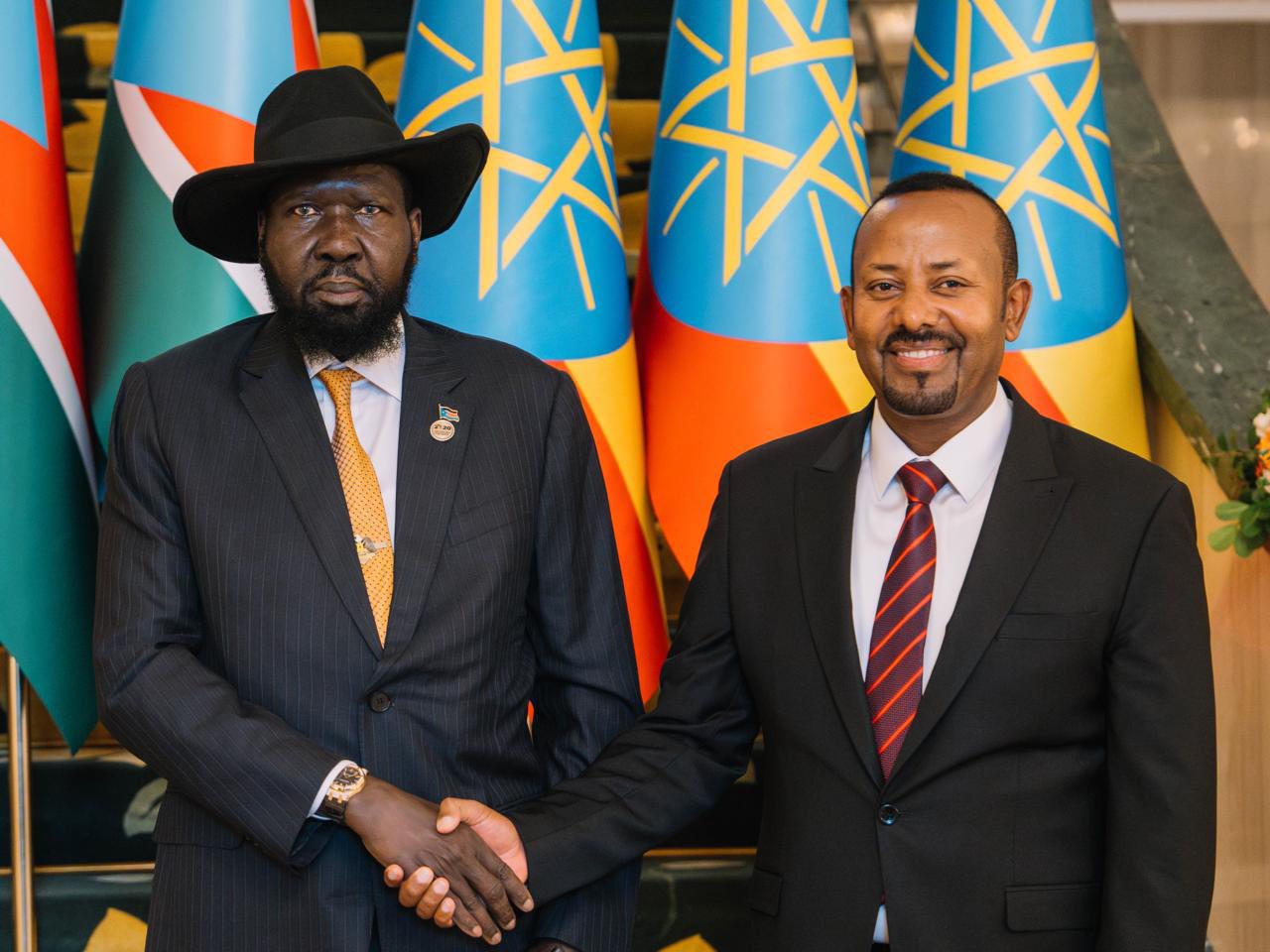
Diplomatic engagements during April included hosting the Presidents of Burundi, Liberia, South Sudan, and Mozambique for official visits, which resulted in the signing of several Memoranda of Understanding covering areas such as defense, health, education, and digital infrastructure.
The Prime Minister also held discussions with the European Union Commissioner for International Partnerships, the President of Afrexim Bank, and Portugal’s Minister of State and Foreign Affairs. In addition, he met with the Minister of Foreign Affairs and International Cooperation of Djibouti to discuss ongoing bilateral cooperation, and with the Director General of the Africa CDC in connection with his role as AU Champion for Artificial Intelligence and Digital Health.
At the domestic level, the Prime Minister met with Tadesse Worede, President of the Tigray Region Interim Administration, to review the annual report and extend his appointment for an additional year.
The month concluded with the celebration of the Easter (Fasika), during which the Prime Minister hosted a community breakfast and shared goods with low-income staff.