
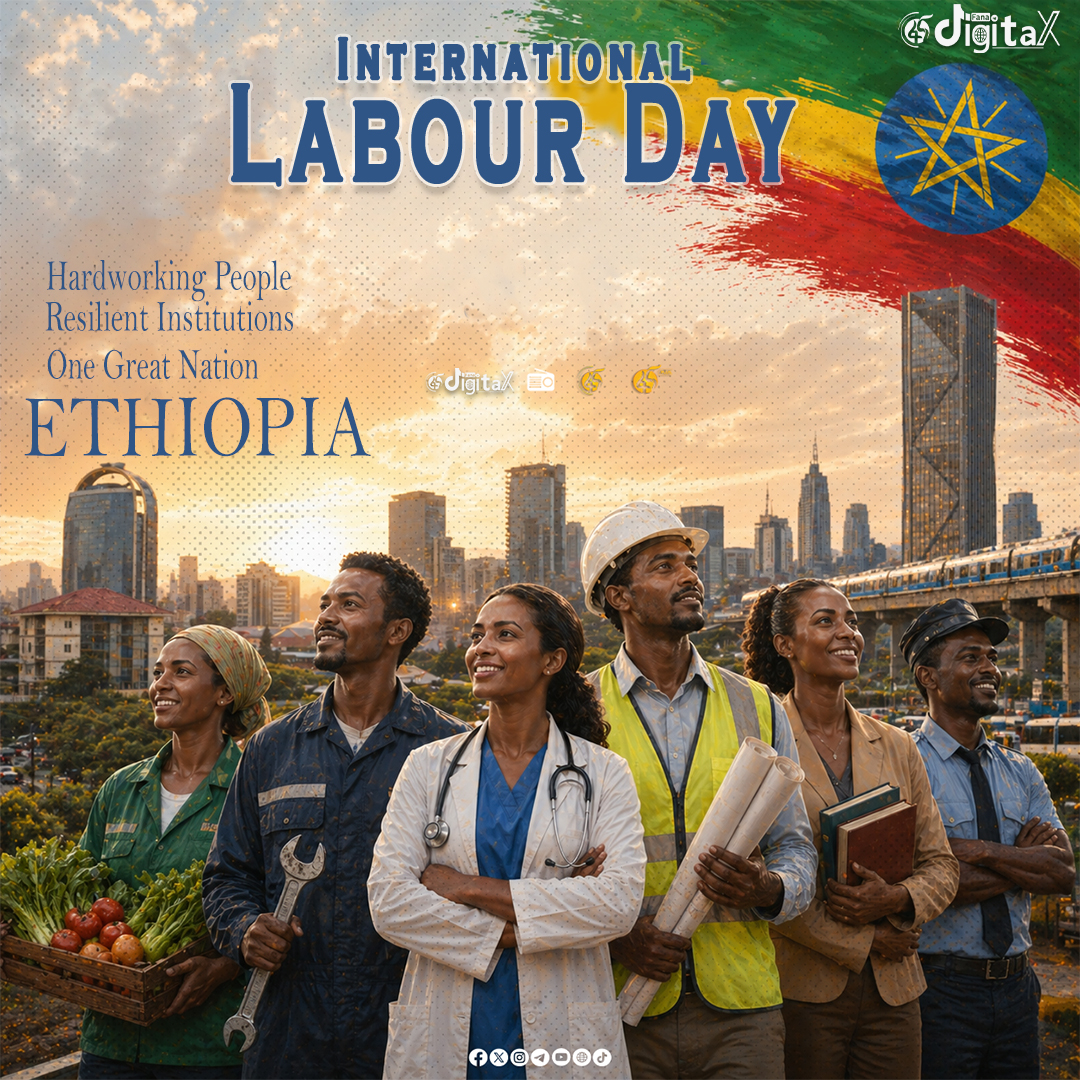
Ethiopia Joins Global Community in Marking International Labour Day
Addis Ababa, May 1, 2026 (FMC) — Ethiopia today joins the international community in celebrating the 137th International Labour Day, marking the occasion with a national emphasis on the pivotal role of the workforce in realizing the country’s aspirations for prosperity.
The day is being observed across the nation under the theme: “Industrious People, Strong Institutions, and a Great Nation.”
This vision underscores the principle that the path to national greatness is built upon the diligence of a hardworking populace and the resilience of its foundational institutions.
Across Ethiopia, the day serves as an occasion to honor the millions of workers in the agricultural, industrial, and service sectors whose daily efforts drive the national economy.
The narrative of the day highlights that the collective strength of the workforce is the engine behind Ethiopia’s ongoing journey toward sustainable development and economic sovereignty.
The origins of International Labour Day trace back to the late 19th century, rooted in the labor union movement’s struggle for fair treatment and regulated working hours.
The date of May 1st was specifically chosen in 1889 to commemorate the 1886 Haymarket affair in Chicago, where workers launched a general strike to demand an eight-hour workday.
The historical significance of the day is built upon the “three-eight” principle: eight hours for work, eight hours for recreation, and eight hours for rest.
Today, the observance has evolved into a global symbol of social justice and the dignity of labor, officially recognized in over 80 countries as a day to celebrate the social and economic achievements of the working class while advocating for safe and equitable workplace environments.
In line with international standards, the International Labour Organization (ILO) has framed 2026 as a defining year for delivering “Decent Work” at scale. Global messages for this year emphasize the importance of transitioning from informal to formal employment, ensuring living wages, and fostering social dialogue to achieve inclusive growth.
Furthermore, international bodies are increasingly focusing on the psychosocial working environment, advocating for workplaces that prioritize not only physical safety but also the mental well-being and dignity of every employee.