
When Africa Looks at Itself: Ethiopia and the Architecture of Continental Democracy
Addis Ababa, June 4, 2026 (FMC) – The African Union Election Observation Mission deployed to Ethiopia’s 7th General Election on 1 June 2026 reflects a broader and evolving continental approach to democracy—one increasingly defined by African institutions assessing African political processes through shared norms, standards, and aspirations.
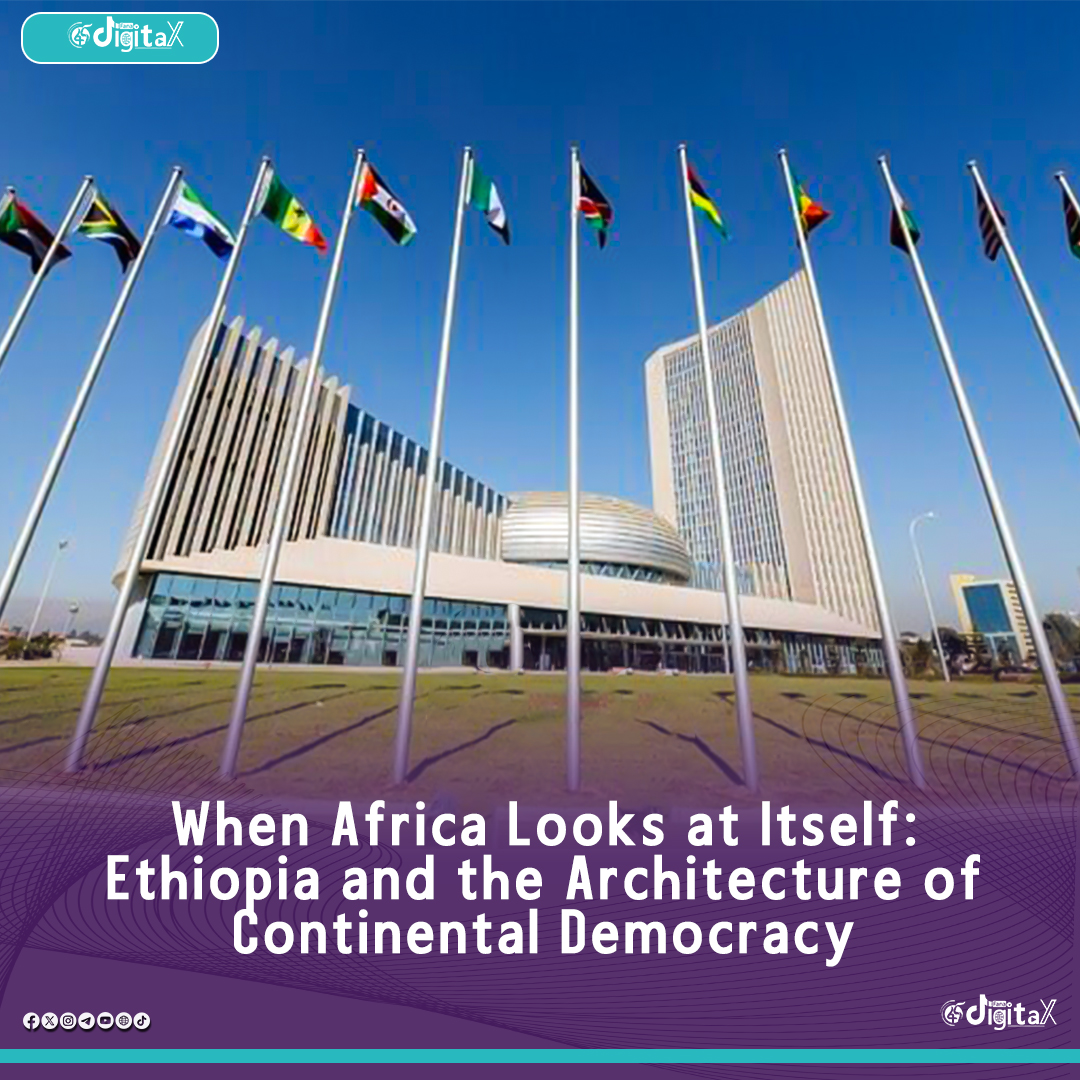
In Ethiopia, this approach carries added significance. As the host of the African Union headquarters in Addis Ababa, the country sits at the symbolic and operational heart of continental diplomacy, making the observation of its electoral process both a technical exercise and a reflection of how Africa interprets, evaluates, and strengthens its own democratic journey.

The AU’s engagement in Ethiopia began well before election day, with the mission engaging national electoral authorities, government institutions, political actors, civil society organisations, and development partners as part of its preparatory observation activities. These consultations formed part of a broader methodology that treats elections as processes shaped by institutional, political, and operational conditions rather than a single-day event.
On election day, 1 June 2026, the African Union Election Observation Mission, led by former Kenyan President Uhuru Kenyatta and supported by former Nigerian Foreign Minister Geoffrey Onyeama, deployed teams across multiple regions of Ethiopia.

Observers visited polling stations in urban, peri-urban, and rural settings, allowing the mission to capture a broad picture of electoral administration across diverse geographic and social contexts. The mission followed key stages of the process, including the opening of polling stations, voter identification procedures, ballot issuance, voting activity, and closing arrangements where accessible.
Across observed polling stations, the mission documented a generally orderly process characterized by structured voter participation and the visible presence of election officials, security personnel, party agents, domestic observers, and media representatives. Voting procedures were implemented in line with established electoral guidelines in most observed locations, with officials guiding voters through verification and balloting processes.
The mission also noted sustained civic engagement throughout the day, with voters participating under generally calm and organized conditions in the areas visited.
In addition to election day procedures, the mission observed key administrative and logistical aspects of the electoral process, including the availability of essential voting materials, the organization of polling station layouts, and the handling of voter queues in high-turnout areas. These observations reflected the scale and complexity of managing a nationwide election across a vast and diverse federal system.
Following election day, the AU mission continued its engagement through consultations with the National Election Board of Ethiopia and other electoral stakeholders. These engagements formed part of the post-voting phase of observation, during which the mission presented its preliminary findings while counting, tabulation, and results aggregation processes were still ongoing. The AU emphasized that its preliminary statement reflects observations up to that stage, with a comprehensive final report to follow after completion of all electoral phases.
Alongside the African Union mission, the Intergovernmental Authority on Development (IGAD) Election Observation Mission also deployed observers to Ethiopia’s electoral process, reflecting the growing role of regional organisations in Africa’s democratic governance architecture.
Led by former Ugandan Vice President Specioza Wandira Kazibwe, the IGAD mission observed voting procedures across selected regions and city administrations, focusing on polling station operations, voter participation, and the conduct of electoral stakeholders.
IGAD noted generally peaceful and orderly conduct in observed areas and engaged with electoral officials and stakeholders as part of its observation mandate, contributing to a broader regional understanding of the electoral environment.
Together, the AU and IGAD missions reflect a layered African electoral observation system—continental and regional—working in parallel to assess and support democratic processes across member states. This dual engagement underscores the expanding capacity of African institutions to interpret, observe, and contribute to electoral governance on the continent.
Ethiopia’s electoral process is viewed within this broader African framework, not only due to its political significance in the Horn of Africa but also because of its institutional position as host of the African Union headquarters. The 7th General Election also forms part of Ethiopia’s ongoing political and institutional evolution following reforms initiated in 2018.
Within this context, Africa’s election observation practice reflects a broader continental shift in democratic governance—one that prioritizes African-defined standards and peer-based assessment. It transforms election observation into a mechanism of institutional learning, where African states engage in mutual evaluation through shared frameworks such as the African Charter on Democracy, Elections and Governance (ACDEG) and related AU instruments.
In this sense, Ethiopia becomes both a site of observation and a reference point for continental democratic practice. Its elections provide insights into how complex, multi-ethnic, federal systems manage electoral processes under evolving political conditions, contributing to wider African conversations on governance, participation, and institutional resilience.
Ultimately, the African Union Election Observation Mission in Ethiopia, together with IGAD’s parallel engagement, reflects a quiet but evolving architecture of continental democracy—built on shared norms, peer engagement, and institutional cooperation.
From preparatory engagement to election day observation and post-election consultations, these missions underscore elections as continuous processes of engagement rather than isolated political moments, within a country that sits at the intersection of national political development and continental institutional identity.
By Mesafint Brlie