
The Green Legacy Initiative: A Seven-Year Odyssey of Environmental Restoration and Global Leadership
Addis Ababa, June 18, 2026 (FMC) – Launched in June 2019 by Prime Minister Abiy Ahmed (PhD), #Ethiopia’s Green Legacy Initiative has developed into one of the world’s most extensive and sustained environmental restoration programs, reshaping degraded landscapes while positioning environmental action as a central pillar of Ethiopia’s national development vision.
The initiative was introduced as a response to environmental degradation, declining forest cover, soil erosion, and increasing climate vulnerability. From its inception, Prime Minister Abiy Ahmed framed it as a long-term national development direction that links ecological restoration with economic growth, food security, and climate resilience, anchored in mass civic participation.
Since 2019, the program has evolved into a nationwide seasonal mobilization during Ethiopia’s rainy periods, engaging tens of millions of citizens annually across urban centers, rural communities, institutions, and administrative regions. This scale of participation has transformed environmental restoration into a shared national practice embedded in public life.
The 2026 Green Legacy planting season was officially launched by Prime Minister Abiy Ahmed in Bishoftu, near Lake Hora Harsade, under the theme “Planting Hope.” At the launch, the Prime Minister announced that Ethiopia will plant 8 billion seedlings this year, describing the campaign as a continuation of a steadily advancing national transformation toward ecological recovery and green development.
He further emphasized Ethiopia’s long-term ambition to reach 65 billion trees by 2027, a milestone aligned with the country’s preparations to host the 32nd United Nations Climate Change Conference (COP32) in Addis Ababa. According to the Prime Minister, this target reflects Ethiopia’s commitment to demonstrating measurable environmental progress on the global stage.
Since its launch in 2019, official figures cited by the Prime Minister indicate that Ethiopia has planted more than 48 billion seedlings, with the 2026 campaign expected to raise the cumulative total to over 56 billion seedlings, reflecting consistent national implementation over seven consecutive planting seasons.
Beyond its scale, the Green Legacy Initiative has evolved into a comprehensive national development framework. It integrates environmental restoration with agricultural productivity, food security, and green economic transformation. Large-scale watershed rehabilitation, soil conservation, and agroforestry expansion have contributed to improved land restoration, strengthened ecological systems, and enhanced environmental stability across multiple regions.
Prime Minister Abiy Ahmed has repeatedly underscored the initiative’s strategic importance, highlighting its role in strengthening food security through agroforestry expansion and the introduction of more than ten improved fruit tree varieties aimed at enhancing agricultural productivity, nutritional diversity, and rural resilience.
The program has also become a significant engine of employment creation, generating opportunities across seedling production, nursery development, planting operations, beekeeping, livestock integration, and broader green economy value chains that support millions of livelihoods across rural and peri-urban areas.
Its mass participation remains one of its defining features, with each planting season transforming into a nationwide civic mobilization that reflects what the Prime Minister has described as a collective national responsibility toward environmental stewardship and intergenerational sustainability.
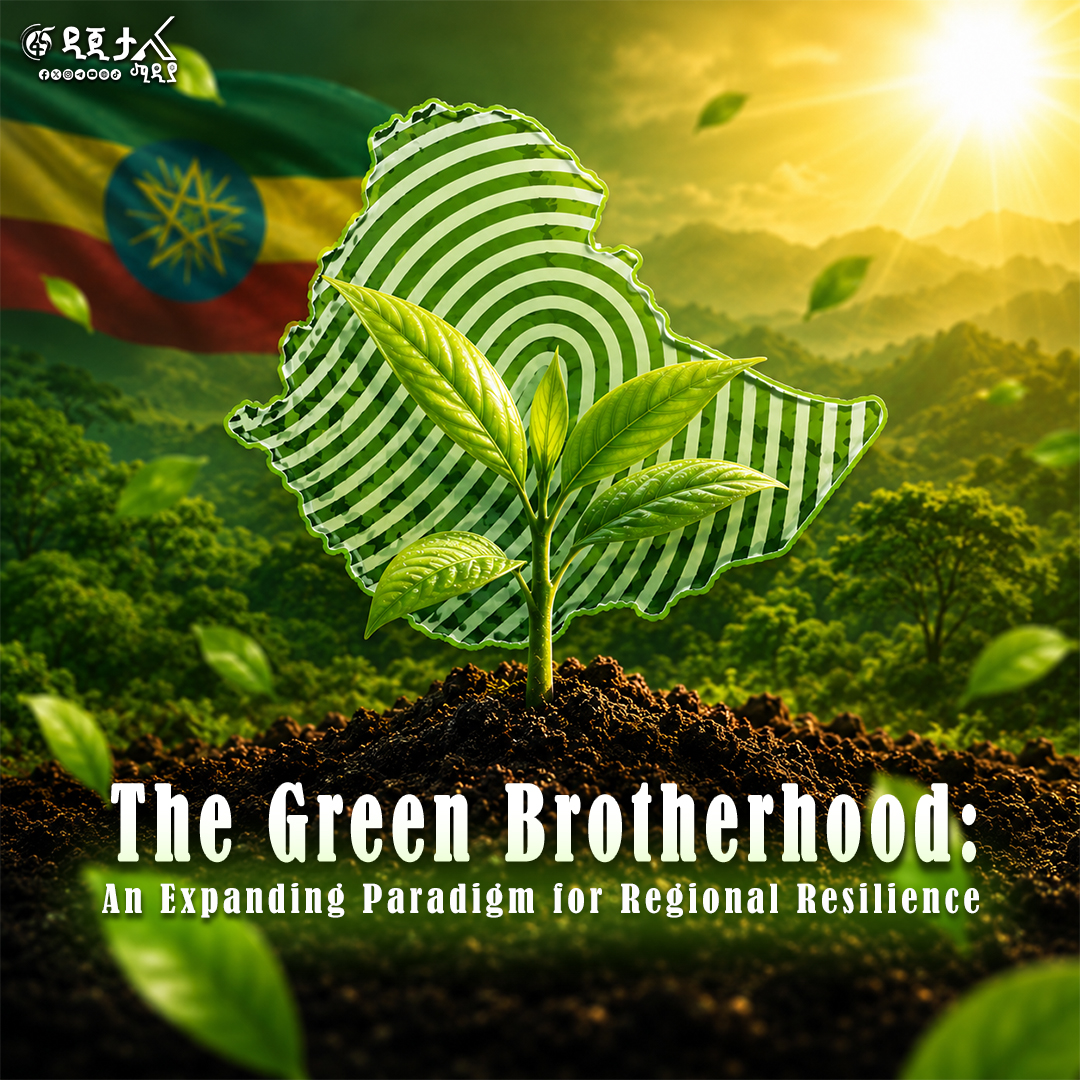
Beyond Ethiopia’s borders, the Green Legacy Initiative has expanded into regional cooperation frameworks across Africa, with Djibouti, South Sudan, Somalia, Kenya, Sudan, and Nigeria engaging in knowledge exchange, seedling collaboration, and ecosystem restoration partnerships inspired by Ethiopia’s large-scale mobilization model.
On the diplomatic stage, the initiative has strengthened Ethiopia’s visibility in global climate discourse, becoming closely associated with the country’s Climate Resilient Green Economy strategy and its advocacy for adaptation financing, ecosystem restoration, and sustainable development pathways.
Ethiopia has also hosted and participated in multiple high-level international and continental conferences on climate, agriculture, and food systems in recent years, reinforcing its position as a convening hub for environmental dialogue in Africa.
As the country advances toward its 2027 milestone, the Green Legacy Initiative continues to stand as a defining pillar of national transformation—linking environmental restoration, economic opportunity, and climate leadership within a unified long-term vision.
In its scale, continuity, and civic participation, the initiative represents one of Africa’s most significant environmental achievements, positioning Ethiopia as a visible contributor to global climate solutions as it prepares to host COP32 in Addis Ababa.