
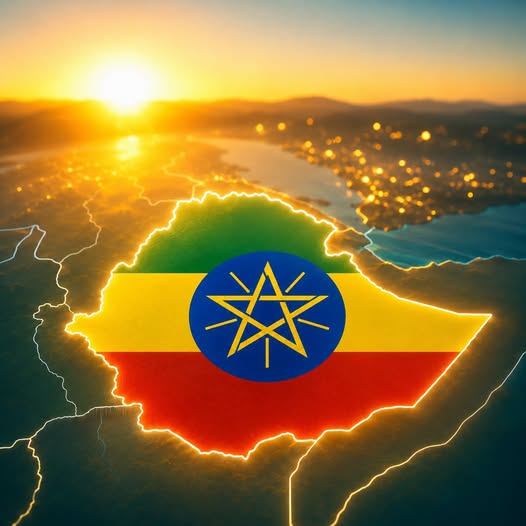
𝗔𝗳𝗿𝗶𝗰𝗮 𝗩𝗼𝘁𝗲𝘀 𝗜𝘁𝘀 𝗢𝘄𝗻 𝗪𝗮𝘆: 𝗘𝘁𝗵𝗶𝗼𝗽𝗶𝗮’𝘀 𝟳𝘁𝗵 𝗚𝗲𝗻𝗲𝗿𝗮𝗹 𝗘𝗹𝗲𝗰𝘁𝗶𝗼𝗻 𝗮𝗻𝗱 𝟱𝟰 𝗠𝗶𝗹𝗹𝗶𝗼𝗻 𝗩𝗼𝘁𝗲𝗿𝘀 𝗶𝗻 𝗮 𝟵𝟰% 𝗧𝘂𝗿𝗻𝗼𝘂𝘁 𝗠𝗼𝗺𝗲𝗻𝘁 𝗼𝗳 𝗥𝗲𝗳𝗼𝗿𝗺 𝗮𝗻𝗱 𝗜𝗻𝘀𝘁𝗶𝘁𝘂𝘁𝗶𝗼𝗻𝗮𝗹 𝗠𝗮𝘁𝘂𝗿𝗮𝘁𝗶𝗼𝗻
Addis Ababa, June 22, 2026 (FMC) – Ethiopia’s 7th General Election unfolded as one of the most extensive electoral processes in the country’s recent history, shaped by institutional preparations, voter registration exercises, legal reforms, technological innovation, and broad public participation. The process moved through pre-election preparations, election-day administration, and the final results announcement on Sunday by the National Election Board of Ethiopia (NEBE), confirming outcomes across federal and regional levels.
At the centre of the process, NEBE coordinated nationwide electoral operations including legal refinements, stakeholder engagement, candidate registration, logistical arrangements, and deployment of election officials. The Board oversaw participation involving over 10,000 candidates competing in different levels of government, supported by systems designed to manage tens of millions of registered voters.
The election was not merely a political contest. It was a months-long national exercise that tested institutions, mobilized citizens, engaged political parties, and drew attention from observers across Ethiopia and the African continent. From the first stages of preparation to the declaration of final results, the process reflected a broader effort to strengthen electoral administration, expand participation, and deepen democratic practice.
Preparations began long before election day. NEBE undertook a series of legal, procedural, and operational measures aimed at improving the conduct of the election. Inclusiveness was identified as a central principle of the process, with reforms introduced to facilitate the participation of women and persons with disabilities while strengthening safeguards against violence targeting women during the electoral period.
The election also marked a significant step in the modernization of electoral administration. For the first time, a digital voter and candidate registration system was deployed, allowing approximately five million voters and candidates to be registered through digital platforms. According to NEBE, the technologies employed during the process were developed by local experts and supported by legal frameworks designed to improve efficiency and strengthen electoral complaint resolution mechanisms.
The scale of preparations reflected the magnitude of the exercise. More than 54 million citizens were registered to vote, while over 10,000 candidates entered the race. NEBE Chairperson Melatwork Hailu later noted that integrating 10,438 candidates into the process presented considerable administrative challenges, but emphasized that the exercise was successfully managed through extensive planning and institutional coordination.
The campaign period brought together more than 42 political parties competing for seats in the House of People’s Representatives and regional state councils. Political actors campaigned across the country while electoral authorities, civil society organizations, media institutions, and stakeholders engaged in voter education, public awareness initiatives, and preparations aimed at ensuring a peaceful process.
As election day approached, government institutions, election officials, and security bodies intensified preparations to facilitate voting across thousands of polling stations. The emphasis throughout the period remained on enabling citizens to participate freely and peacefully in the electoral process.
When Ethiopians headed to the polls, the scale of participation quickly emerged as one of the defining features of the election. Long queues formed early in the morning and continued throughout the day in many parts of the country. Voting hours were extended in some locations to accommodate citizens waiting to cast their ballots.
Prime Minister Abiy Ahmed, after casting his vote, described the election as a reflection of the unity, civic responsibility, and patriotism of Ethiopians. He noted that citizens were demonstrating commitment to national affairs through peaceful democratic participation and emphasized the significance of public engagement in shaping the country’s future.
The Government Communication Service echoed similar sentiments following the completion of voting, commending citizens, security forces, election officials, observers, media institutions, and other stakeholders for their contribution to the peaceful conduct of the polls. The government highlighted the determination of voters who participated in large numbers and acknowledged the role played by institutions that helped facilitate the electoral process.
By the end of election day, voter turnout had surpassed 94 percent, according to figures later cited by President Taye Atske-Selassie. The turnout represented one of the highest levels of participation recorded in the country’s electoral history and reflected the engagement of millions of registered voters across the nation.
Beyond participation figures, election day also drew extensive observation from domestic and continental institutions. Local observer groups, civil society organizations, political party agents, media institutions, and independent stakeholders monitored the process across multiple regions and city administrations.
The Ethiopian Women Lawyers Association reported that voting was generally conducted in a peaceful, orderly, and transparent environment in the polling stations it observed. While highlighting continuing challenges related to women’s representation and participation, the association noted that most polling stations opened on time and largely complied with established electoral procedures.
The Ethiopian Human Rights Commission similarly monitored the process and contributed to broader efforts aimed at promoting transparency, accountability, and respect for democratic rights during the election.
Civil society organizations also played an active role throughout the process. In addition to voter education initiatives conducted during the pre-election period, thousands of observers were deployed to polling stations to monitor voting, counting, and related procedures.
Observation of the election extended beyond domestic stakeholders. One of the distinguishing features of Ethiopia’s 7th General Election was the prominent role played by African-led observation missions.
Ahead of the release of official assessments, both the African Union and IGAD deployed observation teams across various regions and city administrations to monitor the electoral process. Their engagement reflected a broader commitment to strengthening African ownership of democratic processes and advancing the principle of African solutions to African challenges.
The IGAD Election Observation Mission later described the election as largely peaceful and well-administered. The mission highlighted strong voter participation, orderly voting processes, improvements in electoral administration, and the introduction of technological innovations. Observers also noted the presence of long queues and extended voting hours in several locations, interpreting them as indicators of significant public engagement in the electoral process.
Similarly, the African Union Election Observation Mission concluded that the election was conducted in line with continental electoral standards and frameworks. The mission highlighted reforms introduced by electoral authorities, improvements in voter registration systems, institutional preparations, and efforts aimed at broadening participation.
Former Kenyan President Uhuru Kenyatta, who led the AU mission, emphasized Ethiopia’s historic significance to Africa and underscored the importance of dialogue, inclusion, and national cohesion in strengthening democratic governance.
The election also received attention from diplomatic partners based in Addis Ababa. The European Union and partner missions welcomed the conduct of the election and acknowledged the efforts undertaken to facilitate the process, while encouraging continued democratic development and institutional strengthening.
As voting concluded, attention gradually shifted to post-election activities. Electoral officials undertook counting, tabulation, verification, and complaint-handling procedures in accordance with the electoral calendar. NEBE continued to oversee these processes while reviewing reports from polling stations and managing post-election administrative tasks.
During this period, observer missions, civil society organizations, political actors, and stakeholders released preliminary assessments of the election, contributing to public discussion regarding the conduct of the process and its significance.
The culmination of the electoral cycle came on Sunday when NEBE officially announced the final results of the 7th General Election.
The results confirmed a decisive victory for the ruling Prosperity Party, which secured 472 of the 501 seats in the House of People’s Representatives, earning the mandate to form Ethiopia’s next federal government. The party also secured substantial representation in regional state council elections conducted across the country.
Following the announcement, Prosperity Party issued a statement describing the election as a major milestone in Ethiopia’s democratic journey. The party expressed gratitude to voters, election officials, political parties, observers, media institutions, security bodies, civil society organizations, regional organizations, and other stakeholders who contributed to the process.
The party stated that it accepted the renewed public mandate with humility and responsibility, pledging to continue efforts aimed at strengthening democratic governance and advancing national development.
Among the priorities outlined were the strengthening of the rule of law, reducing the cost of living, enhancing food security, expanding employment opportunities, improving public service delivery through technology-driven reforms, combating corruption, and supporting the successful completion of the National Dialogue process. The party also emphasized the importance of working with stakeholders and incorporating constructive ideas in pursuit of national interests and long-term prosperity.
President Taye Atske-Selassie, speaking during the official announcement of results, described the election as evidence of Ethiopians’ commitment to democracy, peace, and development. He stated that the exceptionally high turnout demonstrated public confidence in democratic participation and reflected citizens’ determination to pursue their aspirations through constitutional means.
The President further stressed that peace remains the foundation of modern democracy and that elections serve as the legitimate mechanism through which citizens express political choices. He also noted that the process contributed to strengthening confidence in democratic institutions and advancing a political culture centered on peaceful participation and constitutional order.
Beyond Ethiopia’s domestic framework, the 7th General Election also carried broader significance for Africa’s evolving democratic architecture. The active engagement of African-led observation missions, particularly from the African Union and IGAD, underscored the continent’s growing institutional capacity to evaluate and support its own electoral processes through shared standards and frameworks.
The election was widely framed within these continental mechanisms as part of a broader effort to strengthen African ownership of democratic governance, reinforcing the principle that electoral legitimacy and assessment can be anchored within Africa’s own institutional systems.
In this context, the Ethiopian electoral process contributed to ongoing continental conversations on democratic consolidation, institutional resilience, and the practical application of electoral standards across diverse political environments. It also reflected the increasing role of regional and continental bodies in shaping norms around participation, transparency, and institutional credibility in elections held across Africa.
Taken together, the various stages of Ethiopia’s 7th General Election reveal a process shaped by institutional reforms, technological innovation, broad public engagement, and extensive stakeholder participation. From the registration of more than 54 million voters to turnout exceeding 94 percent, from domestic observation efforts to assessments by African institutions, the election generated a body of experiences and lessons that extend beyond the immediate contest for political office.
For Ethiopia, the process represented another step in an evolving democratic trajectory marked by efforts to strengthen institutions, expand participation, and manage political competition through constitutional mechanisms. For African institutions such as the African Union and IGAD, it provided an opportunity to demonstrate the growing role of continental organizations in observing, assessing, and supporting democratic processes across the continent.
Ultimately, the election brought together citizens, institutions, political actors, observers, and stakeholders in a nationwide exercise that reflected both the scale of Ethiopia’s democratic ambitions and the continuing efforts to shape the country’s political future through participation, dialogue, and institutional development.