
From Civil War to Reconciliation: Obasanjo’s Nigerian Lesson on Rebuilding a Nation After Conflict
864
Addis Ababa, July 17, 2026 (FMC) — A nation emerging from internal conflict faces a challenge far greater than ending the fighting itself: rebuilding trust among its own people. This was the central lesson former Nigerian President and African Union Special Envoy for the Horn of Africa Olusegun Obasanjo shared as he reflected on Nigeria’s experience and its relevance to Ethiopia’s National Dialogue.
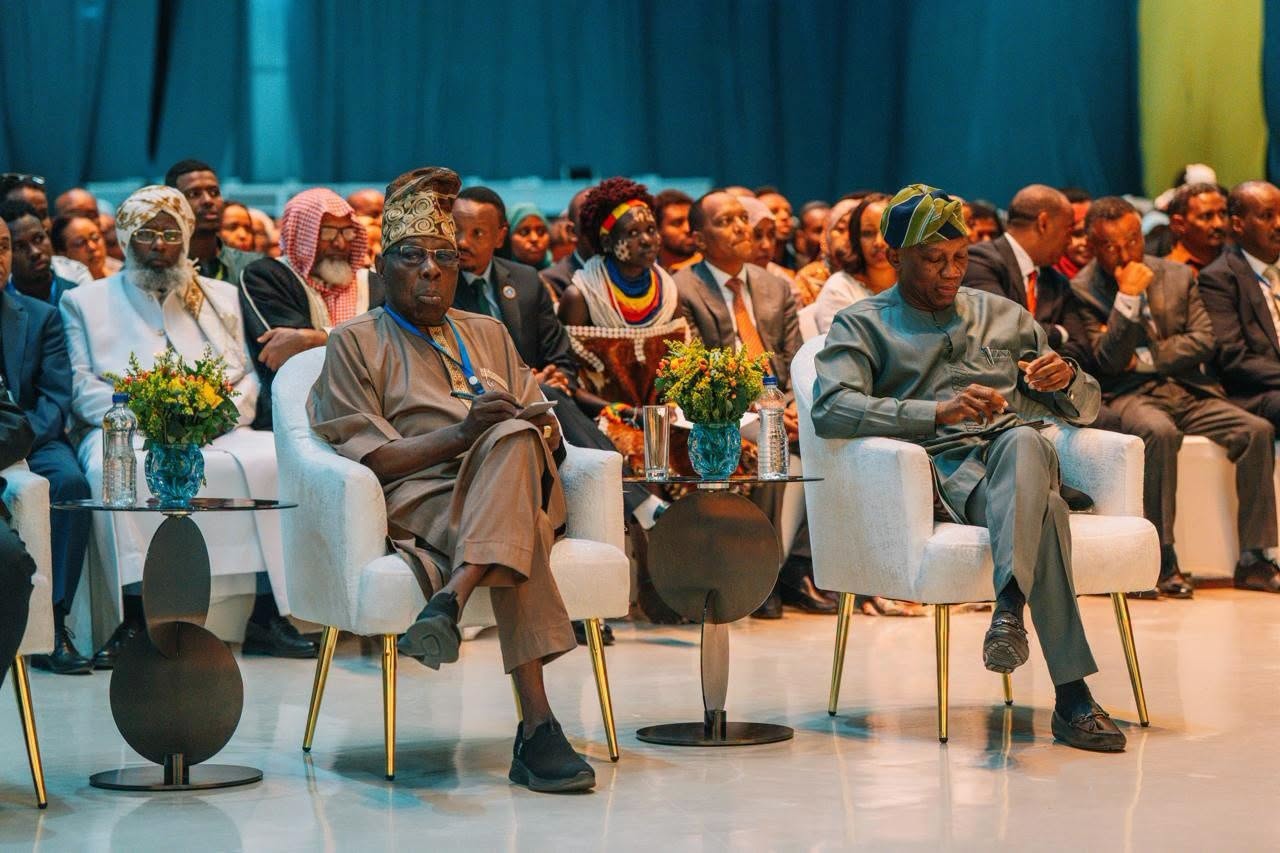
Addressing the opening of Ethiopia’s historic National Dialogue Conference in Addis Ababa, Obasanjo drew parallels between Nigeria’s past civil war experience and Ethiopia’s current effort to address differences through dialogue.
He described civil wars as uniquely difficult because, unlike external conflicts where nations fight against an outside enemy, internal conflicts require countries to rebuild relationships among their own citizens.
“A foreign war you fight and destroy, a civil war you fight and build, because you want to hold together,” Obasanjo said, recalling Nigeria’s experience.
He explained that after Nigeria’s civil war, the country adopted the principle of “no victor, no vanquished” as a foundation for reconciliation. Rather than treating those on the opposing side as permanent enemies, he said, Nigeria sought ways to bring them back as members of the same nation.
During the war, he said Nigeria created special conditions for dealing with those on the other side because the ultimate objective was not only to end the fighting but also to restore national unity.
“We wanted to bring our brothers, for whatever reason they were dissatisfied, we wanted to bring them back,” he said.
Following the end of the conflict, Obasanjo said Nigeria pursued what he described as three pillars of recovery: reconciliation, reconstruction and rehabilitation.
He recalled that when the war had ended militarily, efforts continued to achieve a political and formal conclusion. Former opponents were brought to Lagos and presented not as enemies, but as citizens returning to rebuild their country.
“Here are our brothers who have come back for redeployment,” he recalled saying at the time, emphasizing that they were not viewed as enemies.
He explained that some former officers were reintegrated into the national army, while those who could not return were provided retirement benefits after their dismissal was converted into retirement.
For Obasanjo, the experience demonstrated that ending a conflict requires more than stopping violence. It requires political solutions that address the divisions that led to conflict in the first place.
“The war is a failure of political,” he said, stressing that once war ends, politics must return through dialogue and consultation.
He highlighted Nigeria’s constituent assembly process, political conferences and other dialogue mechanisms as efforts aimed at rebuilding political systems and addressing national questions.
He also recalled Nigeria’s later efforts to examine past grievances through a human rights investigation commission, saying the process was intended to investigate wrongdoing, explain what happened and contribute to understanding.
Through these experiences, Obasanjo presented reconciliation not as forgetting the past, but as a process of confronting history while creating a shared path forward.
His message came as Ethiopia begins a National Dialogue process bringing together thousands of participants from across the country to discuss major national issues.
Commending Ethiopia’s preparations, Obasanjo said the National Dialogue Commission’s work over the past four years reflected a serious effort to create an inclusive platform for discussion.
He described the conference as historic not only for Ethiopia but also for the IGAD region and Africa, expressing hope that dialogue would help Ethiopia strengthen its common national purpose.
For Obasanjo, the experience of nations that have passed through conflict shows that peace is sustained not only by ending battles, but by creating the political space for citizens to rebuild together.