
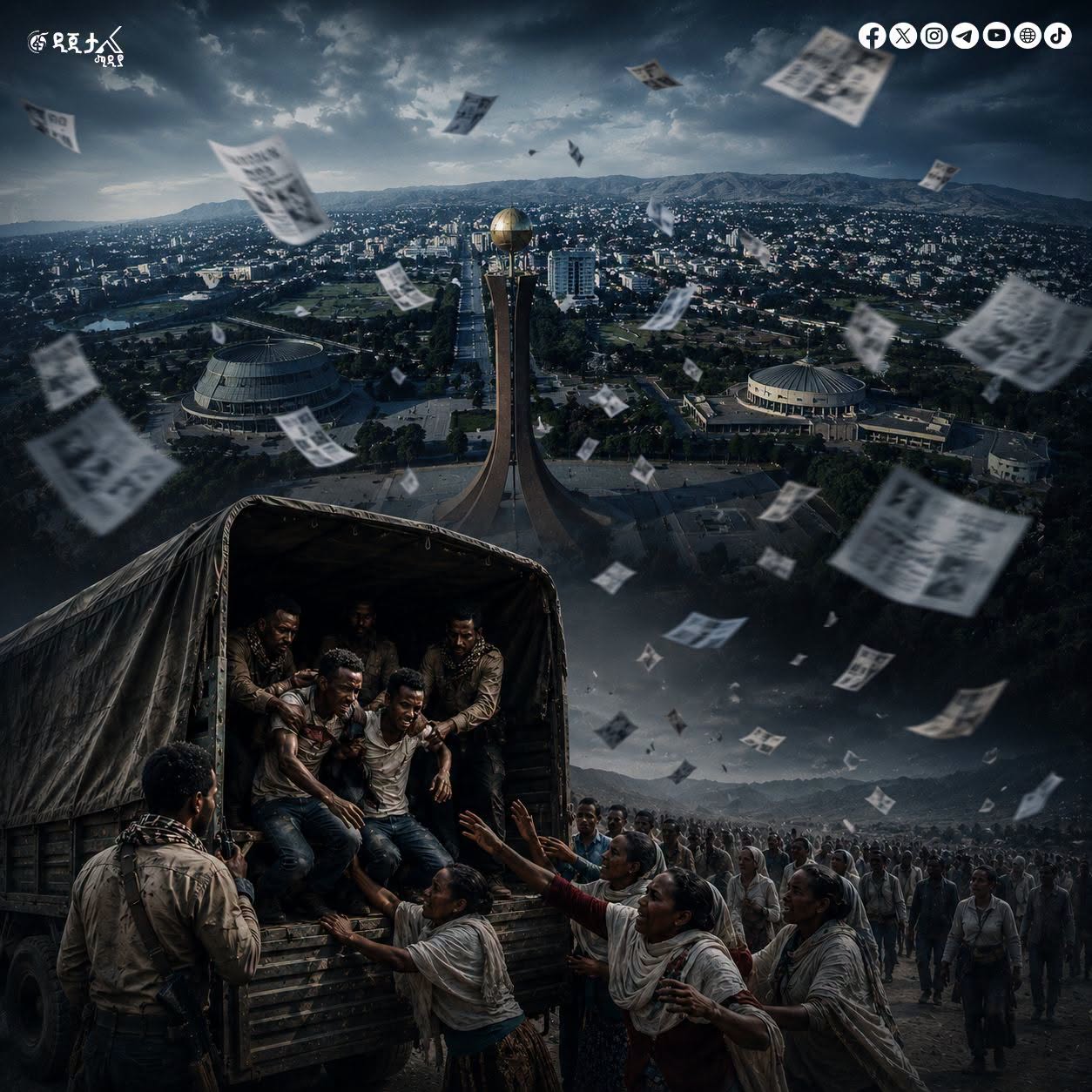
The TPLF Rump’s Asmara-Inspired Tactics: Forced Recruitment and the Push to Revive Conflict in Tigray
Addis Ababa, July 22, 2026 (FMC) — The TPLF rump has intensified forced recruitment activities in Ethiopia’s Tigray region, reviving coercive mobilization practices that resemble those of the Eritrean regime and raising concerns over renewed attempts to push the region back toward conflict.
The group, which lost its legal political status after failing to fulfill the requirements set by Ethiopia’s National Election Board, has turned to coercive measures to expand its control, forcing young people into recruitment campaigns while advancing a war-oriented agenda in the region.
The latest developments have drawn comparisons with the compulsory mobilization practices of the regime in Asmara, where forced recruitment and prolonged military service have remained among the most criticized features of its system.
Rather than learning from neighboring countries’ progress in development and stability, the TPLF rump has chosen to reproduce conflict-driven practices, reviving methods that keep communities trapped in insecurity and undermine efforts to rebuild the Tigray region after years of hardship.
Habte Kebede, a member of the “Brigade N’Hamedu” youth movement that opposes the Eritrean regime, told Fana Digital that the forced recruitment activities being carried out by the TPLF rump in the Tigray region closely resemble practices implemented in Eritrea.
He said the forced recruitment campaign in the region reflects the same approach used by the Eritrean regime, adding that seeing such practices emerge in the Tigray region demonstrates the destructive path being followed by the group.
According to Habte, the two groups share similarities in their origins and methods, with their actions failing to address the real demands of the people, including peace, development and good governance.
He stressed that the people of the Tigray region, particularly mothers who have endured the consequences of prolonged conflict, are seeking stability and recovery rather than another round of war.
“The suffering of Tigray’s mothers and the wider community is immense,” he said, noting that forcing young people into conflict only deepens the pain of families and damages the future of the region’s youth.
Habte said he had witnessed forced recruitment practices in Eritrea and that seeing similar activities carried out in the Tigray region shows the destructive similarities between the approaches of the two sides.
He warned that keeping young people trapped in a cycle of conflict would continue to weaken the region’s development prospects, prolong family suffering and prevent communities from moving forward.
The youth activist further highlighted concerns over restrictions on dissenting voices and pressure against those calling for change, saying that practices associated with suppression and coercion are now being experienced in the Tigray region.
In recent days, growing calls have emerged against forced recruitment and renewed conflict. A peaceful rally held at Meskel Square in Addis Ababa under the theme “Stop Forced Recruitment, Let Peace Prevail” was organized to expose the situation unfolding in the Tigray region, draw the attention of the international community and call for protection of the people of Tigray from the actions of the TPLF rump.
Participants at the rally called for an end to forced military mobilization and war preparations, emphasizing that the people of the Tigray region need peace, reconstruction and development instead of another cycle of destruction.
The rally also highlighted concerns over restrictive measures and actions taken by the TPLF rump against voices demanding peace and change in the region.
The group’s continued reliance on coercive measures, intimidation and militarization has intensified concerns among communities that suffered heavily during previous conflicts.
Young people in the Tigray region have repeatedly expressed a desire to move away from war and focus on education, employment and rebuilding their lives. However, the recruitment campaign has raised fears that a new generation could once again be drawn into conflict.
The TPLF rump’s actions represent a continuation of outdated political approaches that prioritize confrontation over addressing the aspirations of the people it claims to represent.
The people of Ethiopia’s Tigray region are seeking a future defined by peace, stability and development, not renewed conflict driven by attempts to preserve the influence of a group that has lost its legal political standing.
The growing opposition to forced recruitment reflects a broader demand from communities in the region: that the suffering of the past should not be repeated and that the future of Tigray’s youth should be built through peace rather than war.