
Ethiopia in Dialogue: A Nation Unites to Build Its Promising Future
By Leulseged Tadese Abebe,
Ambassador Extraordinary and Plenipotentiary of Ethiopia to Brazil
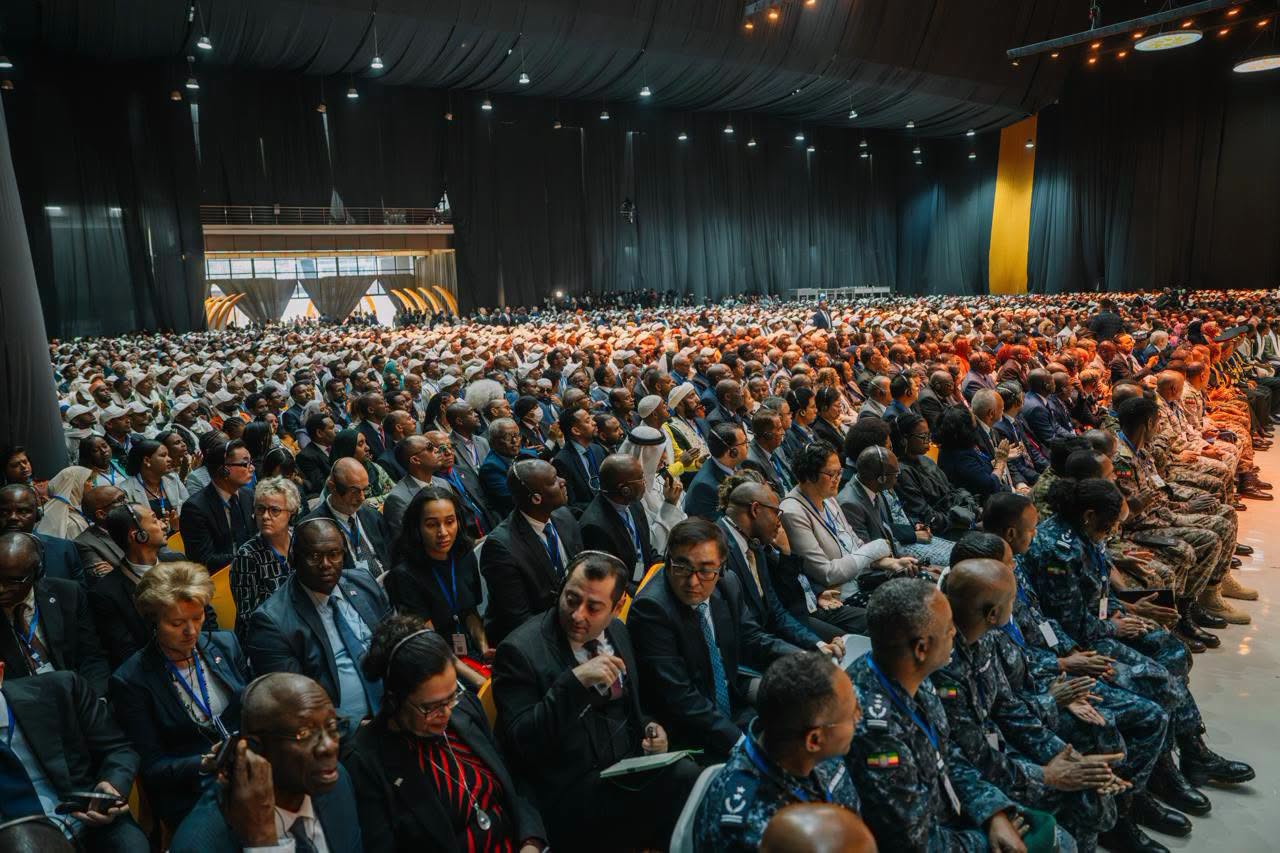
Since July 15, 2026, Ethiopians from all walks of life have been gathering in Addis Ababa to participate in a National Dialogue Conference, a participatory, inclusive, and nationwide event. Approximately 4,000 participants, representing different sectors of society, are taking part in this historic event. The National Dialogue constitutes the largest and first public forum of its kind in the country’s history.
Led by the Ethiopian National Dialogue Commission, an independent body established by the House of Representatives, the process has entered its final phase after four years of agenda setting, consultations, and deliberations. The Dialogue is expected to contribute to building a national consensus on issues of vital importance to the country.
At the opening ceremony, Prime Minister Abiy Ahmed Ali praised the process as a major national effort aimed at breaking with the cycles of past political trajectories. According to the Prime Minister, dialogue offers an opportunity for Ethiopia to write a new chapter in its history. In his words: “Dialogue, through discussion, consultation and mutual trust, is the only way to offer a lasting answer to the historical question of how we can live together.” The Prime Minister emphasized that dialogue represents the path forward for the country and reaffirmed the government’s full support for achieving the expected results.
Why Is National Dialogue Necessary?
National dialogue is used as an effective approach to address critical national issues through a formal, structured, and organized process. It constitutes a platform for resolving political differences without resorting to other means and has become an important tool for seeking mutually beneficial solutions within political processes.
If anyone asks why Ethiopians need a national dialogue, it is a legitimate and pertinent question. Known as the cradle of human civilization and the “land of origins,” Ethiopia is an ancient nation with over three millennia of continuous statehood, governance structures, and traditional institutions.
The country is home to more than 80 ethnic groups, with different languages and cultures that have coexisted for centuries. Even so, there remains a need to address the concerns, aspirations, and ideas of its population, including persistent issues passed down through generations.
Citizens are the true protagonists of their country, and a responsible society seeks to actively participate in building its future. For Ethiopia, given its rapid economic growth, significant population expansion, and predominantly young population, creating an inclusive political space is essential. The voices of this new generation need to be heard. It was from this need that the idea of a national dialogue arose. Lasting prosperity is difficult to achieve without confronting the challenges of the past and the concerns of the present.
Guidelines for the National Dialogue
According to the Chief Commissioner of the National Dialogue, Professor Mesfin Araya, the agenda is structured around eight main pillars, defined directly by the citizens: state building; identity and history; government structure and federalism; the situation of federal cities, including Addis Ababa; religious affairs; the rule of law and human rights; socioeconomic development; the fight against corruption; and peacebuilding and reconciliation.
These guidelines were compiled during previous forums held at the federal and state levels and subsequently subjected to in-depth analysis before being presented to the national consultation process, in which they will be discussed by all participants in the dialogue.
Over three weeks, participants will present their ideas in subgroups of 10 to 50 members. The discussions will then be expanded to larger groups of 250 participants, and finally organized into eight groups of 500 participants.
The Chief Commissioner further noted that experts in areas such as state building, history, identity, federalism, and conflict resolution are giving presentations designed to guide and support the discussions.
Lessons
The Ethiopian National Dialogue is of great importance. The first lesson concerns the need to reformulate the traditional understanding of political processes. Most political dialogues tend to be elitist and dominated by a restricted group. In contrast, this Dialogue seeks to promote broader and more inclusive participation, bringing together representatives from different segments of society.
Political initiatives that exclude citizens are likely to face difficulties in achieving lasting results. The Ethiopian National Dialogue starts from this recognition. Participants are selected from their respective communities and represent not only their localities but also a wide diversity of opinions and perspectives. In this process, everyone is invited to participate, and no one should be left behind. This is the principle of participatory democracy.
The second, and perhaps most important, lesson is that the success of the Ethiopian National Dialogue is relevant not only to the country, but also to the region and the African continent. Located in the Horn of Africa, a region where important geopolitical and geoeconomic interests intersect and where the Bab el-Mandeb Strait is located, the regional space is subject to conflicts of a national and regional nature.
The security situation in the Horn of Africa must therefore be understood as an integral part of broader geopolitical and national interests. The proactive measures adopted by Ethiopia through its national dialogue can serve as a reference for other countries in the region, encouraging initiatives that allow them to address tensions before they result in instability and violence.
In this sense, the National Dialogue can be considered an important test to evaluate the evolution of the region’s political societies. National dialogues should not be conceived as a last resort, adopted only after the outbreak of conflicts, violence, or instability. On the contrary, they should constitute central instruments for the prevention of crises and for the reduction of avoidable suffering.
National dialogues can represent an important path towards building modern and peaceful societies, in which the voices of citizens are equally valued, respected and heard.
Over the past four years, Ethiopians from all parts of the country have been discussing and identifying fundamental issues for the national future. The final phase of the National Dialogue brings together representatives from different segments of society to deliberate on issues of national interest.
It is expected that the results of this process will contribute to further expanding Ethiopia’s potential for economic growth and development. This is a decisive moment, in which the country chooses dialogue, debate, and reconciliation as paths to building lasting solutions.
Through this process, Ethiopia seeks to reshape its political landscape and offers the region an example of how to address complex and sensitive issues, often considered taboo, through participation, dialogue, and the pursuit of consensus.