
Chinese Scientists Develop AI System to Improve Typhoon Forecasting Accuracy
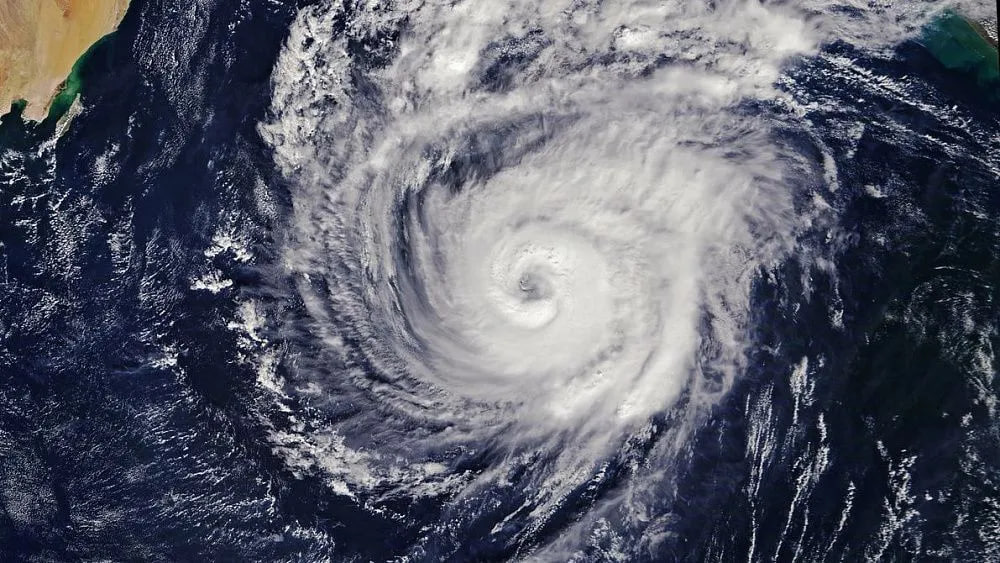
Addis Ababa, 31 July 2026 (FMC) — Chinese researchers have developed a new artificial intelligence-powered typhoon forecasting system capable of predicting storm tracks with greater accuracy while also explaining the physical factors behind changes in their paths, marking a significant advance in weather forecasting and disaster preparedness.
The system was jointly developed by researchers from the Institute of Atmospheric Physics under the Chinese Academy of Sciences and Fudan University, TV BRICS reported, citing its partnerScience and Technology Daily.
Typhoon forecasting remains a major challenge due to the atmosphere’s chaotic nature, where even minor differences in initial weather conditions can result in substantial changes in a storm’s trajectory. Traditional forecasting methods address this uncertainty by generating up to 51 ensemble scenarios to estimate possible paths.
The newly developed system, however, requires only 31 forecast scenarios while delivering higher accuracy than conventional approaches.
Researchers said the improvement stems from an AI model designed to focus on areas that contribute most to forecasting uncertainty, including the typhoon’s core, spiral rainbands, and regions where storms interact with the subtropical anticyclone. By concentrating on these critical zones, the system can better identify where forecast errors are likely to emerge.
The model was evaluated using 62 typhoon cases and 91 ensemble forecasting experiments. Results showed that its performance during the first 24 hours matched that of the world’s leading forecasting centres.
Its biggest advantage emerged in medium- and longer-range forecasts spanning 24 to 120 hours. During this period, track prediction errors were reduced by up to 32.33 percent, while the system’s ability to measure forecast uncertainty improved by as much as 29.2 percent.
Researchers also highlighted the system’s interpretability. Unlike conventional statistical models that generate predictions without explaining the underlying processes, the new AI system can identify the physical factors responsible for shifts in a typhoon’s path.
According to Duan Wansuo, a researcher at the Institute of Atmospheric Physics of the Chinese Academy of Sciences, the breakthrough represents an important step toward building intelligent forecasting systems that are both accurate and explainable.
The development is expected to strengthen disaster preparedness efforts, particularly across the Pacific region, where tropical cyclones pose recurring risks to lives and infrastructure.