
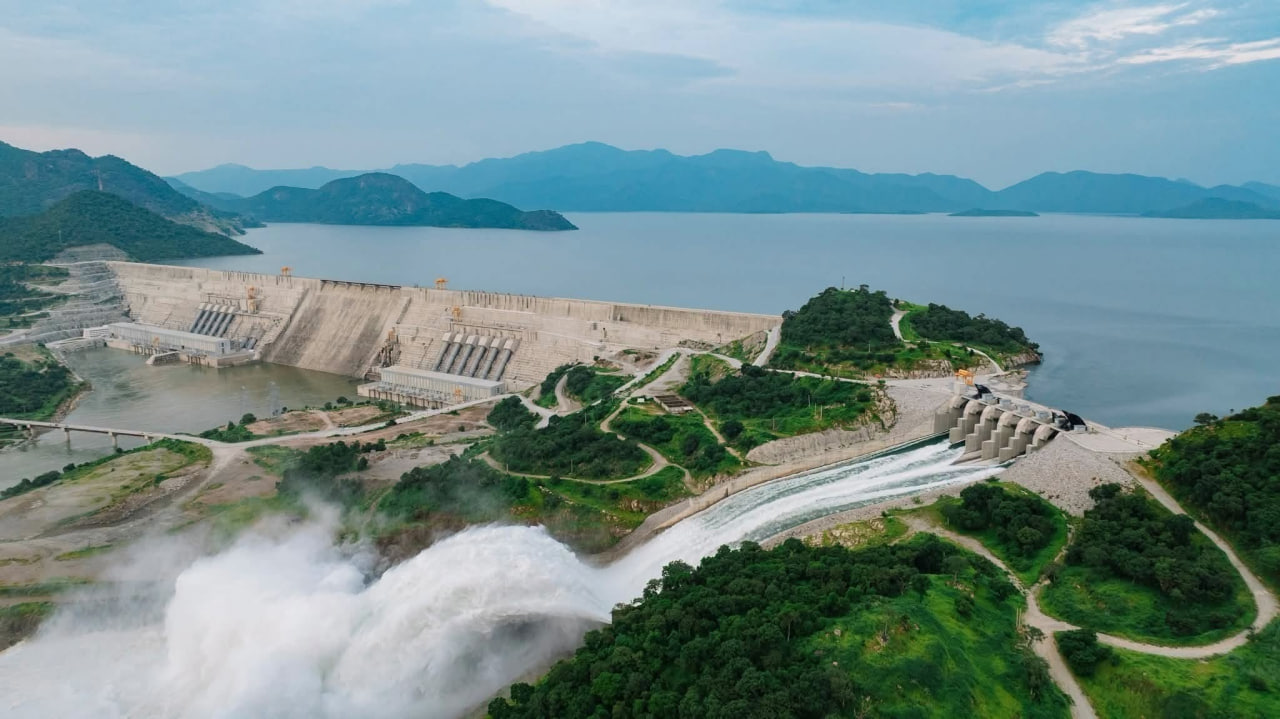
GERD — Beyond Electricity: The Dam Powering a Regional Economic Future
Addis Ababa, August 4, 2026 (FMC) — Rising from the Abbay River, the Grand Ethiopian Renaissance Dam (GERD) has emerged as one of Africa’s most ambitious development projects, transforming Ethiopia’s renewable energy potential into a foundation for economic growth, industrialisation and regional connectivity.
More than a decade after construction began, the massive hydropower project has become a defining symbol of Ethiopia’s determination to harness its natural resources for development.
Officially inaugurated in September 2025 by Prime Minister Abiy Ahmed, GERD represents a new chapter in the country’s energy landscape and a major milestone in its long-term economic transformation journey.
With an installed capacity of 5,150 megawatts, the continent’s largest hydropower dam is expected to significantly expand Ethiopia’s electricity generation capacity, supporting millions of homes and creating a stronger energy base for industries, investment and productivity.
But GERD’s significance goes far beyond electricity production. The project reflects a broader vision of using renewable energy as a catalyst for economic transformation — powering industries, strengthening infrastructure and enabling new opportunities for growth.
Built entirely through Ethiopian resources and national mobilisation, GERD stands as a landmark demonstration of Ethiopia’s capacity to realise a mega development project through its own means.
The construction of the dam was financed through Ethiopian contributions, including public participation, government-issued bonds and national funds, without a single penny of external financing.
The journey to completion involved overcoming major engineering and logistical challenges, including transporting heavy equipment over long distances to the remote project site along the Abbay River.
The achievement brought together Ethiopian engineers, workers and communities in a nationally driven effort to realise one of the country’s largest infrastructure ambitions.
Beyond its domestic impact, GERD is also becoming part of Ethiopia’s wider vision for regional cooperation.
While the project is primarily designed for power generation, Ethiopia has consistently maintained that the dam operates within a framework of shared benefits, with water continuing downstream while electricity generation creates new opportunities for development.
The project has strengthened Ethiopia’s role in regional energy connectivity, with electricity links already established with Kenya, Djibouti and Sudan, while further connections are being explored across East Africa.
Through these growing power networks, GERD is contributing to a vision of regional integration where electricity supports economic activity, trade and development beyond national borders.
The dam’s wider significance also lies in its potential to support neighbouring countries through increased regional cooperation. Ethiopia has presented GERD as part of a broader approach that seeks to transform shared natural resources into opportunities for mutual benefit, including through energy exchanges and stronger economic ties.
Experts involved in the project have emphasised that GERD was designed primarily for power generation, with the electricity produced expected to contribute to improved access, better living conditions and stronger economic activity.
In a recent interview with Fana Media Corporation, Ethiopia’s Water and Energy Minister Engineer Habtamu Itefa has also highlighted the dam’s role in expanding electrification and supporting regional cooperation through energy connectivity.
The economic opportunities linked to GERD extend beyond electricity generation.
The reservoir created by the project has opened possibilities for additional activities, including tourism development around its unique landscapes.
Similar major infrastructure projects around the world have evolved into destinations that combine engineering achievements with tourism potential, and Ethiopia is exploring ways to maximise the wider economic value of the dam.
From powering homes and industries to strengthening regional links and creating new economic opportunities, GERD represents Ethiopia’s broader ambition to turn its natural resources into engines of transformation.
The Abbay River project now stands as more than a hydropower facility. It is a symbol of Ethiopia’s development aspirations — a demonstration of how energy, infrastructure and national determination can combine to shape a new economic future while contributing to a more connected and cooperative East Africa.