
What Does It Take to Transform a Nation? Ethiopia’s Upward Trajectory and Africa’s Search for a New Direction
Addis Ababa, November 3, 2026 (FMC) – At a time when Africa is searching for a new direction, Ethiopia’s experience offers a compelling question for the continent: what does it take to transform a nation, and how can that transformation inspire a wider African renewal?
The question carries particular significance as Addis Ababa prepares to host the Second African Political Parties Summit from November 5 to 7 under the theme, “Governing for Growth: Political Parties as Architects of Africa’s Economic Future.” Yet the challenge before Africa extends beyond economic growth.
It concerns the ability to build capable institutions, mobilise national resources, expand productive capacity, develop human capital and translate political vision into tangible improvements in people’s lives.
Ethiopia occupies a distinctive place in this continental conversation. Its history has long offered Africa an example of resistance, sovereignty and self-determination.
The victory of Adwa in 1896 was more than a military triumph; it challenged colonial assumptions about African subjugation and became a lasting source of inspiration for anti-colonial movements and Pan-African consciousness.
Ethiopia’s historic significance was therefore never confined to its own borders. Its struggle became part of Africa’s collective pursuit of freedom and dignity.
Today, a different but equally consequential question emerges: can Ethiopia’s efforts to transform its national capabilities offer lessons for a continent confronting the demands of development, self-reliance and global competitiveness?
The answer cannot be found in a single project or sector. National transformation is a process of connecting political direction with institutional capacity, investment with production, infrastructure with opportunity, and national ambition with the collective efforts of citizens.
Ethiopia’s current development trajectory reflects this broad undertaking.
Under the Medemer Government, the emphasis on synergy and collective contribution seeks to bring together national institutions, communities, private enterprise and the country’s wider capabilities around shared development priorities.
The significance of this approach lies not simply in its political language, but in the challenge of turning it into coordinated action and measurable progress.
One of the clearest tests of that ambition is the transformation of the productive economy. Import substitution, industrial expansion and the development of domestic manufacturing capacity are essential to reducing structural dependence and strengthening economic resilience.
Ethiopia’s nearly 5.9 billion dollars in import substitution during the previous fiscal year, alongside manufacturing capacity utilisation of 69.2 percent, points to the scale of the effort to build a more productive economy.
The inauguration of the National Precious Metals Refinery, with an annual processing capacity exceeding 600 tonnes, adds another dimension to this ambition.
Rather than remaining primarily a source of unprocessed resources, Ethiopia is seeking to expand its ability to process, add value to and benefit from its own natural wealth. This is a strategic consideration for African countries whose resources have too often generated greater value beyond the continent than within it.
Agriculture presents an equally important measure of transformation. The expansion of irrigated wheat cultivation from 20,000 hectares in 2020 to 3.5 million hectares in 2025 demonstrates the scale of the shift towards more intensive and productive farming.
With wheat production reaching 280 million quintals in 2025, the experience underscores the importance of connecting agricultural modernisation with food security, rural livelihoods and national economic resilience.
Infrastructure is another essential part of this equation. The inauguration of the Megech Dam, with a storage capacity of 185 million cubic metres and irrigation potential exceeding 17,000 hectares, illustrates how water development can support agricultural production and expand opportunities for communities.
The Grand Ethiopian Renaissance Dam, meanwhile, represents the wider strategic importance of harnessing national resources to strengthen energy capacity and support long-term development.
The same ambition is visible in Ethiopia’s environmental and urban transformation. The Green Legacy Initiative has brought the cumulative number of seedlings planted to 56.8 billion, including approximately 8.2 billion during the 2026 planting campaign.
Its longer-term target of 65 billion seedlings by 2027 reflects an effort to make environmental restoration part of the national development agenda rather than a separate undertaking.
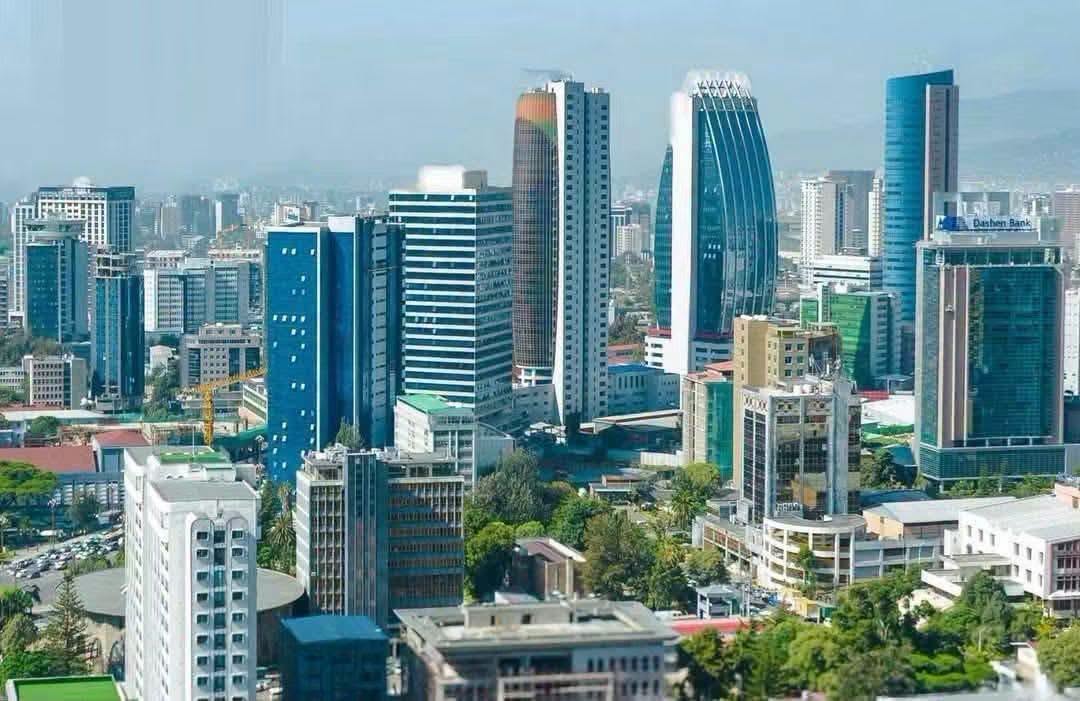
In Addis Ababa, the delivery of 496,971 homes over five years and the transformation of urban spaces through pedestrian-friendly corridors and public infrastructure point to another dimension of development: the relationship between national progress and the everyday lives of citizens.
The city’s recognition through the Shanghai Award for Sustainable Development in Cities also places its urban transformation within a broader international conversation about sustainable and inclusive cities.
But physical infrastructure and economic expansion alone cannot sustain national transformation.
The capabilities of people remain its most important foundation. Ethiopia’s digital-skills initiative, with more than five million enrolments under the 5 Million Coders programme, reflects the growing importance attached to preparing young people for a technology-driven economy.
The expansion of the Fayda digital identity system likewise points to the role of digital infrastructure in improving access to services and strengthening institutional coordination.
These efforts are part of a wider development challenge: ensuring that economic growth, technological progress and public investment translate into broader opportunities, stronger institutions and improved living standards.
They also underscore the importance of continuity, effective implementation and accountability in turning national ambitions into lasting outcomes.
For Africa, the relevance of Ethiopia’s experience lies not in replicating its policies or development model wholesale.
The continent’s countries have different histories, institutions, resources and political circumstances. Rather, the lesson is the importance of defining national priorities, mobilising domestic potential and building the capacity to pursue long-term goals with determination and consistency.
This is precisely where the African Political Parties Summit assumes significance. Political parties are not merely instruments for contesting power; they have a responsibility to articulate national visions, build consensus around development priorities and help create the institutional conditions for progress.
The summit’s focus on governing for growth therefore raises a fundamental issue: how can political leadership become a practical force for transforming African societies?
The first edition in Accra, Ghana, produced the Accra Declaration. The Addis Ababa gathering is expected to advance that continental conversation through the Addis Ababa Declaration, with dedicated platforms for youth and women’s political leadership.
These discussions matter because Africa’s future cannot be shaped by political institutions that leave out the generations and constituencies whose participation is essential to development.
The African Union’s Agenda 2063 offers a shared continental vision, but its fulfilment depends on the ability of individual countries to turn common aspirations into national action and regional cooperation.
Political leadership, institutional strength, productive capacity and the mobilisation of human potential must become mutually reinforcing elements of that undertaking.
Ethiopia once demonstrated that African sovereignty could withstand the ambitions of colonial powers. Its historic example helped affirm a principle that resonated far beyond its borders: Africa’s destiny should be determined by Africans themselves.
The challenge of the present generation is to give that principle a new expression—not only through political independence, but through productive economies, technological capabilities, strong institutions and the capacity to shape the continent’s place in the world.
As political leaders gather in Addis Ababa, the question is therefore larger than what Ethiopia has achieved or what other African countries might emulate. It is whether the continent can translate its immense human and natural potential into a shared project of transformation.
Just as Ethiopia’s resistance once inspired a continent searching for freedom, its present efforts invite a renewed conversation about what African countries can accomplish when national purpose, collective commitment and development ambition converge.