
From Pastoral Heartland to Agricultural Powerhouse: Afar’s Rise Mirrors Ethiopia’s Agricultural Transformation
Addis Ababa, August 9, 2026 (FMC) — Long known primarily for its pastoralist way of life, Ethiopia’s Afar Region is increasingly emerging as a significant agricultural frontier, with rising production offering a tangible illustration of the wider transformation underway in the country’s agricultural sector under the Medemer State.
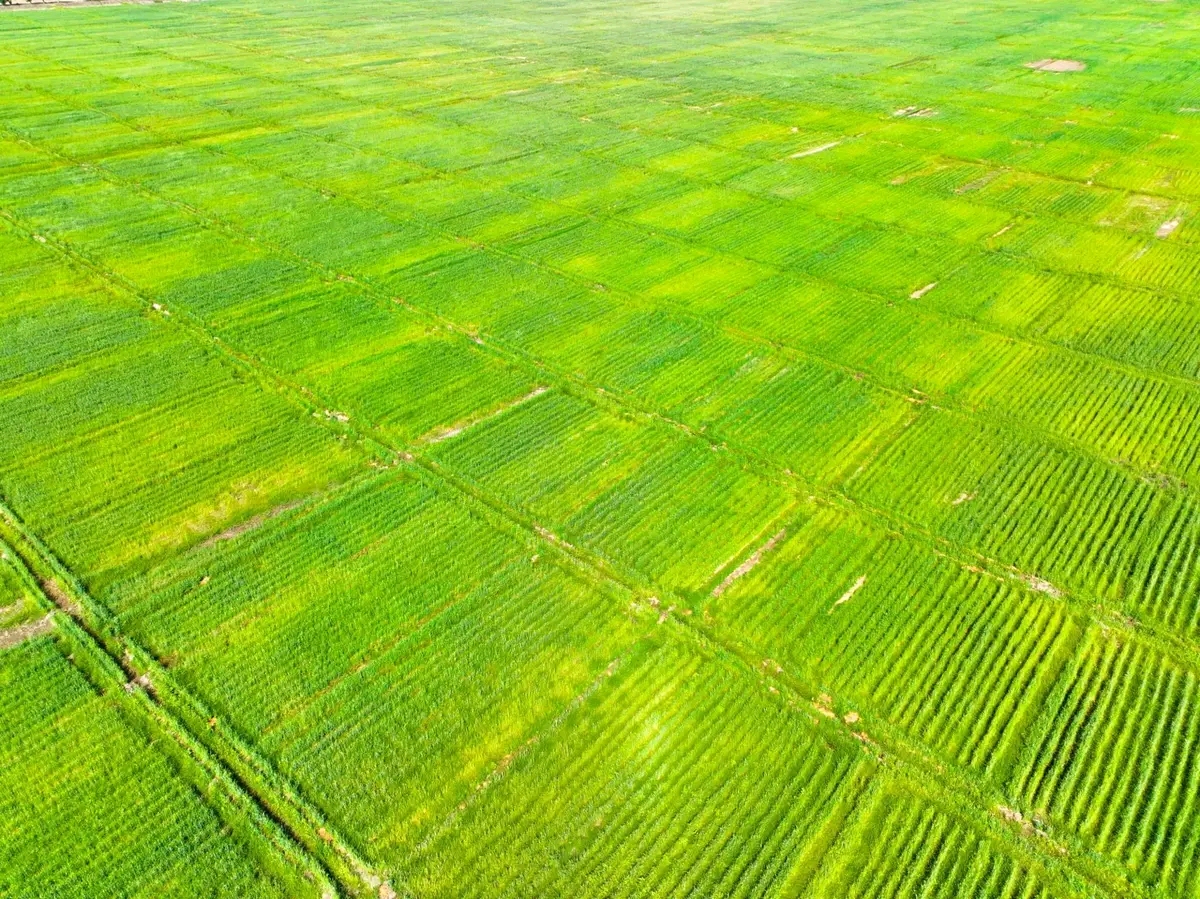
During the completed 2025/26 fiscal year, Afar harvested 5.4 million quintals of various crops, according to Afar Regional State President Awol Arba, marking a sharp increase from the more than 1.61 million quintals reportedly harvested annually in the region before the reform period.
The figures point to a notable shift in a region where pastoralism has traditionally been central to livelihoods. Afar’s vast arable potential is increasingly being brought into productive use as agricultural reforms seek to expand production, raise productivity and strengthen the economic contribution of farming.
Addressing the opening of the Afar Regional State Council’s regular session, President Awol said agricultural interventions undertaken under the Medemer State’s development approach had produced tangible results during the 2025/26 fiscal year.
More than 142,675 hectares of land were covered with crops during the year, against a target of more than 149,875 hectares. The region also distributed 47,341 quintals of fertilizer to farmers at the appropriate time, a measure the regional administration said contributed to improved productivity.
The reported harvest reached 5,400,697 quintals, representing 96 percent of the regional target for the fiscal year.
The change is significant in the context of Afar’s historical economic profile. Rather than viewing the region only through the lens of its pastoral tradition, the ongoing expansion of crop production is bringing greater attention to its agricultural potential and the possibility of diversifying its productive base.
That shift reflects a broader national direction in which Ethiopia is seeking to move agriculture beyond low-productivity subsistence toward a more productive, commercial and increasingly integrated economic sector. Reforms have increasingly focused on improved inputs, irrigation, mechanization, agricultural extension, commercialization, agro-processing and stronger value chains.
The Agricultural Transformation Institute has described this direction as a transition toward treating agriculture as a business and a driver of prosperity, with greater emphasis on productivity, commercialization, agribusiness and food sovereignty.
Recent reforms have also sought to broaden participation in agricultural extension and agribusiness. A new pluralistic agricultural extension framework allows private-sector actors, cooperatives, NGOs and other service providers to participate alongside government services, while the Farmers’ Agribusiness Company framework is designed to facilitate the participation of farmers and pastoralists in commercial agricultural enterprises and value chains.
Afar’s experience provides a particularly important illustration of why such reforms matter. Agricultural transformation in a region facing difficult environmental conditions requires more than expanding cultivated land. It also depends on improving soil management, protecting natural resources, developing livestock feed and strengthening the foundations of sustained production.
During the 2025/26 fiscal year, soil-conservation and related activities were carried out across 245,737 hectares in Afar, while 28,483 hectares were developed for livestock-feed production, according to the regional administration.
The region is also strengthening implementation of the Green Legacy Initiative, linking agricultural development with environmental rehabilitation and the restoration of degraded landscapes.
These efforts form part of a wider Ethiopian agricultural agenda that increasingly connects crop production, livestock development, environmental restoration and food security. The Bounty of the Basket (YeLemat Trufat) initiative, for instance, has placed particular emphasis on expanding livestock productivity and food production, while national reforms continue to promote irrigation, mechanization, improved agricultural inputs and market-oriented production.
The national transformation is increasingly visible beyond individual regions. Ethiopia is seeking to expand agricultural output not only to meet domestic food needs but also to supply industry with raw materials, stimulate agro-processing, create rural employment, reduce import dependence and open new opportunities for value-added exports.
In that broader context, Afar’s reported increase in crop production carries significance beyond the region itself. It demonstrates how agricultural potential in areas traditionally associated with pastoral livelihoods can be progressively incorporated into a wider productive economy when supported by investment, inputs, land management and policy reforms.
The transformation is far from complete, and the challenges facing Ethiopian agriculture remain substantial. But the trajectory represented by Afar’s latest figures is difficult to overlook: a region once viewed predominantly through its pastoral identity is increasingly adding a growing agricultural dimension to its economy.
For the Medemer State, the larger ambition is to turn such regional gains into a nationwide transformation—one in which Ethiopia’s land, labor, water and agricultural resources generate greater productivity, food security, investment and prosperity.
Afar’s 5.4-million-quintal harvest therefore represents more than a regional production figure. It is a snapshot of a much larger national effort to unlock agricultural potential and make farming a more powerful engine of Ethiopia’s economic transformation.