
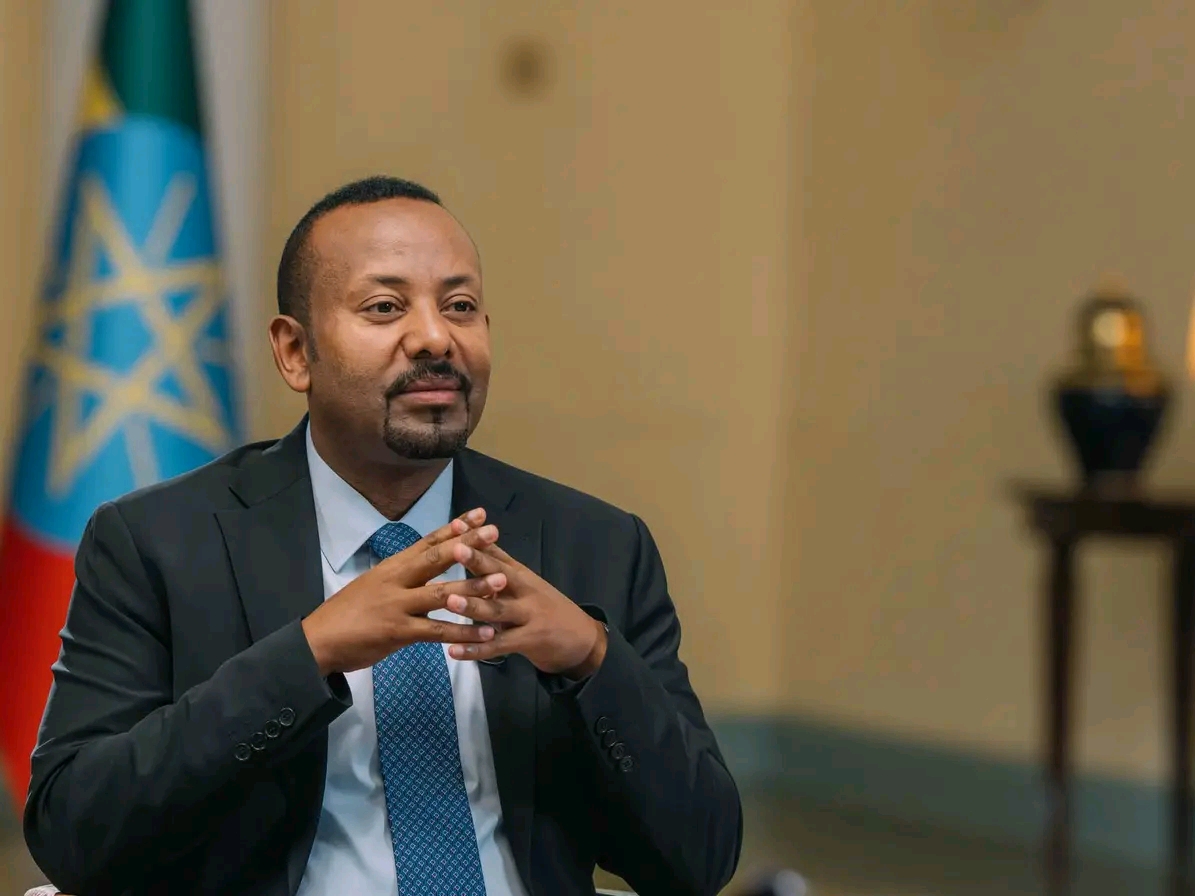
Ethiopia’s Prime Minister Abiy Ahmed Says the Ballot, Not the Bullet, Is Becoming the Path to Political Power
Addis Ababa, August 9, 2026 (FMC) — #Ethiopia’s Prime Minister Abiy Ahmed says the country’s political transition is increasingly shifting power toward the people through elections, political competition, dialogue and inclusive governance, with the latest general election demonstrating what he described as a clear public rejection of force as a means of acquiring political power.
Speaking in an extensive discussion with the Oromia Broadcasting Network (OBN) on current political, economic, social and security affairs, PM Abiy said the participation of about 54 million Ethiopians in the recently held seventh general election represented a major democratic milestone for the country and a significant development in the African context.
He said the election had delivered a clear message to both friends and adversaries that political power in Ethiopia should be obtained through peaceful and democratic means, through elections and popular participation, rather than through armed force.
According to the Prime Minister, the government had fulfilled its responsibility, within its capacity, to enable citizens to participate peacefully and to conduct the election democratically. The participation of numerous political parties, he added, further demonstrated the widening of Ethiopia’s political process.
Abiy said the public vote represented recognition of work undertaken so far while simultaneously placing a greater national responsibility on the government to deliver on the expectations generated by that confidence. He said the electorate had demonstrated a strong commitment to democratic institution-building and had shown that political disagreements can be expressed and addressed through democratic processes.
He described the development as part of a broader transformation of Ethiopia’s political environment, saying competing political parties are increasingly able to operate peacefully, present their ideas freely and seek public support through political competition.
The Prime Minister pointed to the release of large numbers of citizens from detention following the political transition, the participation of political actors with different viewpoints in government structures and the ongoing National Dialogue as evidence of the widening political space.
He said the inclusion of political actors representing different perspectives in government demonstrated an expansion of political participation, while the National Dialogue was creating a platform where citizens could express divergent views and seek lasting solutions to national questions.
Abiy acknowledged, however, that the political opening has taken place amid serious security challenges. He said some individuals released from detention subsequently returned to armed activity and joined groups that they had previously opposed, while some armed political forces that once claimed they could independently challenge the government are now seeking cooperation because they recognize that they cannot achieve their objectives alone.
He argued that these developments should be viewed within the wider transformation of Ethiopia’s political order, particularly the movement away from a system in which political authority was concentrated in a limited group toward one in which broader sections of society participate.
The Prime Minister said political transitions can generate tensions as previously restricted political spaces open and different actors begin to assert competing interests. Such developments, he noted, are not unique to Ethiopia and have occurred during political transitions elsewhere.
The eventual direction, he said, should be from confrontation toward dialogue, from dialogue toward institutional arrangements and ultimately toward wider acceptance of the rule of law. He said ongoing consultation processes are expected to contribute to legal and institutional frameworks that apply equally to all actors and accommodate Ethiopia’s diversity.
Abiy presented this political transition alongside the broader philosophy of Medemer, which he described as an indigenous Ethiopian outlook rooted in the country’s own history, cultures, knowledge and traditional values rather than a philosophy imported from abroad.
He said the philosophy draws, among other sources, on indigenous systems such as the Gadaa system and is intended to provide a framework for addressing Ethiopia’s political, economic, social and diplomatic challenges.
According to the Prime Minister, Medemer has already informed reforms that have produced tangible results in several sectors. He cited major irrigation development in Oromia, particularly achievements recorded in the Borena and Bale zones, as examples of economic reforms designed to translate political ideas into practical improvements in citizens’ lives.
He also pointed to the expansion of pre-primary education and reforms in other social sectors, while saying that the philosophy has informed efforts to strengthen Ethiopia’s international standing and visibility.
Abiy said the central principle of Medemer is to look to the past primarily for lessons rather than remain trapped in it. He noted that the book articulating the philosophy has been translated into more than ten languages and argued that its content brings together elements of Ethiopian history, knowledge, culture and identity.
He characterized Medemer as a practical and problem-solving outlook, saying the fundamental responsibility of political leadership is to move citizens out of hardship and toward a better life.
At the same time, Abiy said Ethiopia’s political transition continues to face armed challenges from groups pursuing political objectives outside peaceful and constitutional processes.
He identified several underlying factors behind the country’s security problems, including the difficulties accompanying political transition, changes in the distribution of political power, competing and irreconcilable narratives, and attempts by armed actors to obtain political authority through force.
He also accused what he described as Ethiopia’s longstanding external adversaries of exploiting internal divisions and security challenges in an effort to destabilize the country.
Regarding the illegal TPLF group, Abiy characterized it as a force that has failed to adapt to changing political realities and continues to operate according to what he described as outdated political thinking.
He accused the group of failing to accept political equality, lacking a genuine contemporary political agenda and seeking to destabilize Ethiopia through links with what he called the country’s enemies. He further alleged that the group had previously relied on external support to gain and maintain power and had diverted national resources toward private interests during its period in power.
The Prime Minister said the group’s current attempts to establish links with other armed forces amounted to an effort to prolong its political relevance and create instability, but asserted that such efforts would ultimately fail.
Despite his criticism of armed groups, Abiy stressed that the government’s approach remains open to peaceful political engagement. He reiterated that the government’s door remains open to any actor prepared to pursue political objectives peacefully and resolve disputes through dialogue.
He said a number of armed combatants have already responded to the government’s peace appeal and are returning to civilian life, demonstrating that peaceful reintegration remains possible.
The Ethiopian PM contrasted this approach with attempts to obtain political power through armed confrontation, maintaining that the country’s political future should be determined through democratic participation, peaceful competition and institutional processes.
He also said the government is working to strengthen an inclusive Ethiopian national identity that accommodates the country’s diverse peoples while creating the conditions for lasting peace, development and stability.
Abiy said Ethiopia’s security challenges can ultimately be overcome as the democratic transition matures and political actors increasingly embrace dialogue, legal institutions and peaceful competition. He expressed confidence that a more stable environment would enable citizens to return their full attention to productive economic and social activity.
Taken together, the Prime Minister’s remarks frame Ethiopia’s current transition as a wider contest over how political authority is acquired, exercised and transferred: between elections and armed confrontation, political dialogue and force, exclusion and inclusion, and competing visions of Ethiopia’s future.
For Abiy, the latest election has demonstrated that the Ethiopian people have made their choice clear — political power should be pursued through the ballot, while the country’s future should be built through democratic participation, inclusive governance, peaceful dialogue and development.