
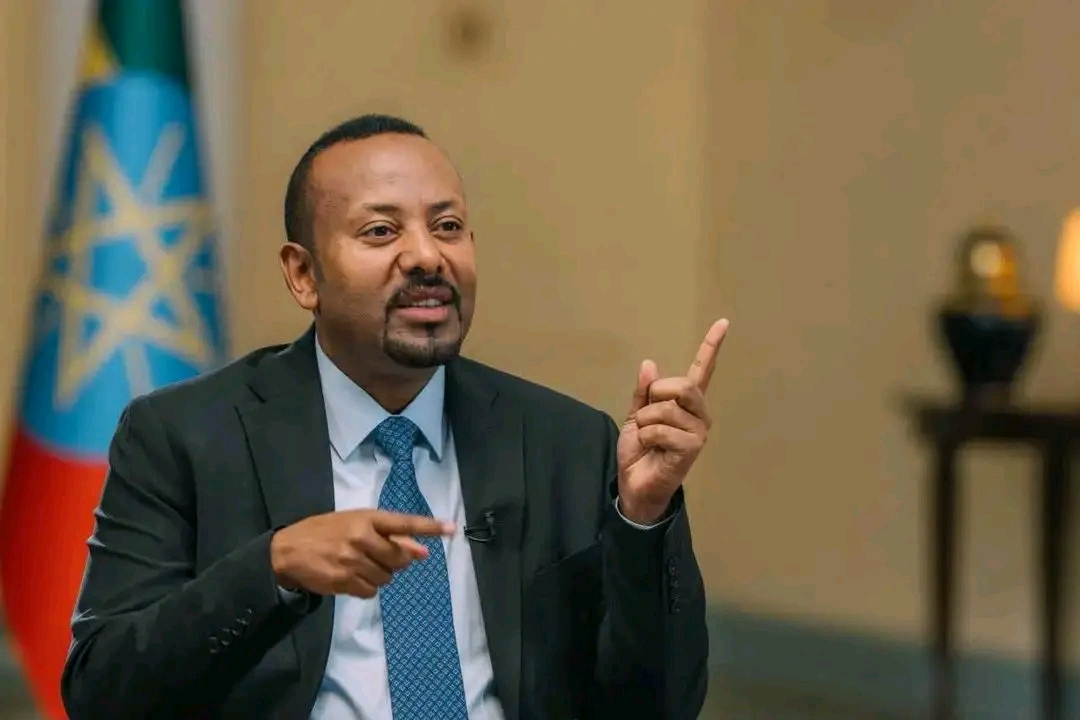
PM Abiy Identifies Four Forces Shaping Ethiopia’s Security Challenges, Puts Dialogue at Center of Political Transition
Addis Ababa, August 10, 2026 (FMC) — Prime Minister Abiy Ahmed has identified four major factors underlying security challenges in Ethiopia, linking the country’s current difficulties to the transition toward a more open political order, shifting power dynamics, entrenched hostile narratives and attempts to capture political power through force.
In the second episode of his interview with local media OBN, aired on Fana Media Corporation (FMC) platforms last night, the Prime Minister said security problems seen in Oromia and elsewhere in the country should not be attributed to a single cause, but understood within the broader political transition Ethiopia is undergoing.
He said opening a previously restricted political space to democratic participation can initially produce instability, as different actors seek to assert influence and may assume that newly available political space gives them equal capacity to exercise power.
According to the Prime Minister, such turbulence is not necessarily permanent. Political competition, he said, must ultimately move toward dialogue, followed by acceptance of the rule of law and institutions capable of governing all actors equally.
He identified a second factor as the changing distribution of political power. Ethiopia, he said, is moving away from a system in which political authority was concentrated among a limited group toward one in which different actors participate in determining the country’s political direction.
That transition, he argued, inevitably challenges arrangements in which one group exercises dominant control while others remain peripheral participants, making the redistribution of political influence an important source of tension during the transition.
A third factor, Prime Minister Abiy said, is the persistence of mutually hostile narratives that prevent differences from being reconciled. He argued that political and national disagreements become more difficult to resolve when competing groups refuse to recognize the interests and aspirations of other communities.
He said the alternative being pursued is an inclusive form of statehood that accommodates Ethiopia’s diverse peoples and interests rather than allowing political differences to become permanent sources of confrontation.
The fourth factor, according to the Prime Minister, involves attempts by actors opposed to Ethiopia’s stability to exploit domestic tensions while seeking to gain political power through shortcuts, including armed action.
He said some actors seek to use weapons and violence rather than organized political participation to capture power, while long-standing adversaries of Ethiopia attempt to take advantage of such conditions and strengthen their own networks.
The Prime Minister said Ethiopia’s peace has passed through serious tests in recent years, but maintained that the public has increasingly understood the forces behind the instability.
He acknowledged that hostile actors continue to organize and strengthen their connections, but expressed confidence that these efforts can ultimately be overcome and that a more stable environment will allow citizens to return their attention fully to productive activities.
His assessment places dialogue at the center of the country’s longer-term political transition. Rather than treating security challenges solely as a matter of force, he argued that the transition must ultimately produce political mechanisms through which differences can be negotiated, laws can be accepted by all sides and competing interests can coexist within a common national framework.
The approach also links Ethiopia’s security agenda with its broader political transformation: widening participation, redistributing political responsibility, addressing competing narratives and establishing the rule of law as the basis for settling disputes.
For a country undergoing a far-reaching political transition while confronting persistent security pressures, the Prime Minister’s four-part assessment frames stability not simply as the absence of armed conflict, but as the outcome of a political order capable of accommodating competition, managing differences and preventing the pursuit of power through violence.