
Egypt’s Latest Nile Rhetoric Seeks to Put Ethiopia’s Development in a Straitjacket
Addis Ababa, August 18, 2026 (FMC) — Egypt has entered another round of rhetoric, disinformation and pressure aimed at turning Ethiopia’s sovereign development ambitions into a manufactured regional threat.
This time, Cairo has seized on remarks by Ethiopia’s Minister of Water and Energy Engineer Habtamu Itefa, stripping them of their clear context and recasting Ethiopia’s determination to develop its own natural resources as an intention to control the Nile and harm downstream countries.
The distortion is revealing: whenever Ethiopia asserts its right to develop, Egypt attempts to redefine that sovereign right as a danger that must be contained.
But the Minister’s message was unmistakably different. Ethiopia, he made clear, will not surrender its right to utilize its own natural resources, including its rivers, for the benefit of its people.
At the same time, he reaffirmed Ethiopia’s unwavering commitment to cooperation, regional integration and mutual prosperity, stressing that Ethiopia considers the interests of downstream countries whenever it develops water projects.
Sovereignty and cooperation, in Ethiopia’s position, are not competing principles. They are the foundation of responsible regional development.
Egypt’s latest campaign deliberately obscures that distinction.
The Minister did not say Ethiopia would divert the Nile water. He did not say Ethiopia would deprive downstream countries of water. Nor did he call for unilateral exploitation at the expense of neighboring states.
His position was that Ethiopia has the sovereign right to develop its own rivers while pursuing cooperation that allows the countries of the region to grow and prosper together.
That is precisely the position Egypt has chosen to twist.
The broader pattern is becoming increasingly difficult to ignore. Whenever Ethiopia takes another step toward harnessing its vast natural resources, Cairo responds as though Ethiopia has committed an act of aggression.
When Ethiopia builds a dam, it becomes a “threat.” When Ethiopia discusses irrigation and water development, it becomes an attempt to “control” the Nile. When Ethiopia asserts its sovereign right to pursue additional projects, Egypt sounds the alarm again.
The implication is extraordinary: Ethiopia is expected to remain permanently underdeveloped so that Egypt can remain permanently comfortable.
That logic cannot survive Ethiopia’s changing reality.
For decades, Ethiopia’s rivers have flowed through its territory while millions of Ethiopians struggled with inadequate electricity, limited irrigation and persistent development constraints. Ethiopia is now changing that equation.
It is investing in hydropower, irrigation, water infrastructure and regional energy connectivity because development cannot be postponed indefinitely to accommodate the preferences of another country.
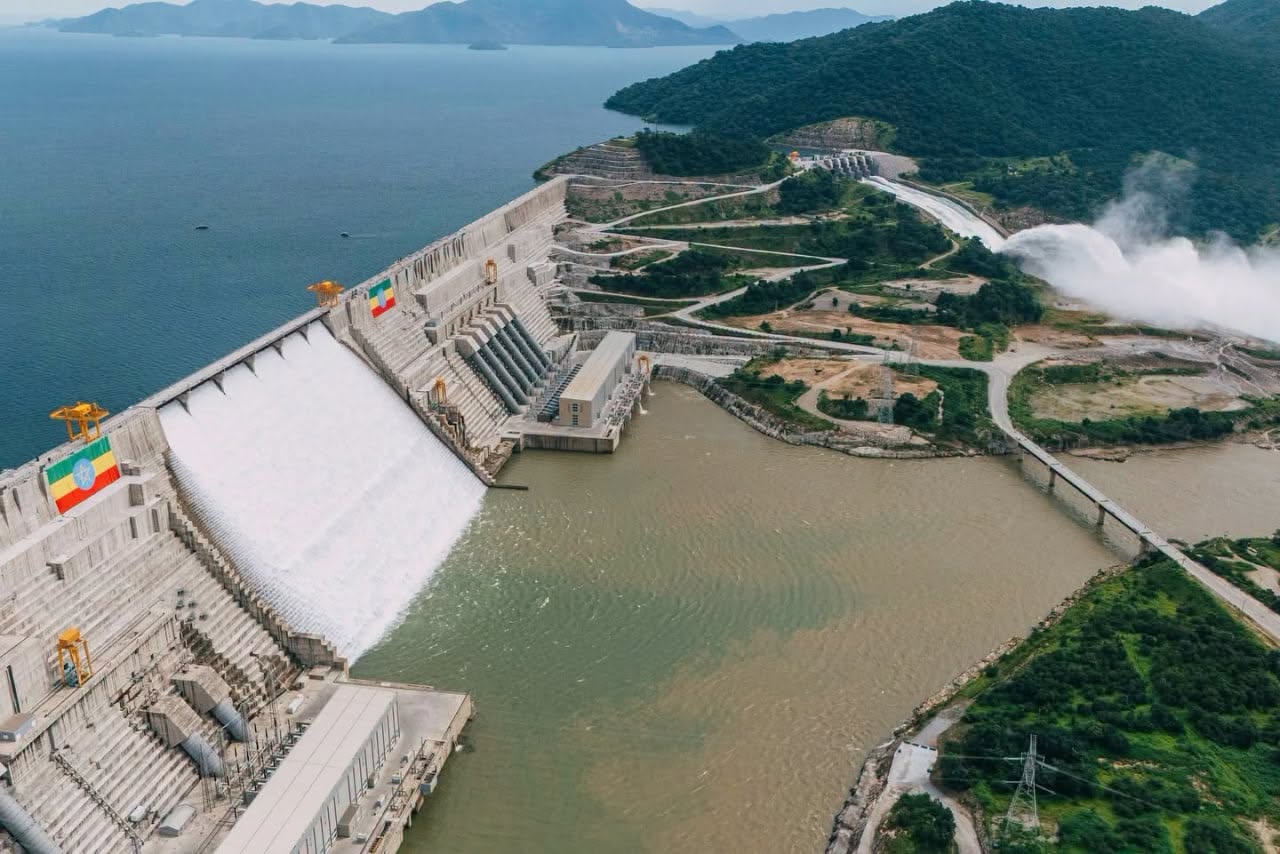
The Grand Ethiopian Renaissance Dam has already demonstrated what that transformation means.
Built through the financial contributions, labor, determination and national mobilization of Ethiopians, GERD has become a source of electricity and a symbol of what African self-reliance can achieve. It has helped expand Ethiopia’s energy capacity while opening opportunities for wider regional electricity cooperation.
Rather than treating that achievement as evidence that African development is possible, Egypt continues to present Ethiopian progress through the vocabulary of danger.
Now, the same rhetoric is being revived around Ethiopia’s broader water-development ambitions.
Yet Ethiopia has never presented its development agenda as a project of domination.
Its position is grounded in equitable and reasonable utilization, cooperation and shared prosperity. Minister Habtamu’s recent remarks reinforce that position: Ethiopia can and will develop its water resources, but it will do so with consideration for downstream countries and with regional cooperation as a guiding principle.
There is nothing threatening about that proposition.
What is increasingly troubling is the expectation that Ethiopia should need permission to develop its own resources.
Egypt does not possess the right to determine how Ethiopia generates electricity, develops irrigation, manages its rivers or plans its economic future. Nor can Cairo turn its own anxieties into a veto over Ethiopia’s development choices.
Yet this is precisely what the latest rhetoric increasingly resembles: an attempt to dictate the limits of what Ethiopia can build, where it can invest and how far it can advance.
That is not cooperation.
It is an attempt to preserve an old regional hierarchy in which upstream development is treated as negotiable only when it remains sufficiently small, sufficiently slow and sufficiently harmless to established interests.
Ethiopia is no longer accepting that premise.
The country’s development agenda is not directed against Egypt or any other downstream country. Ethiopia does not seek to control another country’s resources, dictate another country’s infrastructure choices or determine how another country should pursue prosperity. It asks for the same sovereign space for itself.
And that principle is not negotiable.
The Egyptian campaign also ignores the difference between responsible utilization and control. Developing a river within one’s sovereign territory does not amount to controlling an international river.
Building infrastructure does not automatically constitute an act of aggression. Exercising a development right does not become a threat merely because another state would prefer that right not to be exercised.
The Nile Basin cannot be governed by the permanent fear that Ethiopia’s development must stop whenever Egypt objects.
Nor can Ethiopia’s future be held hostage to recurring cycles of alarm, pressure and international campaigning.
The current rhetoric therefore says more about Egypt’s anxiety over Ethiopia’s transformation than about any genuine Ethiopian threat. A more self-reliant Ethiopia, capable of generating its own electricity, expanding irrigation, strengthening food security and building large-scale infrastructure, fundamentally changes the regional balance of development.
That change is inevitable.
Ethiopia has resources. It has rivers. It has land. It has a growing population with enormous development needs. It has every reason to turn those assets into economic opportunity.
What it does not have—and should not be expected to have—is an obligation to remain poor simply to preserve another country’s sense of security.
The irony is that Egypt’s own rhetoric keeps manufacturing the very confrontation it claims to fear. Instead of embracing an Ethiopia that can contribute more electricity, investment, infrastructure and economic activity to the region, it repeatedly attempts to frame Ethiopia’s advancement as a zero-sum contest.
But Ethiopia’s vision is not zero-sum.
As Minister Habtamu emphasized, cooperation and regional integration remain the way forward. Ethiopia’s development can coexist with the interests of downstream countries. The question is not whether Ethiopia should develop, but how the basin countries can make development work for all.
That requires dialogue between sovereign equals—not instructions from one country to another.
Egypt cannot choke Ethiopia’s development aspirations through rhetoric, disinformation or international pressure. Nor can it manufacture a threat by selectively rewriting the words of Ethiopian officials.
Ethiopia will continue to develop its resources.
It will continue to pursue hydropower and irrigation.
It will continue to strengthen regional energy and economic integration.
And it will continue to uphold cooperation with its neighbors and downstream countries.
Those objectives are not contradictory.
They are the essence of sovereign development.
The real choice facing Egypt is therefore straightforward: continue portraying every Ethiopian development initiative as a threat, or accept the reality that the Nile Basin is changing and engage Ethiopia as a sovereign partner committed to mutual prosperity.
Ethiopia has no intention of controlling Egypt’s future.
Egypt should stop trying to control Ethiopia’s.