
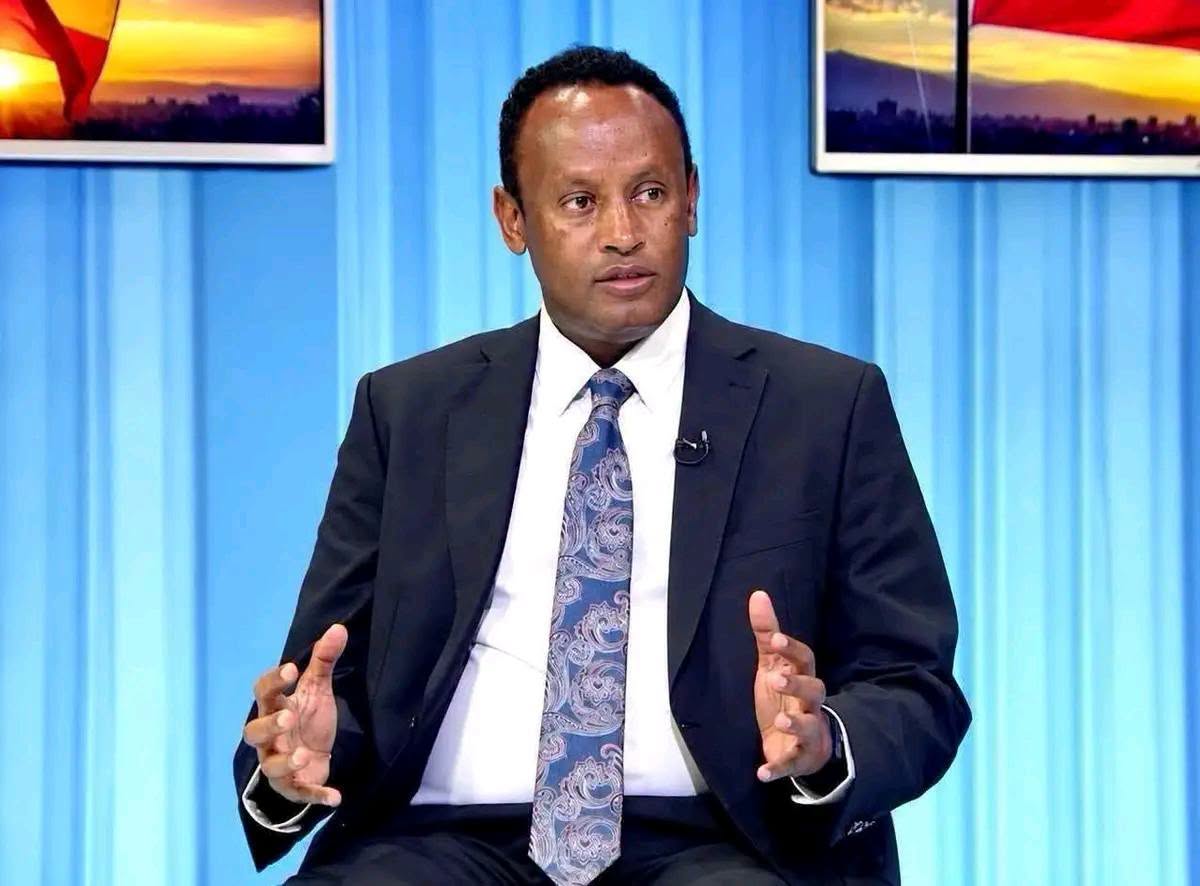
TPLF Manipulated Propaganda and Poverty to Keep Tigray Under Political Control — Senior Official
Addis Ababa, October 4, 2026 (FMC) — The illegal TPLF group manipulated propaganda and poverty to keep Tigray under political control, using sustained political influence and public dependency to preserve its grip over the region, former head of the Tigray Interim Administration Abraham Belay said.
Speaking in an exclusive interview with Fana Media Corporation, Abraham said the illegal TPLF group had for decades relied on propaganda to mobilize people in Tigray and the diaspora, presenting its political narrative as though it represented the interests of the people while pursuing its own political objectives.
He said the group sought to keep virtually every aspect of political and social life in Tigray under its control, suppressing alternative voices and limiting space for competing political perspectives.
According to the former Tigray Interim Administration head, maintaining a dependent population was central to preserving such control. He said a population that remains economically and socially dependent is less able to challenge those exercising political power or demand meaningful accountability.
Abraham said the group’s approach was to prevent the emergence of an empowered population capable of questioning its political dominance. When people become economically independent, educated and empowered, they naturally begin asking questions and demanding better governance, he said.
He pointed to the continued dependence of vulnerable communities on humanitarian assistance as an example of how dependency could be exploited politically, saying people receiving basic support could be kept focused on immediate survival rather than empowered to demand broader political and economic change.
The senior Ethiopian government official said the group’s political control also extended to alternative voices, with those who challenged its dominance facing an environment in which independent political thinking was difficult to sustain.
He said this system allowed the illegal TPLF group to present itself as the sole political force capable of representing the people while restricting genuine political competition.
Abraham said the group’s propaganda extended beyond Tigray, with narratives disseminated among the diaspora and presented to foreign diplomats and international audiences in ways designed to portray its political agenda as the collective interest of the people.
However, he said the group’s actions increasingly exposed the gap between its propaganda and the actual interests of the population.
Following the Pretoria Peace Accord, the Federal Government demonstrated restraint, restored services and worked to create conditions for peace, stability and recovery, he said.
The illegal TPLF group, instead of using the opportunity to help rebuild the region, continued to prioritize political control and the preservation of its influence, according to Abraham.
He said the group’s conduct, including its insistence on retaining political positions and influence, enabled the people of Tigray to increasingly distinguish between political propaganda and the interests of their communities.
The former regional leader said Tigray’s people, particularly its youth, mothers and scholars, increasingly recognized that continued political control and conflict could not provide the future they deserve.
He said the persistence of political methods developed decades ago, despite profound changes in the aspirations of the younger generation, demonstrates the group’s failure to adapt to the demands of a population seeking peace, education, development and opportunity.
Abraham stressed that genuine development requires an empowered population capable of thinking independently, questioning authority and participating freely in political and economic life.
He said the growing rejection of the illegal TPLF group’s methods shows that propaganda and manufactured dependency cannot permanently suppress the aspirations of the people of Tigray.