
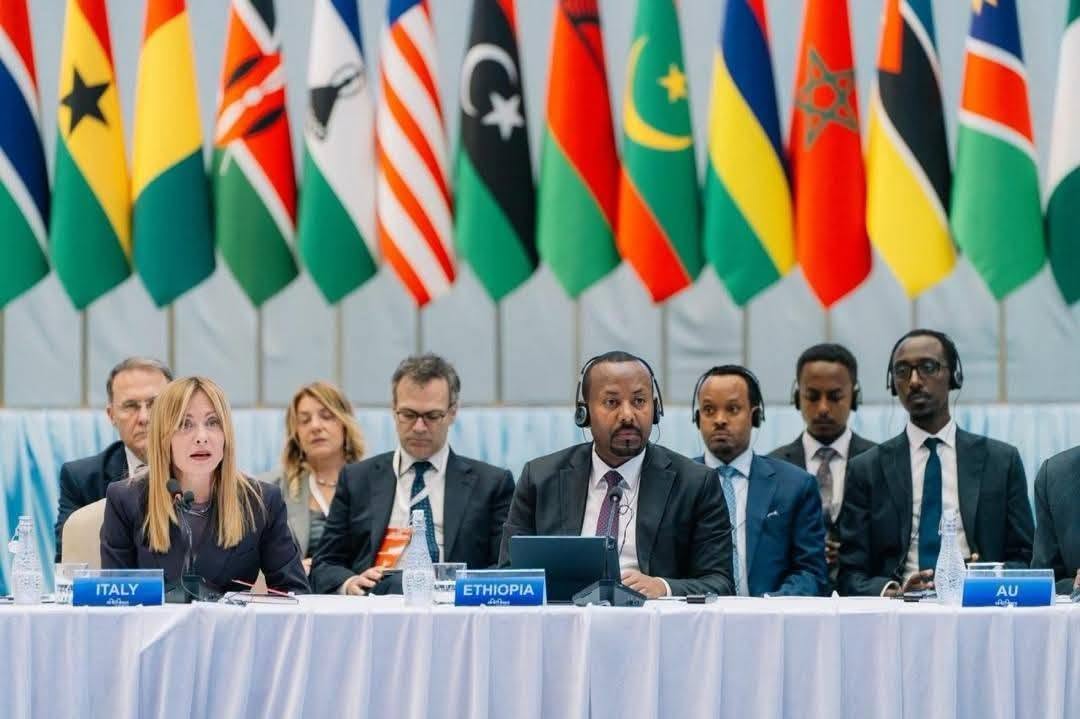
From a Wider Circle of Friends to a Stronger Voice: The 4As Behind Ethiopia’s Changing Global Role
Addis Ababa, September 8, 2026 (FMC) — As Ethiopia closes 2018 E.C., the final days of the Ethiopian calendar year offer more than a moment to look back. They provide a window into a five-year journey in which the country has been reshaping its domestic foundations while steadily widening the circle of countries, institutions and global platforms with which it engages.
That journey is now meeting a new political chapter. The June 2026 general election gave the Prosperity Party 438 seats in the House of Peoples’ Representatives, providing the parliamentary basis for the formation of the next federal government. Against that backdrop, Ethiopia enters 2019 E.C. with a record to reflect on and a new five-year horizon before it.
One of the clearest ways to understand the country’s changing external role is through the 4As — Active, Alternative, Adaptive and Agenda-Setting — a diplomatic framework articulated by Prime Minister Abiy Ahmed. The four principles describe an approach built around proactive engagement, diversified partnerships, flexibility in a changing geopolitical environment and a growing ambition to place Ethiopian priorities more firmly on regional and international tables.
Active diplomacy has meant expanding Ethiopia’s presence rather than waiting for international developments to arrive at its doorstep. Over the past five years, engagement has stretched across Africa, Asia, Europe, the Middle East and North America, alongside deeper participation in multilateral institutions and international initiatives.
The country’s growing diplomatic circle is also reflected in new platforms. Ethiopia joined BRICS in 2024, increasing its engagement with one of the major forums for dialogue among emerging economies. In 2026, it joined 28 other countries in establishing the World Artificial Intelligence Cooperation Organization, placing Ethiopia among the founding participants of an emerging framework for international cooperation on artificial intelligence.
At the continental and interregional level, Ethiopia’s election to chair the OACPS Council of Ministers from August 2026 to January 2027 has added another institutional responsibility. These developments do not simply enlarge Ethiopia’s list of diplomatic partners; they create additional spaces in which the country can advance its economic, technological, development and geopolitical interests.
That is where Alternative becomes important. Ethiopia’s external engagement has increasingly drawn on multiple channels rather than a single diplomatic orbit. Relations with established partners continue, while engagement with emerging economies, Gulf countries, Asian powers, African institutions and multilateral groupings has expanded. The objective is not to replace one circle with another, but to widen the range of choices available to Ethiopia.
The approach has also evolved in response to a world where alliances, economic interests and security calculations are constantly shifting. Adaptive diplomacy therefore gives the 4As their flexibility. Ethiopia has sought to defend core national interests while adjusting its diplomatic methods to changing regional and global circumstances.
Few issues demonstrate this more clearly than the country’s pursuit of peaceful maritime connectivity. Ethiopia continues to regard reliable access to the Red Sea as a strategic national interest, while emphasizing dialogue and mutually beneficial arrangements. The issue has increasingly become part of broader conversations about regional trade, connectivity and security.
But the most forward-looking of the four principles is Agenda-Setting — the aspiration to move beyond responding to issues shaped elsewhere and increasingly bring Ethiopian priorities into the wider conversation.
The Nile and the Grand Ethiopian Renaissance Dam remain important examples of Ethiopia’s sustained effort to shape discussions around development, equitable utilization of transboundary resources and regional cooperation. Climate diplomacy offers another expanding platform. Ethiopia’s successful bid to host COP32 in Addis Ababa in 2027 will place the country and African climate priorities before a global audience at a major international forum.
Yet the 4As cannot be understood through diplomacy alone. Their effectiveness ultimately rests on what Ethiopia is building at home.
The past five years have seen economic reforms aimed at changing the structure and performance of the economy, expanding private-sector participation and strengthening Ethiopia’s engagement with international markets. The IMF reported in July 2026 that macroeconomic outcomes had improved, with strong indicators in growth, exports, reserves and revenue under the reform program.
Technology, too, has become part of the country’s changing national profile, from digital identification and payment systems to artificial intelligence and broader digital transformation. Environmental action has similarly moved from a domestic campaign into an important element of Ethiopia’s international climate narrative through the Green Legacy Initiative and its preparations to host COP32.
These strands — political change, economic reform, technological development, environmental action and diplomacy — increasingly intersect. A wider diplomatic circle becomes more meaningful when backed by stronger economic capacity; a stronger international voice gains weight when it is supported by institutions, infrastructure, technology and a population able to benefit from national development.
That is what gives the close of 2018 E.C. a significance beyond the calendar.
The past five years have expanded the spaces in which Ethiopia engages. The next chapter will test how effectively those spaces can be converted into lasting partnerships, practical gains and greater influence in the issues that matter to the country and the wider region.
The 4As, in that sense, are less a declaration of arrival than a description of direction: active enough to engage, alternative enough to choose, adaptive enough to navigate change, and increasingly ambitious enough to bring Ethiopia’s own priorities to the table.
As the old Ethiopian year gives way to a new one, the story is therefore not simply about how many friends Ethiopia has gained. It is about what it can do with a wider circle — and how confidently it can turn that wider circle into a stronger voice in the world.