
Ethiopia Finds Its Place at the Front Table of a Changing World
Addis Ababa, September 12, 2026 (FMC) — The world is changing its shape. Power is no longer concentrated as it once was; economic weight is spreading, new centers of influence are emerging, and countries across the Global South are seeking a greater voice in decisions that shape their future.
For Ethiopia, this transformation is not a distant geopolitical development to be watched from the sidelines. It is becoming a diplomatic opportunity to be actively engaged.
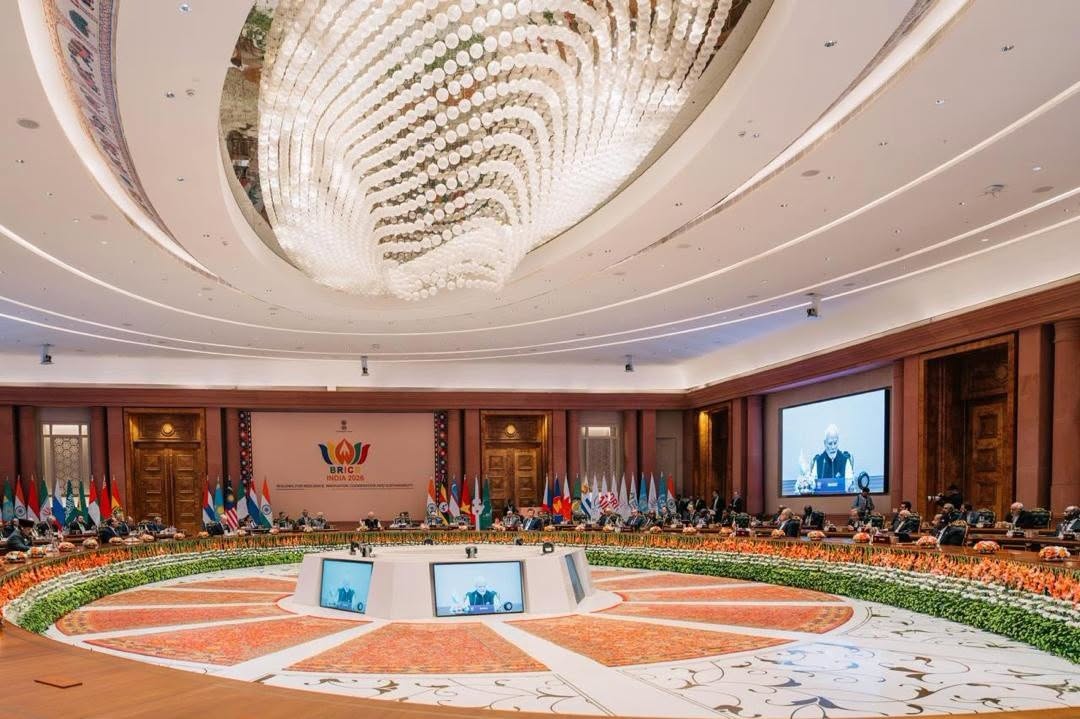
The clearest picture is emerging in New Delhi, where Prime Minister Abiy Ahmed is participating in the 18th BRICS Leaders’ Summit alongside the leaders of some of the world’s largest and most influential countries. China, Russia, India, Brazil, South Africa and other members of the expanded grouping are at the same table, while the summit is also drawing the heads of major international institutions, including the United Nations, World Trade Organization and World Health Organization.
For Ethiopia, the significance lies not simply in being present. It lies in the increasingly wider diplomatic space from which Addis Ababa can pursue its interests, build partnerships and contribute to conversations about the future of the international system.
Ethiopia’s entry into BRICS in 2024 was therefore more than an addition to a membership list. It marked a new channel for the country to engage with major centers of economic and political influence and to advance its longstanding interest in a more representative multilateral system.
The transformation, however, goes well beyond BRICS.
A diplomacy built for a more diverse world
Ethiopia has historically possessed considerable diplomatic capital. Addis Ababa hosts the African Union and the UN Economic Commission for Africa, while Ethiopia has long played a prominent role in African peace and multilateral diplomacy.
What is evolving is the way that capital is being deployed.
The country’s diplomacy is increasingly oriented toward diversification—expanding partnerships rather than depending on a single center of power, and seeking practical gains from relationships across different regions.
That means deeper engagement with China and India, continued relations with the United States and Europe, expanding economic ties with Gulf countries, closer interaction with Russia and stronger South-South cooperation.
The logic is increasingly clear: in a more distributed international system, diplomatic flexibility becomes an asset.
Ethiopia does not need to choose one relationship at the expense of another. It can seek technology from one partner, investment from another, development finance from another and diplomatic cooperation from several—provided that each relationship serves clearly defined national interests.
This is the essence of a diplomacy increasingly shaped by strategic options.
From access to influence
The more consequential question is what Ethiopia does with the access it has gained.
At the New Delhi summit, Prime Minister Abiy has already used the occasion to engage Indian Prime Minister Narendra Modi on defence cooperation, technology transfer, capacity building, mining and cooperation toward COP32.
Such encounters demonstrate how multilateral diplomacy can become an instrument of national development.
A summit is no longer merely a ceremonial gathering when it creates opportunities for investment, technology, skills, trade, finance and strategic cooperation.
The same logic is visible in Ethiopia’s pursuit of membership in the New Development Bank, the BRICS-linked multilateral development institution. For a country undertaking major economic transformation, diversified access to development finance and international investment is not simply an economic consideration; it is part of a broader diplomatic strategy.
The objective is to turn relationships into capabilities.
The Horn gives Ethiopia another strategic card
Geography reinforces this diplomatic ambition.
Ethiopia is one of Africa’s largest countries by population and sits at the heart of the Horn of Africa, close to the Red Sea and major international maritime routes. Its economic trajectory is therefore intertwined with questions of regional connectivity, trade, energy and security.
This gives Addis Ababa interests that extend beyond its borders.
A stable and economically integrated Horn serves Ethiopia’s interests. Regional connectivity can expand markets. Cross-border infrastructure can strengthen trade. Energy cooperation can create new economic links. Dialogue can reduce the space for instability.
Ethiopia’s regional diplomacy is consequently becoming increasingly connected to its economic diplomacy.
The Horn is not merely a neighborhood to be managed; it is part of a wider strategic environment in which Ethiopia seeks to build connectivity and partnerships that support its transformation.
A continental voice with a global reach
There is also a distinctly African dimension to Ethiopia’s growing diplomatic profile.
As the host of the African Union, Addis Ababa occupies a unique position at the intersection of national, regional and continental diplomacy.
Its stronger presence in BRICS and other international forums therefore carries significance beyond Ethiopia itself.
Issues such as development finance, climate finance, technology access, food and energy security, health, trade and reform of global institutions are central African priorities. Ethiopia’s ability to bring those concerns into wider Global South discussions can give continental interests another avenue of expression.
This is where Ethiopia’s diplomatic geography becomes particularly valuable.
It can engage the Global South as an African country, participate in continental diplomacy from the seat of the African Union and pursue its own national interests as a major East African state.
The three dimensions reinforce one another.
The rise of agenda-setting diplomacy
Perhaps the most important change is that Ethiopia’s diplomacy is increasingly concerned not only with responding to international agendas, but also with helping shape them.
A changing world creates space for countries that can connect different regions, institutions and interests.
Ethiopia is attempting to build that connective role.
Its diplomacy increasingly emphasizes diversification, economic engagement, regional integration, South-South cooperation and a stronger voice for developing countries in international decision-making.
That approach is particularly relevant as countries across Africa and the wider Global South seek greater representation in institutions whose structures were largely shaped by an earlier distribution of global power.
The debate is no longer simply about who possesses power. It is also about who has a voice in defining the rules, priorities and institutions through which that power is exercised.
Ethiopia increasingly wants to be part of that conversation.
From the sidelines to the front table
None of this makes Ethiopia a global superpower. Its influence still depends on economic strength, institutional capacity, domestic stability and the ability to convert diplomatic opportunities into measurable outcomes.
But influence is not measured only by military or economic size.
It can also be built through strategic geography, diplomatic networks, institutional presence, partnerships and the ability to bring different actors together around shared interests.
Ethiopia possesses many of these assets—and its recent diplomacy suggests a growing determination to use them.
The image from New Delhi is therefore significant precisely because it represents something larger than a summit.
It shows Ethiopia sitting alongside major powers, engaging partners from different regions, participating in the institutions of a changing Global South and pursuing its own priorities within an increasingly diverse international system.
The journey is far from complete. Diplomatic visibility must ultimately become economic opportunity, regional stability, technological advancement, investment, stronger institutions and greater development.
But the direction is unmistakable.
Ethiopia is no longer content to watch the architecture of the international system evolve around it.
As the world moves toward a more multipolar landscape, Addis Ababa is seeking not merely a place within the emerging order, but a voice in shaping what that order becomes.