
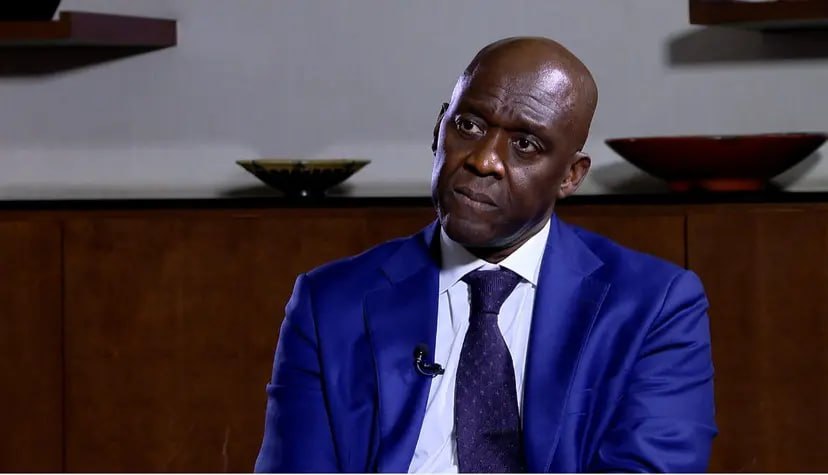
IFC Sees Ethiopia’s Economic Reforms Laying Stronger Ground for Private Investment
Addis Ababa, September 17, 2026 (FMC) — The International Finance Corporation (IFC) has welcomed Ethiopia’s economic reform efforts, noting that progress in the foreign-exchange market, international reserves and inflation is helping ease some of the major constraints that had previously discouraged private-sector investment.
IFC Managing Director Makhtar Diop said Ethiopia had made substantial headway in addressing economic challenges that had historically generated uncertainty for investors.
Recalling his earlier engagement with Ethiopia, Diop identified three major constraints: elevated inflation, foreign-exchange pressures and insufficient reserve levels.
He told local media POA English that these challenges had a direct impact on businesses’ ability to operate and invest. Foreign-exchange shortages, for example, made it difficult for companies to import essential goods and could also complicate the repatriation of profits.
Diop said Ethiopia has since undertaken measures to ease these pressures, particularly through the shift toward a more flexible exchange-rate system, rebuilding foreign-exchange reserves and bringing down inflation.
He noted that inflation, which had previously remained in double-digit territory, has at times declined to single-digit levels, although it continues to fluctuate in response to economic conditions.
For private-sector investors, Diop said, such developments are significant because investment decisions are closely tied to economic predictability.
He stressed that stronger economic fundamentals are essential to attracting private capital, as investors require a measure of certainty before committing resources to a market.
Diop credited the Ethiopian government with taking serious measures to address the economic constraints that had previously weighed on private-sector investment.
His assessment places Ethiopia’s ongoing economic reforms within a broader effort to establish a more predictable environment for domestic and international businesses, with implications for investment, trade, infrastructure and private-sector-led growth.
For Africa more broadly, the developments underscore the importance of macroeconomic stability, access to foreign exchange and investment certainty in expanding private-sector participation in the continent’s economic transformation.
Diop also pointed to investment opportunities in Ethiopia’s digital economy, tourism, aviation, infrastructure and renewable energy sectors, as well as the potential for investment in housing.
During his visit to Ethiopia from September 1 to 3, IFC Managing Director Makhtar Diop met with Prime Minister Abiy Ahmed and other government officials to discuss economic reforms, private-sector investment and job creation.
On September 3, Prime Minister Abiy oversaw the signing of a framework agreement between the National Bank of Ethiopia and the IFC to establish the country’s first mortgage refinance company.
The proposed institution is expected to have a capitalization of 100 billion birr, with the IFC contributing at least 200 million US dollars, in support of the government’s ambition to deliver 1.5 million homes over the next five years.
The IFC chief said expanding housing would also require greater involvement from private developers, alongside investment in skills development and construction capacity.