
The 22 Projects Egypt Cannot Explain Away
Addis Ababa, October 1, 2026 (FMC) — The most striking figure to emerge from Ethiopia’s latest conversation over the Abbay is not 74 percent, 80 percent or any other familiar statistic attached to the Grand Ethiopian Renaissance Dam. It is 22.
More than 22 Ethiopian development projects, including the GERD, have been identified by a national committee as projects that Minister of Water and Energy Engineer Habtamu Itefa says were blocked or obstructed by Egypt.
Twenty-two projects.
That number demands more than another round of diplomatic exchanges over the Nile. It demands a reckoning with what Ethiopia says has happened to its development aspirations over the years—and with the economic opportunities that may have been lost whenever a development project became entangled with Egyptian opposition.
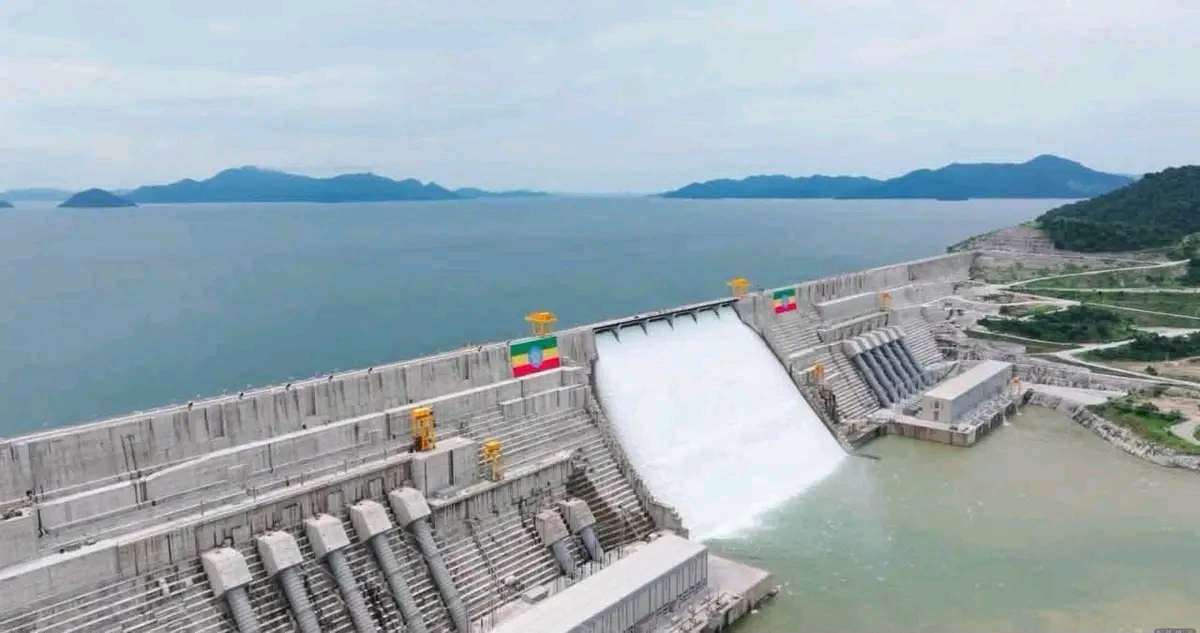
For years, the GERD has dominated the international narrative surrounding Ethiopia and Egypt. The dam became the symbol, the argument, the controversy and, in many accounts, almost the entirety of the story.
But the minister has now placed a much larger number on the table.
“We have established a national committee. Already we counted more than 22 projects that have been blocked or obstructed by Egyptians, including the GERD,” Habtamu said.
That statement changes the scale of the conversation.
If the GERD was the project that the world watched, what were the other projects? What would they have produced? How many jobs could they have created? How much electricity could they have generated? How much agricultural production could they have unlocked? What industries might have emerged around them? And, most importantly, what did Ethiopia lose when projects intended to transform its development trajectory were, according to the minister, obstructed?
These are no longer merely rhetorical questions.
The government says it is collecting the evidence.
The committee includes experts, former ministers, advisers and legal professionals. Its task is to identify the losses Ethiopia says were imposed on its development, examine the basis for compensation and assess the broader economic and environmental dimensions of the country’s contribution to the Abbay and Nile systems.
The language used by Habtamu is unusually direct.
“Number one is to identify and to claim the total amount of loss that they have imposed on Ethiopia because of our development,” he said.
That is the heart of the matter.
Development is not an abstract ambition for Ethiopia. It is the difference between darkness and electricity, subsistence and productivity, unemployment and opportunity, dependence and economic capacity.
Every major project carries an opportunity cost when it is delayed or prevented. A power project is not merely concrete and turbines. It is factories that can operate, businesses that can expand, students who can study, hospitals that can function and an economy that can become more productive.
An irrigation project is not simply a canal or reservoir. It is agricultural output, food security, exports and livelihoods.
A transport or industrial project is not merely infrastructure. It is connectivity, investment and jobs.
This is why the figure of 22 cannot be casually folded into the familiar Nile dispute narrative.
It raises a much larger question about Ethiopia’s development history.
For Ethiopia, the Abbay is not an abstract geopolitical instrument. It is part of the country’s natural resource base and a foundation of its development potential. The question at stake is whether an upstream country of more than 100 million people can develop that potential while maintaining cooperation with its downstream neighbors.
Egypt has long emphasized its concerns over the Nile. Those concerns are part of the regional reality. But Ethiopia’s development needs are equally unavoidable.
A country cannot indefinitely suspend its economic transformation because another country is uncomfortable with the prospect of that transformation.
That is the fundamental tension exposed by the 22-project revelation.
And it is precisely why the GERD became so much more than a dam.
For Ethiopia, the GERD represents a declaration that development cannot remain permanently postponed. It represents electricity, industrialization and the ability to finance national development through Ethiopia’s own resources and determination.
But the minister’s remarks suggest that Ethiopia sees the GERD as only one chapter in a much larger history.
He said Ethiopia has already collected evidence on projects that were opposed, including the GERD.
“We have prepared as many as possible projects which they have opposed, including the GERD,” he said.
The significance of that evidence-gathering should not be underestimated.
Political arguments can continue endlessly. Documentation is different.
Projects have records. Decisions leave paper trails. Financing has documentation. Construction plans have dates. Agreements have signatures. Economic projections can be examined. Lost opportunities can be assessed.
That is where Ethiopia’s new committee potentially changes the character of the conversation.
It is an attempt to move from grievance to documentation, from accusation to quantification and from political rhetoric to a formal assessment of what Ethiopia says it has lost.
The minister also placed Ethiopia’s environmental investments within this broader picture.
Since the launch of the Green Legacy Initiative in 2019, Ethiopia has planted 56.8 billion tree seedlings across the country. Habtamu said 30 percent of those trees were planted in the Baro, Abbay and Tekeze river basins.
That figure is staggering in its own right.
It represents an enormous national investment in restoring landscapes, protecting watersheds and strengthening the ecological foundations of Ethiopia’s water resources.
And it complicates any simplistic portrayal of Ethiopia as merely seeking to take water from the Nile.
Ethiopia is also investing heavily in the landscapes that generate and regulate that water.
The same argument applies to the GERD.
Habtamu argued that the dam’s water-storage and regulation capacity provides benefits beyond Ethiopia, particularly when rainfall falls below average.
“This year, it is El Nino. El Nino means the amount of rainfall we received is below than the average,” he said.
His argument was blunt: without the dam’s ability to store and regulate water, downstream countries would not necessarily have received the amount of water they are receiving during the current period of reduced rainfall.
“So they couldn’t have gotten the amount of water that we are giving them now, had there been no dam,” he said.
He also pointed to the experience of Sudan and the potential consequences of severe flooding, arguing that the absence of the dam could have produced even worse impacts.
“Had there been no dam, there could have been worse issues,” he said.
These are powerful arguments in Ethiopia’s presentation of the Abbay question: that responsible water management is not inherently a zero-sum exercise, and that infrastructure developed upstream can generate benefits downstream as well.
Yet the minister was even more forceful when discussing what Ethiopia says has been the pressure surrounding its development projects.
Speaking about the GERD, he said attempts had been made to threaten Ethiopia by invoking Egypt’s military power.
“They even try to threaten the country as well, to say as if they have a giant military power and then come to exercise something, which is really a crime in front of the international community,” Habtamu said.
That statement should not be lost amid the technical language of committees and compensation.
It captures the political dimension of Ethiopia’s complaint: that development has, in its view, repeatedly been treated as something to be constrained rather than something to be accommodated through negotiation.
Yet Ethiopia’s answer, at least in the minister’s formulation, is not to abandon negotiation.
It is to insist that negotiation must coexist with development.
“We are already on the right track in terms of development and economic growth,” Habtamu said.
Then came the message that perhaps best captures Ethiopia’s position:
“So Egyptians have to support that. They have to agree with what we mean, which is win-win.”
That is not a call to freeze the Nile in an old geopolitical formula.
It is an argument that the future of the Abbay must accommodate an Ethiopia that is developing, electrifying, industrializing, restoring its environment and seeking greater prosperity for its people.
And that brings us back to the number.
Twenty-two.
The significance of the figure is not that every project on a list automatically proves every element of Ethiopia’s case. The significance is that Ethiopia says there are more than 22 projects whose histories can now be examined, documented and assessed.
For years, the international conversation could comfortably be reduced to one question: what will Ethiopia do with the GERD?
The emerging Ethiopian question is considerably larger:
What happened to everything else Ethiopia says it tried to build?
That is the question Egypt now faces in the context of Ethiopia’s new compensation process—not merely as another diplomatic talking point, but as a question that Ethiopia says it intends to document project by project and loss by loss.
The GERD may have been the most visible battle.
The 22 projects suggest it was never the whole story.